




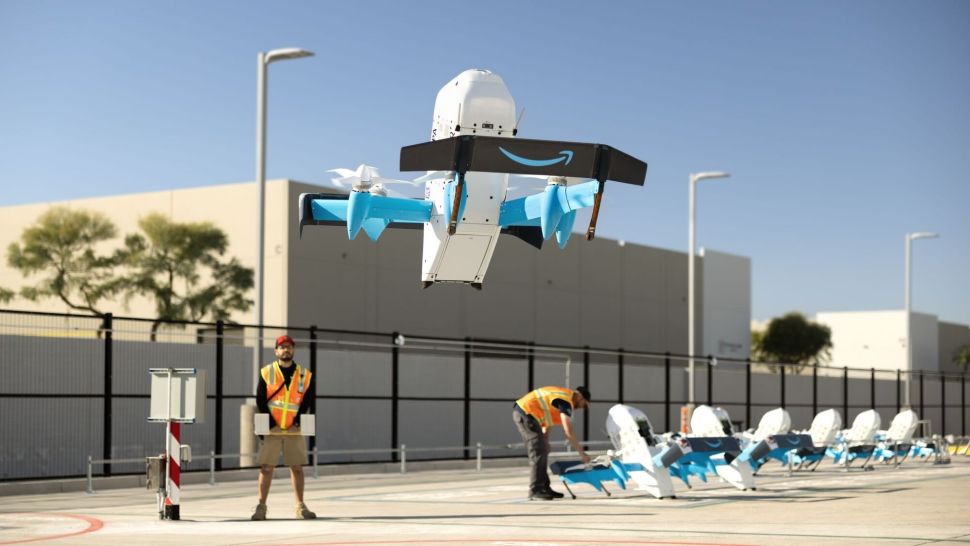
In April, Amazon CEO Andy Jassy said the company’s Prime Air service would be able to deliver a wide range of products by drone to 30 million people in various U.S. communities by the end of the year.
That promise is starting to bear fruit. On Wednesday, the retail and logistics behemoth said autonomous drone delivery in as little as 30 minutes would be available in nearly 500 communities by the end of 2026, up from the current 11 locations.
Amazon Prime Air currently operates in Tolleson, Arizona (Phoenix metro area); Ruskin, Florida (Tampa metro); Kansas City, Kansas; Baton Rouge, Louisiana; Detroit metro; Papillon, Nebraska (Omaha metro); Houston metro; Dallas metro; San Antonio and Waco, Texas.
Prime Air plans to launch soon in the Chicago; Syracuse, New York; Cleveland; Atlanta; and Boise, Idaho metro areas, with more communities to come later this year. So far it has made hundreds of thousands of deliveries by drone in 2026, the company said in a blog post.
Amazon (NASDAQ: AMZN) previously said it would begin serving customers in the southside of Chicago from two fulfillment centers by early summer. The launch of Prime Air in Memphis, Tennessee, has been delayed from its June target date, said a source who has attended local government briefings aimed at coordinating safety protocols.
“Customers already turn to Amazon for fast Same- and Next-Day Delivery, and Prime Air provides them an even speedier option when they need it,” said David Carbon, vice president of Amazon Prime Air.
Experts say ultra-fast delivery is becoming a standard necessity for retailers. On Tuesday, Home Depot announced the nationwide rollout of express delivery for online orders fulfilled from local stories — the latest example of retailers trying to offer faster delivery options on the premise that it can convert browsers into buyers. Walmart is also rapidly growing same-day and three-hour delivery service.
(Why It Matters: Amazon is the largest U.S. retailer and a trend setter, especially for technology adoption. Using drones will keep vehicles off the road, reducing traffic and emissions.)
Globally, Amazon delivered more than 40% of items same day or overnight in the first half of the year versus the same period last year. And it expanded ultra-fast delivery service Amazon Now, which promises delivery in 30 minutes or less on thousands of everyday essentials, to 80 cities and towns across the United States and several major cities in Egypt. Amazon Now is available in nine countries and over 250 cities and towns, including Atlanta, Houston and Denver. Management says faster delivery speeds combined with a broad selection of products on the marketplace are driving consumers to make more purchases on the Amazon site.
For Amazon Now, Prime members pay a discounted delivery fee of $3.99 per order, while customers without a Prime membership pay $13.99.
Amazon and Home Depot, notably, are charging extra for ultra-fast delivery.
What drone delivery looks like
The MK30 drone used by Amazon has a payload of five pounds. More than 60% of the most frequently purchased items are eligible for drone delivery. Most orders arrive about 60 minutes after checkout, Amazon said.
Drone delivery is free for Prime members on orders of $50 or more. The delivery fee is $2.99 on orders less than $50. Customers without a Prime membership pay a $4.99 delivery fee.
Customers see drone delivery as an option in their checkout experience if it is available in their area. A satellite map of their property shows options for “delivery zones,” pre-identified using Amazon’s digital mapping and AI systems. The customer can then select one of the drop-off zones and will be reminded to keep the area clear, according to Amazon.
The drones cruise at about 73 mph and 200 to 300 feet high. Six vertical propellers provide lift, with staggered tandem wings supporting cruise flight. They can fly in light precipitation and winds faster than 20 mph. Parcels are stored in a shoebox-sized fuselage and dropped to the ground from about 13 feet up.
When a drone arrives at the selected delivery point with an order, it descends while cameras check to make sure there are no people, pets or vehicles in the way. The drone then drops the parcel from a safe height. Prime Air boxes have customized cushioning technology at the bottom to protect the item during delivery.
Certified by the Federal Aviation Administration, Prime Air uses a number of systems to ensure operational safety. A collision-avoidance system monitors the airspace and environment around the drone, similar to how a pilot would scan the flight area. Prime Air drones use onboard cameras and sensors for navigation, obstacle detection and delivery. There is no live camera feed monitored by a person. The onboard camera data is processed by the drone itself for safe navigation.
Amazon recently publicized its Prime Air drone service in Darlington, England — the first location outside the United States to offer unmanned air delivery.
Click here for more FreightWaves/American Shipper stories by Eric Kulisch.
Write to Eric Kulisch at ekulisch@freightwaves.com.
RELATED STORIES:
Brokerage Compliance Symposium
The day before F3. Every compliance issue you face - fraud exposure, carrier liability, FMCSA rules, cargo theft, insurance gaps - navigated by attorneys and operators defining best practices in a changing industry.
F3 Awards Dinner
The night before F3. FreightTech100 companies honored. FreightTech 25 and Shipper of Choice winners revealed live. Cocktail reception into dinner and live music - 300 industry leaders in one purpose-built room.
F3: Future of Freight Festival
Industry-defining keynotes, rapid-fire technology demos, and industry leaders networking in experiences across Chattanooga - plus the inaugural F3 Awards Dinner featuring the FreightTech and Shipper of Choice reveals.
The day before F3. Every compliance issue you face - fraud exposure, carrier liability, FMCSA rules, cargo theft, insurance gaps - navigated by attorneys and operators defining best practices in a changing industry.
The Signal at Chattanooga Choo Choo • Chattanooga, TN Register NowThe night before F3. FreightTech100 companies honored. FreightTech 25 and Shipper of Choice winners revealed live. Cocktail reception into dinner and live music - 300 industry leaders in one purpose-built room.
The Signal at Chattanooga Choo Choo • Chattanooga, TN Register NowIndustry-defining keynotes, rapid-fire technology demos, and industry leaders networking in experiences across Chattanooga - plus the inaugural F3 Awards Dinner featuring the FreightTech and Shipper of Choice reveals.
The Signal at Chattanooga Choo Choo • Chattanooga, TN Register Now