




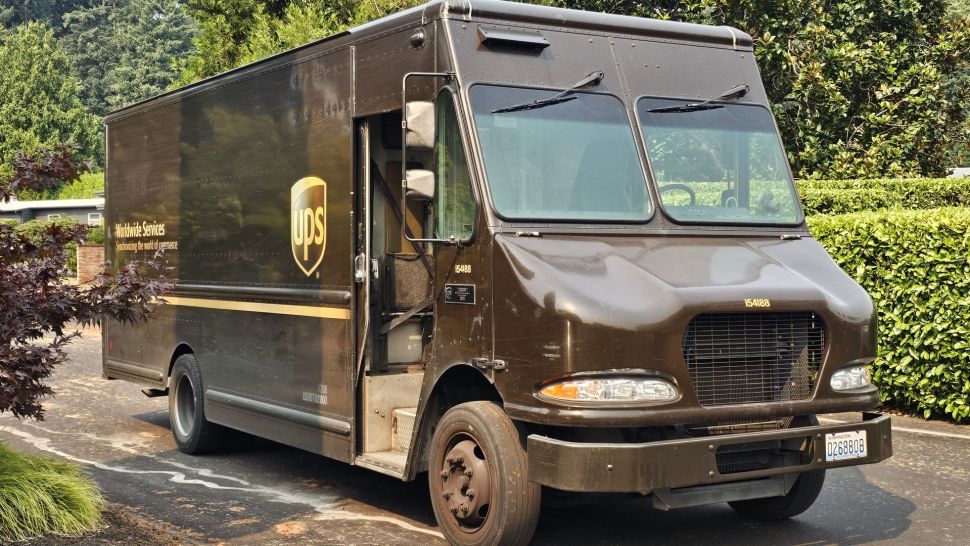
How United Parcel Service negotiates with unionized parcel drivers and loaders when the current contract reaches its end in two years will trigger a tsunami that either wipes UPS from the last-mile delivery market or severely damages its competitors, creating a more competitive landscape that benefits online retailers and consumers, an influential industry analyst predicted last week.
UPS (NYSE: UPS) needs to convince the Teamsters union that the current Cadillac-wage structure enshrined in the 2023 contract is unsustainable and the vast majority of parcel delivery jobs will disappear as customers flee to cheaper alternatives, said Satish Jindel, the president of ShipMatrix Inc., at a supply chain conference organized by Ohio-based Jarrett Logistics.
As the only unionized private parcel carrier, UPS has a greater challenge than FedEx (NYSE: FDX) in stemming the loss of B2C delivery business to large retailers like Amazon (NASDAQ: AMZN) and Walmart (NASDAQ: WMT), and startup couriers. Teamsters drivers cost about $65 per hour — total compensation when all healthcare and other benefits are included with the $49 hourly rate for senior drivers — compared to FedEx drivers who earn about $35 to $39 per hour on average. UPS’s direct hourly wage is roughly 20% to 28% higher at the experienced-driver level, according to a contract comparison by LJM, a parcel spend management firm.
Regional carriers that heavily rely on contract fleets or gig workers spend about $15 per hour, or less, on last-mile delivery drivers, experts say.
UPS will trigger a massive market reaction in August 2028, whichever way it deals the Teamsters, said Jindel, an outspoken industry observer and former executive at FedEx Ground’s predecessor whose company now tracks shipping data and helps businesses optimize carrier partnerships.
Labor clash looms as inflection point
UPS could end up dominating the market if it takes a hard stand against the powerfulTeamsters, which represents about 330,000 company employees. Conversely, giving in to worker demands and not lowering its cost to serve, would cause the logistics giant’s parcel business to wither away, said Jindel, according to notes of his presentation provided by an attendee at the Cleveland event.
The carrier “will have to offer much lower pay and require them to allow use of the Roadie platform for residential deliveries, or let them strike,” he said. In a November commentary, Jindel urged UPS to adopt a hybrid delivery model in which Roadie handles last-mile delivery of e-commerce shipments from thousands of UPS Stores while Teamster drivers, operating large package vans, provide middle-mile transport from regional sortation hubs to the UPS Store.
UPS acquired Roadie, which uses crowd-sourced drivers who supply their own vehicles, to handle urgent same-day, grocery and oversize shipments from local retailers that don’t move through the traditional automated sorting network. The Teamsters for months have publicly called out UPS for improperly steering shipments to non-union Roadie in violation of its contract. The union alleges Roadie uses UPS labels, tracking and equipment, but provided no concrete evidence Roadie is taking work from Teamster drivers.
“If they strike, UPS should be prepared to replace the drivers with non-union workers hired from FedEx independent contractor base and Amazon delivery service providers, which in turn will drastically reduce the workforce for its two main competitors,” Jindel argued. And it should lean more heavily on the Roadie network and its gig workers to minimize the strike’s impact, he added. “The result will be that UPS can dominate the parcel market like it did in the 1990s.”
In a follow-up phone interview, Jindel said “FedEx and Amazon won’t be able to handle the volume during the disruption and UPS will own the parcel market. But if they extend the contract they will not be able to compete with the others at half the hourly rate, or less, with the gig workers.”
Teamsters boss Sean O’Brien is not the compromising type. He has repeatedly boasted about how he secured an historic contract for members, forcing UPS in 2023 to put $30 billion on the table over the previous contract. And he has taken a hyper-aggressive stance in holding the company accountable to contract terms, such as providing air conditioning for thousands of delivery vans and limiting job losses through voluntary buyouts, saying management is greedy and can’t be trusted by workers.
By 2028, FedEx will be poised to take market share from UPS because it will have completed its Network 2.0 consolidation of delivery stations, which is removing excess capacity and will give it a lower cost structure. FedEx will also need to change how it works with independent service providers to prevent drivers from defecting to UPS and develop, or acquire, an on-demand, gig-worker delivery subsidiary to compete with Roadie and other startup parcel carriers, Jindel said.
Jindel questioned new Postmaster General David Steiner’s decision switching back to provide last-mile delivery for e-commerce retailers and parcel consolidators who bulk drop shipments near their final destination, saying the practice cannibalizes the U.S. Postal Service’s own end-to-end Ground Advantage volume. Predecessor Louis DeJoy worked to maximize the value of the Postal Service’s middle-mile network, pushing e-commerce and logistics companies to sort packages at the regional level and deliver them to upstream distribution centers, where higher rates are charged. Steiner recently inked major deals with Amazon and DHL eCommerce to accept their packages deep in its system and deliver them to individual addresses.
Meanwhile, the Postal Service’s high-cost, unionized workforce will make it increasingly difficult to provide Parcel Select service at a competitive price, Jindel told the Jarrett audience. Parcel Select is a cost-effective, bulk-shipping ground service for high-volume commercial shippers who drop presorted packages directly at destination processing centers to bypass early postal handling, securing the lowest possible rates for last-mile delivery.
By late 2028, a union-free UPS delivering parcels with Roadie gig workers would be able to reduce its use of Parcel Select. However, Jindel said, the Postal Service can avoid the domino effect if it focuses on parcels that fit in mailboxes and move to delivering on alternate routes every other day of a six-day workweek.
Amazon, like FedEx, would lose outsourced drivers to a non-unionized UPS by late 2028, according to Jindel’s scenario. “Unless it finds ways to retain those drivers, it would have to go back to using UPS for even more volume than before the recent glide down,” he said.
UPS spent the past 18 months eliminating 50% of Amazon’s volume from its network because moving low-price parcels through its network was uneconomical. Instead, the company is focusing more on high-margin B2B verticals and premium B2C shipments with higher yields.
Jindel said Walmart, which is insourcing final-mile delivery using a gig-worker model to fulfill orders from its 4,000-plus stores, will be in the best position to withstand the UPS-triggered tidal wave as it becomes less reliant on FedEx and UPS.
DHL eCommerce, the analyst predicted, will have to switch to an app-based, Uber-style model if it wants to continue achieving its 20% per year growth rate through 2030.
Nonaffiliated regional and startup delivery companies like On-Trac, Gofo, UniUni, SpeedX, Jitsu and Veho will be impacted by UPS’s labor decision, to some degree, because it will be more difficult to attract independent delivery agents when UPS is offering more pay. Some could end up being acquired by Walmart, Target and other retailers interested in having their own networks, said Jindel.
Click here for more FreightWaves/American Shipper stories by Eric Kulisch.
Write to Eric Kulisch at ekulisch@freightwaves.com.
RELATED STORIES:
DHL outsources last-mile parcel delivery to US Postal Service for $10B
UPS meets deadline for retrofitting delivery vans with air conditioning
UPS to cap driver buyouts at 7,500 after Teamster pushback
Cyberattack on Ceva Logistics warehouses in Europe impacts retailers
Brokerage Compliance Symposium
The day before F3. Every compliance issue you face - fraud exposure, carrier liability, FMCSA rules, cargo theft, insurance gaps - navigated by attorneys and operators defining best practices in a changing industry.
F3 Awards Dinner
The night before F3. FreightTech100 companies honored. FreightTech 25 and Shipper of Choice winners revealed live. Cocktail reception into dinner and live music - 300 industry leaders in one purpose-built room.
F3: Future of Freight Festival
Industry-defining keynotes, rapid-fire technology demos, and industry leaders networking in experiences across Chattanooga - plus the inaugural F3 Awards Dinner featuring the FreightTech and Shipper of Choice reveals.
The day before F3. Every compliance issue you face - fraud exposure, carrier liability, FMCSA rules, cargo theft, insurance gaps - navigated by attorneys and operators defining best practices in a changing industry.
The Signal at Chattanooga Choo Choo • Chattanooga, TN Register NowThe night before F3. FreightTech100 companies honored. FreightTech 25 and Shipper of Choice winners revealed live. Cocktail reception into dinner and live music - 300 industry leaders in one purpose-built room.
The Signal at Chattanooga Choo Choo • Chattanooga, TN Register NowIndustry-defining keynotes, rapid-fire technology demos, and industry leaders networking in experiences across Chattanooga - plus the inaugural F3 Awards Dinner featuring the FreightTech and Shipper of Choice reveals.
The Signal at Chattanooga Choo Choo • Chattanooga, TN Register Now