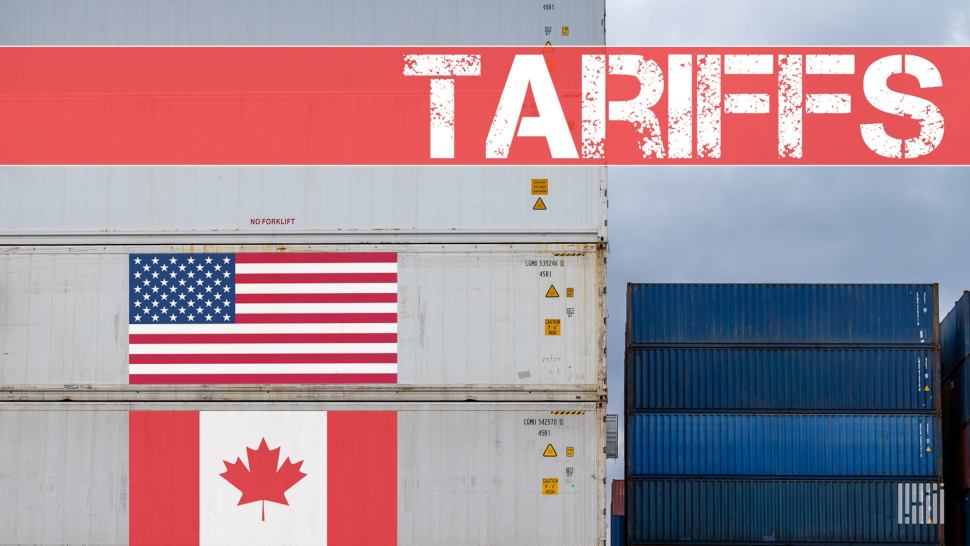
Headlines blare about sweeping bans on Canadian imports, but the reality of President Donald Trump’s newest trade war with Canada is something just as newsworthy for logistics specialists, says a trade analyst.
Starting Sept. 29, 2026, targeted tariff lines will move from a 50% additional duty to an import prohibition under Section 338 of the Tariff Act of 1930, while other Canadian goods remain on the 50% list or are removed entirely.
The White House’s three proclamations aim to pressure consumer-facing, packaged goods rather than broad industrial categories.
“The headline says the U.S. just banned Canadian dairy, alcohol, and motor vehicles. I read the annexes. That’s not quite what happened,” wrote James Ferry, a longtime trade compliance specialist and board member of World Trade Center Denver, on LinkedIn.
The motor vehicle ban takes up all of one line in the tariff, covering motorcycles and mopeds with engines over 800cc. Passenger cars, light trucks and most auto parts are not banned.
The dairy ban is 14 lines, and most of it isn’t dairy, Ferry said. Eight whey lines, five molasses lines, and non-alcoholic beer.
“See the pattern? The bans concentrate on consumer-facing, packaged goods. Industrial inputs mostly stay on the 50% duty list instead.
“This is shelf-space policy wearing trade-remedy clothing.”
The alcohol annex covers specific finished beverages such as malt beer, wine, cider, whisky, vodka and other spirits.
Importers are navigating a staggered timeline that changes both cost and compliance risk, said customs broker A.N. Deringer:
- Sept. 15 — 50% duty list changes. Rock salt and cement come off the additional-duty list; all‑terrain vehicles and additional dairy-related lines go on. There is no phase‑in, creating an immediate P&L impact for affected importers.
- Sept. 18 — Customs and Border Protection tightens importer-of-record (IOR) data enforcement. Per an Aug. 19 CBP notice, Customs will begin voiding IOR numbers where Form 5106 data is inaccurate or incomplete. A voided IOR number cannot be used to enter goods.
- Sept. 29 — Import prohibitions take effect. Designated Canadian goods that had been subject to the 50% additional duty will instead be excluded from entry.
Two operational points stand out in the text of the proclamations and accompanying guidance.
USMCA origin is not an exemption, said C.H. Robinson, in a statement. The White House states explicitly that Section 338 duties— and now prohibitions — apply regardless of USMCA eligibility and stack on top of any Section 232 duties that may already apply.
Ferry said a bonded warehouse can serve as real mitigation.
Goods imported but not yet entered for consumption before Sept. 29 remain subject to the 50% additional duty rather than the ban. That can convert a prohibition into a payable duty, Ferry said, but that window closes sharply once the entry-for-consumption deadline passes.
Litigation is unlikely to restore access
Each proclamation includes a severability clause. If a court were to strike the ban portion, the 50% additional duty would snap back onto the same goods, said Ferry. The best realistic outcome for challengers is a downgrade from “banned” to “expensive,” not a return to pre‑Section 338 treatment, said legal analyst Edmarverson A. Santos, writing in Diplomacy & Law.
He said trade counsel and customs brokers are urging clients to treat this as a line‑by‑line compliance exercise, not a headline-driven policy shift.
Read more articles by Stuart Chirls here.
Read more:
World container volumes post record 17.3 million TEUs in July
Drinking water or warships? Panama Canal reverses ship restrictions
Sustainability goals: New analysis shows 31% emissions gap between ocean carriers on same trade lane
Brokerage Compliance Symposium
The day before F3. Every compliance issue you face - fraud exposure, carrier liability, FMCSA rules, cargo theft, insurance gaps - navigated by attorneys and operators defining best practices in a changing industry.
F3 Awards Dinner
The night before F3. FreightTech100 companies honored. FreightTech 25 and Shipper of Choice winners revealed live. Cocktail reception into dinner and live music - 300 industry leaders in one purpose-built room.
F3: Future of Freight Festival
Industry-defining keynotes, rapid-fire technology demos, and industry leaders networking in experiences across Chattanooga - plus the inaugural F3 Awards Dinner featuring the FreightTech and Shipper of Choice reveals.
The day before F3. Every compliance issue you face - fraud exposure, carrier liability, FMCSA rules, cargo theft, insurance gaps - navigated by attorneys and operators defining best practices in a changing industry.
The Signal at Chattanooga Choo Choo • Chattanooga, TN Register NowThe night before F3. FreightTech100 companies honored. FreightTech 25 and Shipper of Choice winners revealed live. Cocktail reception into dinner and live music - 300 industry leaders in one purpose-built room.
The Signal at Chattanooga Choo Choo • Chattanooga, TN Register NowIndustry-defining keynotes, rapid-fire technology demos, and industry leaders networking in experiences across Chattanooga - plus the inaugural F3 Awards Dinner featuring the FreightTech and Shipper of Choice reveals.
The Signal at Chattanooga Choo Choo • Chattanooga, TN Register Now