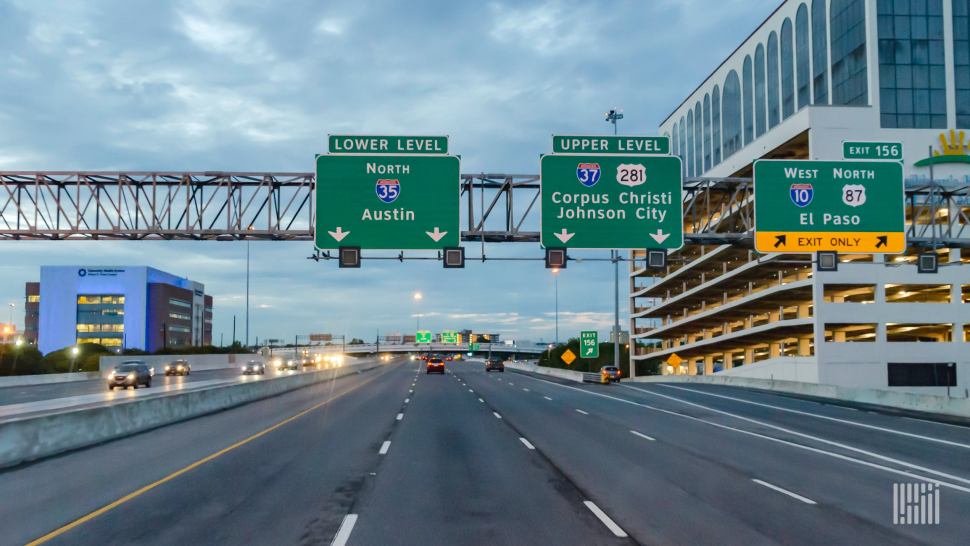
Every experienced driver has a story about it, or knows someone who does. A truck follows a navigation app built for cars, and the app cheerfully routes it toward a bridge it cannot clear, a road it is too heavy for, or a turn it physically cannot make. The low-bridge strike is one of the oldest and most avoidable disasters in trucking, and it happens in large part because the mapping tools most people use were never built for a truck.
Google is now stepping directly into that gap. In a blog post published August 17, 2026 by Google Maps Platform product manager Mohit Moondra, the company announced the general availability of Large Vehicle Routing, described as a version of its routing technology built specifically for the needs of large commercial vehicles like trucks and buses. Here is what the company says it does, and an honest look at what it means for a working driver.
What Google Announced
According to the announcement, Large Vehicle Routing, which Google abbreviates as LVR, is now generally available in the United States across three of Google’s developer products: the Routes API, the Route Optimization API, and the Navigation SDK. Those are the tools that software companies use to build mapping and navigation into their own apps, which is an important detail we will come back to.
The company frames the problem plainly. In its words, traditional routing algorithms are optimized for the routes and speeds of standard cars and typically do not account for the factors that affect large fleets, which leaves fleet managers and drivers relying on manual checks and local knowledge. Google describes that older approach as inefficient and, at times, unsafe. LVR is its answer, an approach that builds real-world vehicle and road constraints directly into the routing itself.
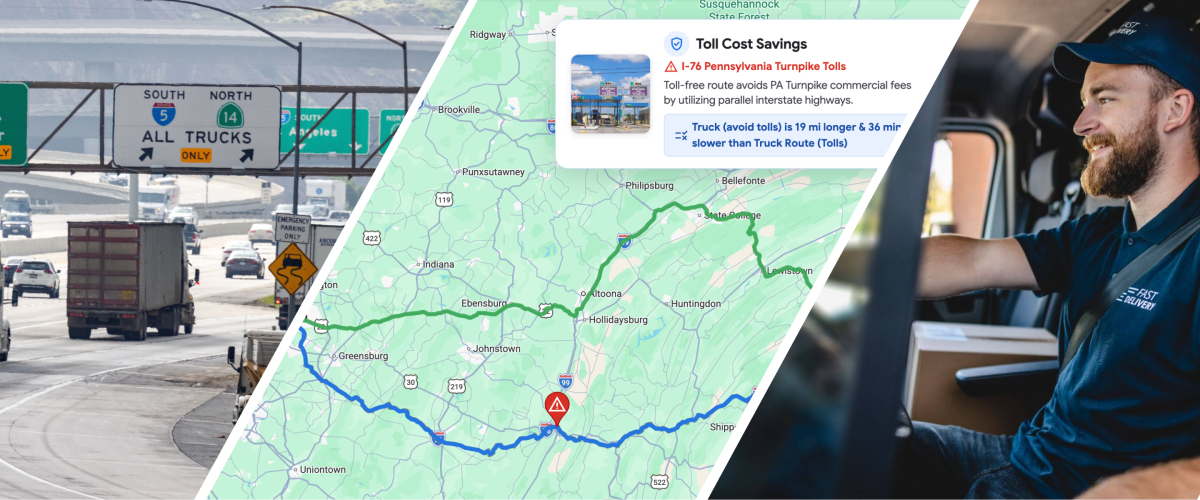
Per the announcement, the system lets an operator specify detailed vehicle profiles, including height, weight, length, width, axle count, and hazardous goods classifications, and then generates routes, travel times, and distances calculated specifically for those attributes rather than for a generic car. Google says it also introduced a large-vehicle-specific estimated-time-of-arrival model that combines observed truck travel speeds with real-time and predictive traffic data, on the logic that a loaded truck does not move through a route the way a passenger car does.
On the in-cab side, the announcement says the Navigation SDK displays these truck-aware routes in an interface that looks like the familiar Google Maps, with added visual callouts that flag restrictions along the way, such as height or weight limits matched to the vehicle’s dimensions. Google also points to a feature it calls a route token, which is meant to ensure the route a fleet plans in the office is the same route the driver actually sees and follows in the truck.
Why This Actually Matters
Set aside the developer terminology, and the significance is straightforward. The largest and most trusted name in consumer mapping is now offering genuine truck-aware routing, and that is a meaningful shift.
Truck-specific routing is not new in itself. Dedicated trucking navigation products have existed for years, and many carriers and owner-operators already pay for them precisely because ordinary Google Maps or a phone’s default navigation does not know or care that the vehicle is 13 feet 6 inches tall and carrying 44,000 pounds. What is new is Google bringing its enormous road dataset, traffic modeling, and the interface millions of drivers already know to the specific problem of routing a large vehicle. When the company with arguably the best road data in the world builds for trucks, the quality bar for the whole category tends to move.
The low-clearance problem alone justifies the attention. Bridge strikes cause injuries, deaths, expensive infrastructure damage, and enormous liability, and a meaningful share of them trace back to a driver following directions from a tool that did not account for height. A routing system that actively knows a truck’s dimensions and warns about the bridge before the truck reaches it is addressing one of the most preventable hazards in the industry. The same logic extends to weight-restricted roads and bridges, hazmat-restricted routes, and tight turns and tunnels that a car map treats as perfectly fine.
The Part Owner-Operators Need to Understand
Here is the honest and important caveat, and it is easy to miss in the excitement of a Google announcement. This is not, as announced, a free app you download to your phone and start using tomorrow.
Large Vehicle Routing was launched as a set of developer tools, APIs and an SDK, that other companies build into their own software. In plain terms, Google is providing the engine, not the finished car. The people who will use LVR directly are the software developers at fleet management companies, TMS providers, telematics firms, and trucking app makers, who can now integrate Google’s truck-aware routing into the products they sell to carriers. For a large fleet with its own software or a vendor relationship, that is genuinely valuable, and it may show up as a better routing feature inside tools those operators already use.
For an individual owner-operator, the practical benefit is more indirect, at least for now. You will most likely encounter LVR not by downloading something called Large Vehicle Routing, but through the navigation or dispatch product you already use, if and when that product’s maker chooses to build Google’s new capability into it. It is a behind-the-scenes upgrade to the ecosystem more than a consumer product launch. That is not a knock on it, it is just what was actually announced, and it is worth being clear-eyed about rather than assuming a new free truck GPS just landed.
It is also worth remembering what any routing tool can and cannot do. Even the best truck-aware routing depends on the quality and currency of its restriction data, and no system replaces a driver’s own eyes, a proper trip plan, and awareness of a specific low bridge or seasonal restriction that data might not capture. Truck-aware routing is a powerful safety and efficiency aid. It is not a substitute for the professional judgment that keeps a truck out from under a bridge. The strongest operators will treat it as one more layer of protection on top of their own diligence, not a replacement for it.
The Bigger Picture
Google’s entry into truck routing fits a pattern this platform has tracked repeatedly: the steady flow of serious technology investment into freight, and the growing recognition that trucking is a large, valuable, underserved market for better tools. When a company of Google’s scale builds a product specifically for the physical realities of moving a large vehicle down a road, it is a signal that truck routing has become a category worth competing in, which over time tends to benefit the drivers on the receiving end through better products and more competition.
According to the announcement, Google is positioning LVR for everything from fleets of delivery trucks to complex heavy hauls to hazardous materials transport, and it has published documentation for developers who want to build with it. For carriers and owner-operators, the near-term takeaway is simple: the routing tools available to the industry are getting smarter about the actual vehicle you drive, and it is worth asking whichever navigation or fleet software you rely on whether and when they plan to take advantage of capabilities like this one. The technology that keeps a truck off the wrong road is improving, and that is good news for the people whose job depends on staying on the right one.
This article is based on an announcement published by Google Maps Platform and is provided for informational purposes. It is not an endorsement of Google’s products or a recommendation of any particular navigation or routing tool. Carriers should evaluate any routing or navigation product against their own operational needs.
Brokerage Compliance Symposium
The day before F3. Every compliance issue you face - fraud exposure, carrier liability, FMCSA rules, cargo theft, insurance gaps - navigated by attorneys and operators defining best practices in a changing industry.
F3 Awards Dinner
The night before F3. FreightTech100 companies honored. FreightTech 25 and Shipper of Choice winners revealed live. Cocktail reception into dinner and live music - 300 industry leaders in one purpose-built room.
F3: Future of Freight Festival
Industry-defining keynotes, rapid-fire technology demos, and industry leaders networking in experiences across Chattanooga - plus the inaugural F3 Awards Dinner featuring the FreightTech and Shipper of Choice reveals.
The day before F3. Every compliance issue you face - fraud exposure, carrier liability, FMCSA rules, cargo theft, insurance gaps - navigated by attorneys and operators defining best practices in a changing industry.
The Signal at Chattanooga Choo Choo • Chattanooga, TN Register NowThe night before F3. FreightTech100 companies honored. FreightTech 25 and Shipper of Choice winners revealed live. Cocktail reception into dinner and live music - 300 industry leaders in one purpose-built room.
The Signal at Chattanooga Choo Choo • Chattanooga, TN Register NowIndustry-defining keynotes, rapid-fire technology demos, and industry leaders networking in experiences across Chattanooga - plus the inaugural F3 Awards Dinner featuring the FreightTech and Shipper of Choice reveals.
The Signal at Chattanooga Choo Choo • Chattanooga, TN Register Now