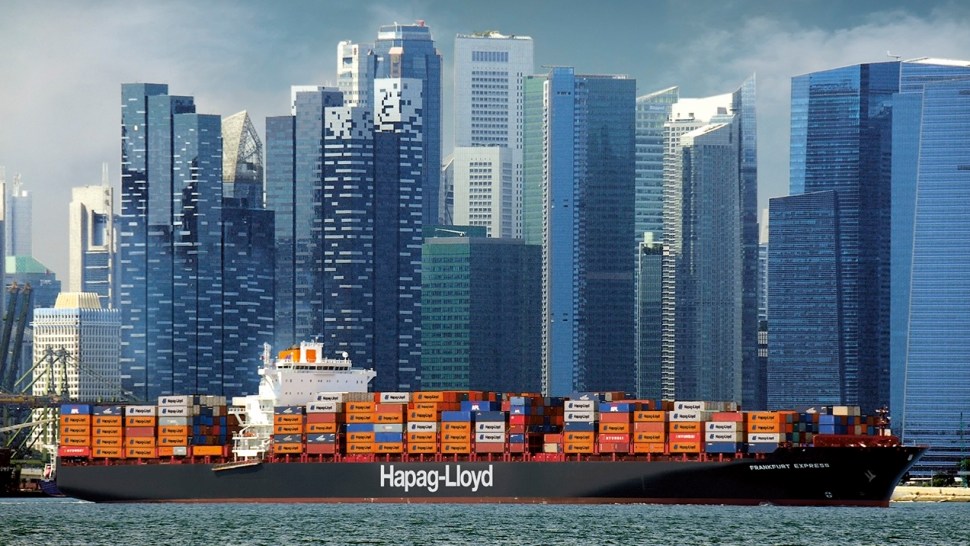
Hapag-Lloyd Chief Executive Rolf Habben Jansen said container shipping demand has remained more resilient than expected, but warned that conflict-driven route disruptions, rising operating costs and uncertainty over a return to the Red Sea continue to shape the industry’s outlook.
Speaking in recent public appearances and customer communications, Habben Jansen characterized the operating environment as increasingly unpredictable, with the situation in the Middle East remaining “very strained and fluid.” Hapag-Lloyd has suspended transits through the Strait of Hormuz, prioritizing the safety of crews and employees as regional security risks affect vessel deployments.
The disruption has supported volatile freight rates and added significant costs to carrier networks. Hapag-Lloyd said bunker fuel, insurance, container handling and inland transportation expenses have increased, while disruption-related costs were running at about $50 million to $60 million per week during the period covered by its June customer call.
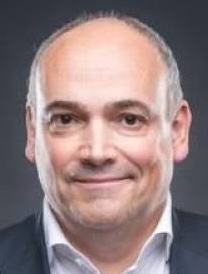
Despite those pressures, Habben Jansen has struck a relatively constructive tone on demand. In an August CNBC interview, he said the container-shipping sector’s resilience had been “surprisingly strong,” even as carriers contended with Middle East turmoil and operational challenges including low water levels on the Rhine.
He has also argued that higher tariffs may redirect cargo flows but are unlikely to bring them to a halt. Tariffs in the 15% to 20% range are “not great” and hurt global commerce, Habben Jansen said in comments reported earlier this month, but “that doesn’t stop global trade.” He said market demand had performed better than expected after volatile conditions earlier in the year, while the pace of freight-rate declines had moderated.
At the same time, a large-scale return of container ships from the Cape of Good Hope route to the Red Sea and Suez Canal would reduce voyage distances and release effective vessel capacity back into the market.
Gemini partners Hapag-Lloyd and Maersk (OTC: AMKBY) announced four more services have been switched to a Suez Canal routing from longer, diverted voyages around Africa. These cover a pair of Asia-Mediterranean services, as well as single Asia-North Europe and Indian subcontinent-Europe rotations. Gemini has now normalized three out of four Asia-Med services and one out of four Asia-N. Europe services, according to analyst Lars Jensen.
The change comes as carriers look to shore up weakening rates on Europe services as port congestion roils major hubs, and Houthi rebels in Yemen step up attacks on Saudi targets along the Red Sea.
Habben Jansen’s comments suggest Hapag-Lloyd expects cargo demand to remain broadly supportive, even as tariffs and shifting sourcing patterns alter trade lanes. The more immediate risk, however, remains whether regional security conditions allow shipping lines to restore Red Sea services safely, and how quickly ports and carrier networks can absorb the resulting change in vessel schedules and capacity.
Hapag-Lloyd is revising its proposed $4.2 billion acquisition of Zim top focus on restructuring the transaction to meet Israeli security concerns while preserving confidence that the deal can still close by year-end.
In the company’s Sept. 7 announcement, Habben Jansen said Hapag-Lloyd and its partners had listened to concerns raised by Israeli government agencies and were preparing an improved proposal.
“We have listened carefully to the needs raised during our discussions with the Israeli government and the relevant authorities. Together with our partners, we are now developing an improved proposal designed to further strengthen Israel’s maritime security and independence.”
In comments reported Sept. 15, Habben Jansen said Hapag-Lloyd sees annual synergies of $300 million to $500 million from combining with Zim. The combined operation would have more than 400 vessels, over 3 million TEUs of capacity and annual volumes exceeding 18 million TEUs. However, the deal would fail to boost Hapag-Lloyd past China’s Cosco (1919.HK) as the world’s fourth-largest container line.
Read more articles by Stuart Chirls here.
Read more:
U.S. container imports climb 3.8% to 2.6 million TEUs, 3rd highest monthly level
Houthi gains deepen risk as carriers restore Red Sea services
Almost 1 million TEUs in new record for this U.S. container gateway
SC Ports, Norfolk Southern expand intermodal access to Huntsville
BNSF, CPKC, and CSX to request broad access to a combined UP-NS network
Brokerage Compliance Symposium
The day before F3. Every compliance issue you face - fraud exposure, carrier liability, FMCSA rules, cargo theft, insurance gaps - navigated by attorneys and operators defining best practices in a changing industry.
F3 Awards Dinner
The night before F3. FreightTech100 companies honored. FreightTech 25 and Shipper of Choice winners revealed live. Cocktail reception into dinner and live music - 300 industry leaders in one purpose-built room.
F3: Future of Freight Festival
Industry-defining keynotes, rapid-fire technology demos, and industry leaders networking in experiences across Chattanooga - plus the inaugural F3 Awards Dinner featuring the FreightTech and Shipper of Choice reveals.
The day before F3. Every compliance issue you face - fraud exposure, carrier liability, FMCSA rules, cargo theft, insurance gaps - navigated by attorneys and operators defining best practices in a changing industry.
The Signal at Chattanooga Choo Choo • Chattanooga, TN Register NowThe night before F3. FreightTech100 companies honored. FreightTech 25 and Shipper of Choice winners revealed live. Cocktail reception into dinner and live music - 300 industry leaders in one purpose-built room.
The Signal at Chattanooga Choo Choo • Chattanooga, TN Register NowIndustry-defining keynotes, rapid-fire technology demos, and industry leaders networking in experiences across Chattanooga - plus the inaugural F3 Awards Dinner featuring the FreightTech and Shipper of Choice reveals.
The Signal at Chattanooga Choo Choo • Chattanooga, TN Register Now