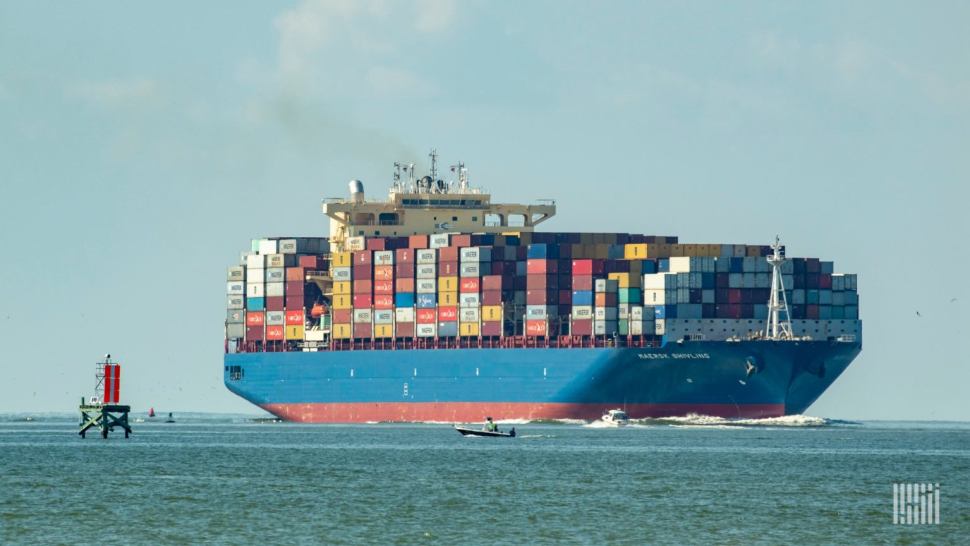
Port Houston recorded an 11% year-over-year increase in container volumes in September, fueled by stronger imports and improving export activity through its Bayport and Barbours Cut container terminals.
The port handled 376,419 twenty-foot equivalent units (TEUs) during the month, compared with 337,659 TEUs during the same month in 2025, according to figures presented during the Oct. 21 Port Commission meeting.
Through the first nine months of 2026, Port Houston handled 3.35 million TEUs, up 2% from 3.27 million TEUs during the same period last year.
Loaded container imports rose 16% year over year in September to 174,189 TEUs, while loaded exports increased 2% to 132,009 TEUs.
Port Houston CEO Charlie Jenkins said September’s performance represented a significant improvement after a challenging start to 2026.
“We had a pretty rough start to the year,” Jenkins told commissioners, adding that recent cargo activity had improved the port’s outlook heading into the final quarter.
Ryan Mariacher, the port’s chief operations officer, said container activity at Bayport and Barbours Cut continued to benefit from stronger import demand, while export volumes began accelerating toward the end of September.
“The growth at Bayport and Barber’s Cut for the month was largely driven by imports,” Mariacher said during the meeting.
He added that the second half of September and first half of October brought a long-anticipated surge in export volumes.
Port officials said ocean carriers and shippers expect the stronger export activity to continue in the near term, potentially supporting additional freight movements through Houston’s container terminals.
Houston container imports outperform national trends
John Mosley, Port Houston’s chief commercial officer, said import demand remained unusually strong during the third quarter, traditionally the peak shipping season as retailers prepare for year-end sales.
“This year has been unusually high with Port Houston outpacing the rest of the country,” Mosley told commissioners.
He cited National Retail Federation Port Tracker data showing Houston among the strongest-performing major U.S. container gateways for import growth.
Loaded imports through Port Houston increased 6% year to date through September, compared with a much weaker national import market, according to Mosley.
The port’s September figures showed loaded imports increasing to 1.56 million TEUs through the first nine months, compared with 1.47 million TEUs during the same period in 2025.
Mosley said the port was cautiously optimistic that exports would continue strengthening during the fourth quarter.
Port officials have been meeting with major international ocean carriers to discuss additional shipping capacity, improved terminal throughput and opportunities to expand services.
Eric Casey, Port Houston’s chief operating officer, said the port launched a new container and refrigerated cargo service in September and was negotiating additional services.
“Commercially, we started a new container and reefer service in September, and more services are being negotiated today, so we are growing,” Casey said.
The port’s September 2026 comparative statistics also showed a 31% increase in empty container exports, to 55,963 TEUs, compared with 42,782 TEUs a year earlier.
The increase in empty equipment movements underscores the importance of container repositioning as ocean carriers balance import and export demand.
Vessel traffic increases as cargo volumes rebound
Port Houston recorded 750 vessel movements at its public terminals during September, up 10% from 681 a year earlier.
Through September, vessel movements totaled 6,562, an 8% increase from 6,096 during the same period last year.
Barge activity also increased, with 181 movements in September, up 23% year over year.
The higher vessel activity coincided with stronger cargo throughput at the port’s public terminals, where total revenue tonnage increased 15% year over year to 4.88 million tons.
Year-to-date cargo tonnage reached 42.37 million tons, up 2% from the same period in 2025.
Port officials also highlighted the completion of Port Houston-led portions of Project 11, the Houston Ship Channel expansion project designed to accommodate larger vessels and improve navigation.
The project widened a section of the Houston Ship Channel through Galveston Bay from 530 feet to 700 feet, allowing larger ships to move more efficiently and reducing daylight navigation restrictions.
Jenkins said Port Houston was also advancing planning for Project 12, the next major expansion of the Houston Ship Channel, while considering ways to accelerate individual improvements to maintain the competitiveness of its container terminals.
He noted that Port Houston previously accelerated channel improvements serving Bayport and Barbours Cut rather than waiting for the broader federal project schedule.
Steel imports surge 181% in September
Beyond containers, Port Houston reported a sharp increase in steel shipments, reflecting stronger activity tied to construction, manufacturing and energy infrastructure projects.
Steel imports totaled 539,993 tons in September, up 181% from 192,351 tons a year earlier.
Combined steel imports and exports exceeded 581,000 tons, the port’s strongest monthly steel performance since May 2022, according to operations officials.
Port Houston also reported its first consecutive months exceeding 500,000 tons of steel in more than a decade.
General cargo volumes have also increased, with officials pointing to rail-bound project cargo, including large electrical equipment and infrastructure components, as an important contributor to growth.
September cargo statistics at a glance
| Metric | September 2026 | Year-over-year |
| Total container volume | 376,419 TEUs | +11% |
| Loaded import containers | 174,189 TEUs | +16% |
| Loaded export containers | 132,009 TEUs | +2% |
| Empty export containers | 55,963 TEUs | +31% |
| Total revenue tonnage | 4.88 million tons | +15% |
| Steel imports | 539,993 tons | +181% |
| Public-terminal vessel movements | 750 | +10% |
| Barge movements | 181 | +23% |
Why it matters: Stronger container volumes at Port Houston signal continued demand for Gulf Coast freight transportation and could support additional trucking, warehousing and intermodal activity.
F3: Future of Freight Festival
Industry-defining keynotes, rapid-fire technology demos, and industry leaders networking in experiences across Chattanooga - plus the inaugural F3 Awards Dinner featuring the FreightTech and Shipper of Choice reveals.
Industry-defining keynotes, rapid-fire technology demos, and industry leaders networking in experiences across Chattanooga - plus the inaugural F3 Awards Dinner featuring the FreightTech and Shipper of Choice reveals.
The Signal at Chattanooga Choo Choo • Chattanooga, TN Register Now