For years, freight technology had been a solution looking for the industry to feel enough pain to adopt it. In 2021, the pain arrived.
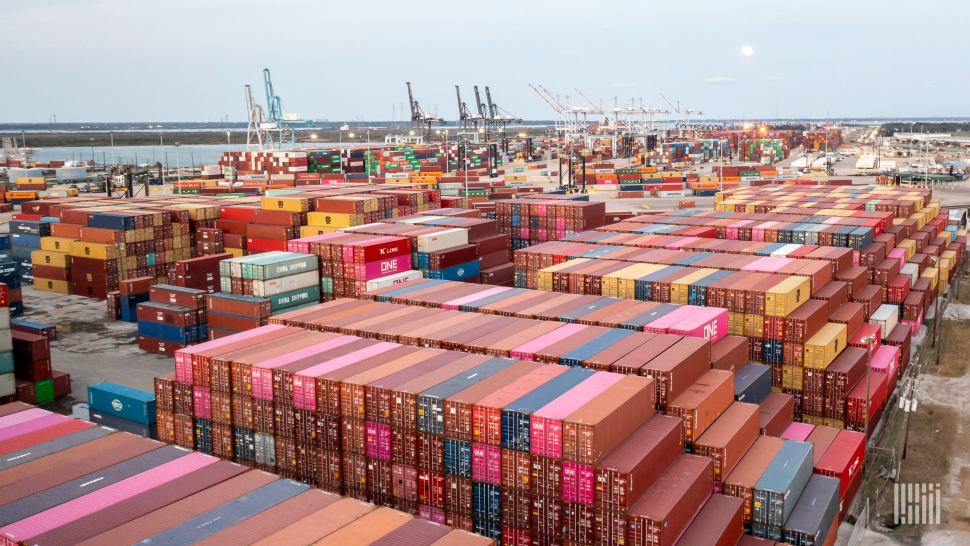
The pandemic-era supply chain crisis did in eighteen months what a decade of sales pitches could not. It took every abstract argument for digital freight tools, real-time visibility, capacity matching, automation, and turned each one into an operational emergency that shippers, brokers, and carriers had to solve immediately. Container ships stacked up outside ports. Capacity vanished and then whipsawed. Rates detached from anything resembling normal. And the companies that had spent the founding years building the plumbing suddenly found the entire industry pounding on their door.
This is the chapter where freight tech stopped being a promising category and became essential infrastructure.
The inflection point
What changed in 2021 was not the technology. Much of it already existed, refined during the quieter founding years. What changed was demand, and demand changed all at once.
A shipper who had spent years treating real-time visibility as a nice-to-have now could not run the business without it, because “where is my freight” had become the difference between a stocked shelf and an empty one. A broker who had matched capacity by phone now needed to do it at a speed and volume that only software could deliver, because the market moved too fast for the old rhythm. Automation stopped being a cost-cutting luxury and became a survival tool, because there were not enough hands to process the volume manually and there was no time to hire them.
The crisis compressed the industry’s technology adoption curve violently. Tools that might have taken five years to reach mainstream acceptance reached it in one, because the alternative was failing to move freight in a market where moving freight was the only thing that mattered.
The sub-categories that exploded
Three areas in particular went from interesting to indispensable in this window, and the award’s nominee pool reflected the surge.
Digital freight matching, the software-driven pairing of loads and capacity, hit its moment. When capacity is scarce and rates are volatile, the ability to find the right truck fast is worth real money, and the platforms that could do it at scale saw adoption that would have been unthinkable in 2019.
Visibility platforms became the category’s marquee story. The capability that had been nascent in the founding years, actually knowing where freight was in real time, became table stakes. Shippers demanded it, and the companies that delivered it reliably at scale became some of the most valuable names in the space. Real-time visibility went, in the span of this window, from a differentiator to an expectation.
Automation tooling spread across every function. Document processing, appointment scheduling, track-and-trace, exception management, the unglamorous, high-volume tasks that consumed human hours the industry no longer had to spare, all became targets for software. If a task was repetitive and there were not enough people to do it, someone was building a tool to automate it, and the best of those tools made the list.
How the award changed with the market
The FreightTech 100’s own nominee pool tells the story of the acceleration years as clearly as any market report.
The volume climbed sharply. By the 2023 cycle, FreightWaves was receiving more than 1,500 nominations representing over 400 distinct companies, the largest nomination field the program had seen to that point, and FreightWaves described the process that year as the most competitive it had run. That surge was not an accident of marketing. It was the category itself expanding, more companies, more sub-categories, more capital, more legitimate contenders for a hundred spots that had not gotten any more numerous.
The variety climbed with the volume. The founding-class mix of established giants and a handful of venture-backed challengers gave way to a dense, diverse field spanning every function in the freight lifecycle. The stakes climbed too. A place on the FreightTech 100 in the acceleration years meant standing out in the most crowded and consequential moment the category had ever seen, which is exactly what made it worth standing out.
Through all of it, the structure that gave the award its credibility held. The wide field still got narrowed by a FreightWaves panel to the FreightTech 100, and the FreightTech 25 was still chosen from that hundred by a peer group of executives, investors, and academics through the same points-based vote. As the field grew more crowded and the stakes grew higher, that peer validation mattered more, not less, because distinguishing genuine impact from pandemic-era noise was harder than it had ever been, and the industry needed a signal it could trust.
The moment the category became permanent
There is a version of the pandemic freight tech story that treats the surge as a bubble, a temporary spike in demand that would deflate once the supply chain normalized. That version turned out to be wrong in an important way, and the distinction matters for understanding why the award’s field never shrank back.
Some individual companies did not survive the normalization. Valuations that made sense in the scarcity of 2021 did not hold when capacity returned, and the category went through a painful correction. But the underlying shift, the industry’s move from treating technology as optional to treating it as core, did not reverse. A shipper who learned during the crisis that real-time visibility was possible did not go back to accepting blindness once the crisis passed. A broker who automated document processing under duress did not re-hire the manual workflow when volumes calmed. The pandemic did not create temporary demand for freight tech. It permanently reset the baseline expectation of what a competent freight operation looks like.
That is why the acceleration years were an inflection point rather than a spike. They moved freight technology from the margin to the center of the industry and left it there.
The acceleration years proved what the founding class had only promised: that freight technology was not a side story to the freight industry but increasingly the thing determining which companies in it would thrive. The FreightTech 100 was there to mark it, and the companies that earned a place on those lists earned it in the hardest market the category had ever faced.
Nominations for the 2027 FreightTech 100 close August 31. Nominate your company here.
Brokerage Compliance Symposium
The day before F3. Every compliance issue you face - fraud exposure, carrier liability, FMCSA rules, cargo theft, insurance gaps - navigated by attorneys and operators defining best practices in a changing industry.
F3 Awards Dinner
The night before F3. FreightTech100 companies honored. FreightTech 25 and Shipper of Choice winners revealed live. Cocktail reception into dinner and live music - 300 industry leaders in one purpose-built room.
F3: Future of Freight Festival
Industry-defining keynotes, rapid-fire technology demos, and industry leaders networking in experiences across Chattanooga - plus the inaugural F3 Awards Dinner featuring the FreightTech and Shipper of Choice reveals.
The day before F3. Every compliance issue you face - fraud exposure, carrier liability, FMCSA rules, cargo theft, insurance gaps - navigated by attorneys and operators defining best practices in a changing industry.
The Signal at Chattanooga Choo Choo • Chattanooga, TN Register NowThe night before F3. FreightTech100 companies honored. FreightTech 25 and Shipper of Choice winners revealed live. Cocktail reception into dinner and live music - 300 industry leaders in one purpose-built room.
The Signal at Chattanooga Choo Choo • Chattanooga, TN Register NowIndustry-defining keynotes, rapid-fire technology demos, and industry leaders networking in experiences across Chattanooga - plus the inaugural F3 Awards Dinner featuring the FreightTech and Shipper of Choice reveals.
The Signal at Chattanooga Choo Choo • Chattanooga, TN Register Now