




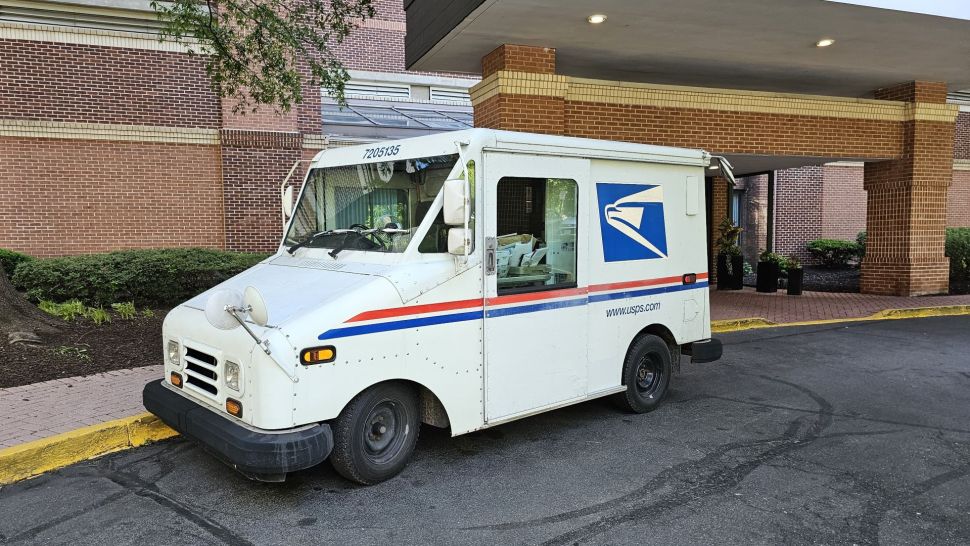
The U.S. Postal Service has inked a multi-year contract valued at more than $10 billion to continue providing last-mile parcel delivery service for DHL eCommerce, which specializes in cross-border and domestic B2C shipping services for e-commerce merchants, the organizations announced Thursday.
Injecting parcels downstream into the postal system near letter carrier routes is more efficient for parcel consolidators like DHL eCommerce (XETRA: DHL) because the Postal Service already has the infrastructure to reach every home and address in the country.
The outsourcing deal bolsters Postmaster General David Steiner’s strategy of pumping up revenue rather than simply cutting costs to stabilize the postal agency’s finances after years of heavy losses. In fiscal year 2025, the U.S. Postal Service had a net loss of $9.5 billion.
Steiner on Tuesday placed a freeze on nonessential spending, such as hiring and travel, to avoid running out of cash earlier than expected after warning Congress that the agency faced a potential cash crisis within 12 months. The website 21st Century Postal Worker posted Steiner’s memo to staff members and Federal News Network was first to report on it.
DHL eCommerce’s deal follows Amazon’s agreement in early April to retain the Postal Service for last-mile delivery, albeit at 20% less annual volume than in the previous contract as Amazon expands its own ability to cost-effectively deliver in rural areas. Amazon paid the USPS $6 billion per year under the previous contract — about 7.5% of the Postal Service’s total revenue.
The Postal Service’s three largest customers for last-mile services, which includes UPS, bring in more than $8 billion in revenue each year, Steiner said during a virtual media briefing.
“We want to continue to grow out that last mile network to make it more efficient, make it faster, make it cheaper for our customers,” he said, adding that the USPS also has middle-mile and first-mile pickup capabilities available for companies that need end-to-end shipping, including returns..
Earlier this year, Steiner initiated an auction to solicit bids from a broader base of retailers and logistics companies interested in the national post delivering their parcels on the final leg to homes and businesses after changing back the rules so shippers have flexibility to drop loads at the post office level instead of upstream distribution centers. The Postmaster General argued that the organization has for too long undercharged for its most valuable asset, the last-mile network.
“We are going to tailor our network to the needs of our customers rather than telling our customers to change their business to meet the needs of our network,” he said Thursday.
Although DHL didn’t have to bid for access to the USPS’s last-mile network, the auction process did inform how the arrangement was structured.
“Through the Last Mile solicitation process, we gained significant insight into market demand and customer needs. That initiative helped validate the value of our network and highlighted opportunities to create more flexible pricing and operational models tied to our evolving last-mile infrastructure. The DHL agreement reflects many of those learnings,” Steiner said in a statement to FreightWaves.
Officials did not disclose the duration of the contract, but said it was the longest and most scalable contract the Postal Service has ever had with DHL over 25 years. The $10 billion value is also seen as a baseline, which they expect will grow much higher over the contract’s term.
DHL’s postal consolidation model
The e-commerce logistics division of Germany-based DHL Group said extending the Postal Service partnership will help it handle growing volumes as shoppers increasingly order merchandise online or on mobile devices and enable it to expand in the U.S. market. It also increases the company’s ability to move heavier packages. DHL eCommerce specializes in packages that weigh one to eight pounds because that is where it can be most cost effective.
DHL eCommerce handles nationwide pickup, sortation across 19 fully automated hubs, and linehaul through its air and ground network before handing pre-sorted containers to the USPS to complete the final mile for all deliveries. With its universal service mandate, the Postal Service reaches more than 41,550 zip codes and more than 170 million locations six days a week.
The length of the agreement is the key difference from the past, said Scott Ashbaugh, CEO of DHL eCommerce Americas, during the briefing. “Really for the first time, we’ve got a multiyear agreement. And that allows us more predictability and gives confidence to our clients that over the long term they’re in a good place with our solution.” That gives DHL “the ability to extend longer term agreements with our clients and have them feel comfortable to shift their volume from wherever they may be into the DHL and USPS networks.”
Ashbaugh explained the benefits of work sharing with the Post Service on the eCom Logistics podcast last June.
“Our expertise is that middle mile. We spent hundreds of millions of dollars building out that network and have the scale to keep it full. And that gives us quite an advantage. []As for the last mile], that USPS truck is going to every house every day. I struggle to see how it is more effective to put a new truck or car on the road to your personal address when there’s already a truck there.”
DHL eCommerce wasn’t a fan of former Postmaster General Louis DeJoy’s decision forcing parcel shippers to inject loads at centralized processing centers because it benefitted smaller operators, Ashbaugh added.
“We were going to 10,000 destination delivery units (post offices and regional hubs) every day, and you’ve got to have scale and quite a sophisticated operation to get there. So pulling us back one step to maybe 200 entry locations is a little easier to replicate,” he said.
Click here for more FreightWaves/American Shipper stories by Eric Kulisch.
Write to Eric Kulisch at ekulisch@freightwaves.com.
RELATED STORIES:
Amazon signs new delivery deal with Postal Service at 20% less volume
Walmart credits fast delivery, third-party marketplace for revenue gains
Brokerage Compliance Symposium
The day before F3. Every compliance issue you face - fraud exposure, carrier liability, FMCSA rules, cargo theft, insurance gaps - navigated by attorneys and operators defining best practices in a changing industry.
F3 Awards Dinner
The night before F3. FreightTech100 companies honored. FreightTech 25 and Shipper of Choice winners revealed live. Cocktail reception into dinner and live music - 300 industry leaders in one purpose-built room.
F3: Future of Freight Festival
Industry-defining keynotes, rapid-fire technology demos, and industry leaders networking in experiences across Chattanooga - plus the inaugural F3 Awards Dinner featuring the FreightTech and Shipper of Choice reveals.
The day before F3. Every compliance issue you face - fraud exposure, carrier liability, FMCSA rules, cargo theft, insurance gaps - navigated by attorneys and operators defining best practices in a changing industry.
The Signal at Chattanooga Choo Choo • Chattanooga, TN Register NowThe night before F3. FreightTech100 companies honored. FreightTech 25 and Shipper of Choice winners revealed live. Cocktail reception into dinner and live music - 300 industry leaders in one purpose-built room.
The Signal at Chattanooga Choo Choo • Chattanooga, TN Register NowIndustry-defining keynotes, rapid-fire technology demos, and industry leaders networking in experiences across Chattanooga - plus the inaugural F3 Awards Dinner featuring the FreightTech and Shipper of Choice reveals.
The Signal at Chattanooga Choo Choo • Chattanooga, TN Register Now