5 Things Every Growing Brand Should Know Before Selling to Big-Box Stores
Retail’s no place for trial and error. Getting your products onto retail shelves is a major win—but one misstep in shipping can cost you the whole deal. From meeting strict retailer requirements to avoiding chargebacks and stock-outs, this guide breaks down what you really need to know before scaling up.
Inside you’ll learn:
The #1 mistake new retail suppliers make—and how to avoid it
How to pick carriers that won’t tank your OTIF scores
What tech tools you actually need to scale
When to use parcel, LTL, or FTL (and how to avoid overpaying)
Why inventory visibility is make-or-break for shelf space
Download this guide from WSI and skip the costly mistakes.
White Paper: State of the Industry – April 2025
The April 2025 “State of the Industry Report” — presented in affiliation with Ryder — shares an in-depth overview across the trucking, maritime and intermodal markets, as well as what to expect in the coming weeks. The data contained within the report provides breakdowns of capacity, volumes and rates.
In this report, you will find:
Truckload demand has waned in March but should soon see a boost from seasonal pressures and import volumes.
Intermodal demand has fully recovered from its February lull and is continuing to take market share away from trucking, given its alternative use as short-term storage.
Ocean spot rates are in freefall, as the confluence of increased capacity and softer demand is exerting enormous downward pressure.
Though most macroeconomic data is still quite positive, sentiment has plummeted among consumers and producers alike.
Continued resilience in the labor market led the Federal Open Market Committee to maintain its wait-and-see approach to interest rates in March, with remarks from Fed Chair Jerome Powell implying that the impact of tariffs will influence future policy to a high degree.
Download the complimentary report today to access the full insights.
This New Bill Could Crash the Spot Market – Here’s What Small Carriers Need to Know
(Photo: Jim Allen/FreightWaves)
Why More Trucks Won’t Fix the Problem – And Could Actually Wreck the Spot Market
A new bill just dropped in Washington – the Strengthening Supply Chains Through Truck Driver Incentives Act – and it’s being pitched as a solution to fix the “driver shortage,” unclog the supply chain and lower costs for American families. Congressman Zach Nunn of Iowa introduced this legislation, which he claims will help recruit more drivers to an already strained supply.
Sounds beneficial on the surface, right? But here’s the problem:
It’s based on a completely outdated view of the trucking industry. If passed, this bill could actually destroy small trucking businesses – especially those relying on the spot market – by flooding the system with more trucks when what we really need is more freight.
Let’s explain using a simple analogy.
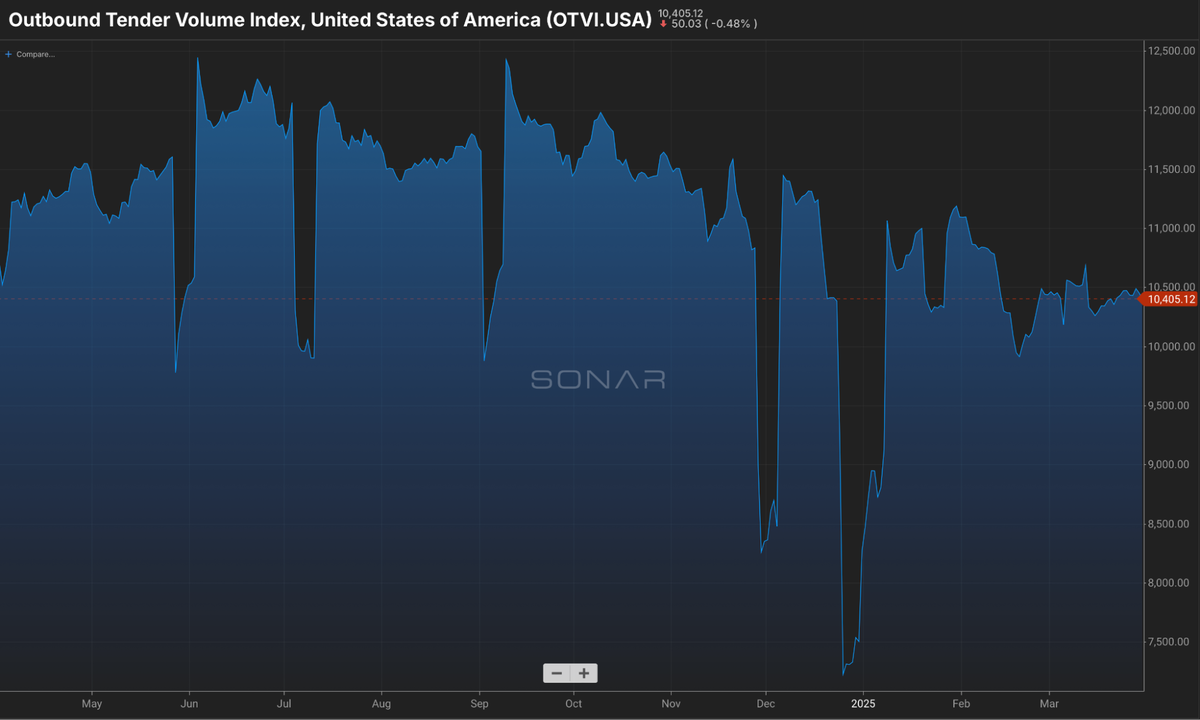
Chart: OTVI (Outbound Tender Volume Index) is an indicator that provides insight as to how much available freight is currently in the marketplace. Since the recovery from the Christmas lull, there hasn’t been much to get excited over in terms of demand for small carriers.
The Market Right Now: Like a Concert With Not Enough Hungry People
Imagine you’re at a concert where there are only 10 food trucks serving the crowd. It’s competitive, but those 10 trucks can stay busy.
Now imagine 80 more food trucks show up … but the crowd size doesn’t grow. Suddenly, everyone is competing for the same limited number of customers. Food trucks start undercutting each other, dropping prices just to stay busy, and some go home empty-handed or in the red.
That’s exactly what happens when you add tens of thousands of new trucks to the freight market without increasing the amount of freight available.
The Real Issue Isn’t a Driver Shortage – It’s a Freight Shortage
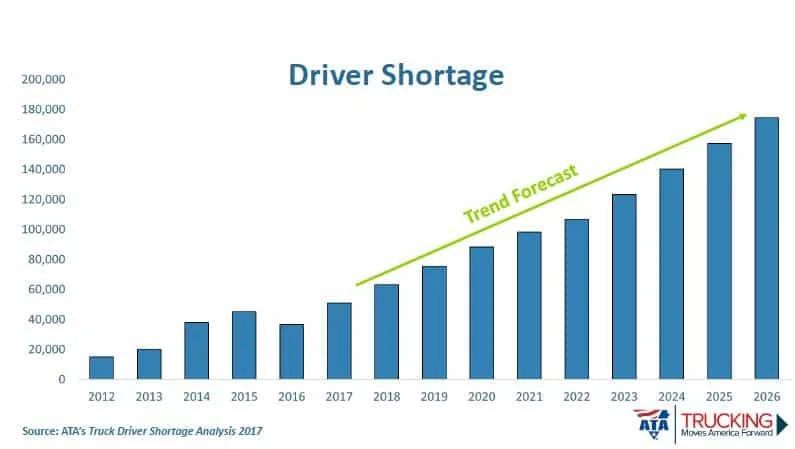
The bill’s supporters cite a 2022 stat from the American Trucking Associations that claimed we were short about 78,800 drivers. But that number mostly applies to large fleet turnover – not to the actual amount of freight needing to be hauled.
Right now, theOutbound Tender Volume Index (OTVI) – which measures how much freight is being offered to carriers – is sitting around 10,405. That number isn’t going up. In fact, it’s flat, maybe even declining.
Meanwhile, the average spot rate is around $2.27 per mile, according to SONAR. That’s not a terrible number, but it’s barely holding, and we haven’t even added more trucks yet.
We Modeled What Happens If You Add 80,000 More Trucks
Here’s where things get dangerous. We ran the numbers and looked at what would happen if you suddenly added 80,000 more dry van trucks to the market – whether through tax credits, apprenticeships or CDL grants.
The result? Rates will take a hit. And it doesn’t take long.
If 80,000 additional dry van trucks are introduced into the market, the projected national average spot rate is expected to fall within a likely range of $2.04 to $2.16 per mile. In a worst-case scenario – if the added capacity triggers aggressive rate competition and undercutting – the spot market could dip as low as $1.93 per mile. These changes would likely occur within three to six weeks of the new capacity entering the system, depending on how quickly the trucks are deployed and how regional freight volumes respond.
That means if you’re running a 1,000-mile load, you could go from making $2,270 to $1,930. That’s $340 less revenue on a single load, just because there are too many trucks competing for the same freight.
This Helps Big Fleets, Not the Backbone of the Industry
Who’s backing this bill? The American Trucking Associations, Teamsters and other groups that represent the megacarriers. These are companies that churn through drivers by the thousands. Of course they want tax credits to bring in more drivers – they need warm bodies in trucks.
But what they don’t tell you is that the spot market – where independent carriers and small fleets live – can’t survive if rates drop even a little bit.
Adding more trucks into an already soft freight market doesn’t fix the supply chain. It just breaks the small carrier.
Why This Is So Dangerous for Small Fleets
Many small carriers have a break-even cost between $1.75 and $2.10 per mile on average.
If spot rates fall below $2.00 – and they absolutely will if this bill is successful – thousands of small fleets could go under.
Insurance is up. Maintenance is up. Fuel is unpredictable. The only thing we don’t need right now is more trucks with nowhere to go.
What the Industry Really Needs
If Congress actually wants to help trucking, it needs to stop pushing out more CDL graduates like it’s 2019 and start focusing on retention, fair rates and freight access. Here’s what would actually help:
Programs that support and scale existing carriers, not just create new ones.
Funding for technology and dispatch tools that help carriers run more efficiently.
Access to direct shippers, not just more brokered freight.
Better training on business operations so carriers can stay profitable long term.
Final Word
This bill sounds helpful to those who wrote it, but it’s built on a flawed premise. More trucks do not mean better supply chains if there’s no freight for them to haul. If you flood the market, spot rates crash, and the small carriers that built this industry get pushed out.
It’s time for lawmakers to look past the lobby groups and listen to the folks actually out here hauling the freight. Because the people writing this bill? They’re solving a problem we don’t have – and creating one we can’t afford.
The iconic Kenworth W900 will be phased out of production, bringing an end to an era of trucking dominance. (Photo: Kenworth)
End of an Era: Kenworth Announces Final Production for W900, T800 and C500 Models
Kenworth just dropped a bombshell – production of the legendary W900, T800W and C500 will officially end in 2026.
If you’re in this industry, you already know: The W900 isn’t just a truck, it’s a symbol – a long-hood icon that’s been on the road since 1963, built for real haulers who care about performance, style and reliability. Same goes for the T800W, the backbone of vocational work, and the C500, one of the most rugged off-road trucks ever built.
This decision is tied to evolving emissions standards and new tech demands, but let’s call it what it is: the end of an era for true blue-collar, driver-first engineering.
Kenworth says its W990 and T880 platforms will carry the torch. But for many of us who built our careers around the look, sound and feel of the W900, there’s just no substitute.
If you’ve ever dreamed of owning one of these classics, now is the time. Final order windows will be announced later this year – but when they’re gone, they’re gone. At the Mid-America Trucking Show, they showcased one of the final 1,000 units in production for this year.
Derek Barrs (left) received the leadership recognition award from 2023-2024 CVSA President Col. Russ Christoferson, with the Montana Department of Transportation, at the 2024 CVSA Annual Conference and Exhibition. (Photo: CVSA)
FMCSA May See New Leadership – Again
Since 2018, we’ve seen six different administrators rotate through the Federal Motor Carrier Safety Administration. That kind of turnover creates confusion, inconsistency and a lack of long-term vision – especially for small carriers who rely on stable, clear regulatory guidance to operate safely and profitably.
Now, the Commercial Vehicle Safety Alliance (CVSA) is backing Derek Barrs as the next FMCSA administrator. Barrs brings two decades of law enforcement and safety experience, having served as chief of the Florida Highway Patrol and later as associate VP at HNTB, a transportation infrastructure firm. He’s also held leadership roles within CVSA and chaired modernization committees, and he currently sits on the ATA’s Law Enforcement Advisory Board.
On paper, that all sounds good – but for many small fleet owners, the concern isn’t about credentials. It’s about consistency. The revolving door at FMCSA has left many of us unsure where the agency truly stands on the practical issues that affect our day-to-day operations: ELD enforcement, broker transparency, safety audits and the integration of new tech that often favors large carriers.
While Barrs has built a strong resume within the safety and enforcement world, the big question remains: Will he finally bring steady leadership and real industry understanding to FMCSA – or will this be another short-term appointment that fails to move the needle for small carriers?
We’ve seen the awards. We’ve heard the endorsements. Now it’s time to see if we’ll get an administrator who actually listens to the backbone of this industry – the small fleets and owner-operators keeping America moving.
Let’s hope this isn’t just another name in the long line of temporary leadership. Because what we need isn’t another resume – we need someone who shows up, stays put and leads with clarity.
Benchmark diesel price up for second straight week, futures markets rise sharply
After up-and-down movements for several weeks that netted out to lower retail diesel prices, two weeks of upward moves as well as developments in the futures market are signaling that a bottom may have been reached for now.
The average weekly retail diesel price published Monday by the Department of Energy/Energy Information Administration rose 2.5 cents a gallon to $3.592. That price is used for most fuel surcharges and is up 4.3 cents per gallon over the past two weeks.
But it is still well below the prices that prevailed for most of January and February. The DOE/EIOA price hit a recent high of $3.1716 a gallon on Jan. 20.
Futures prices for crude oil and products all rose on the CME commodity exchange Monday. Ultra low sulfur diesel (ULSD) settled at $2.314 a gallon, up 5.31 cents on the day, an increase of 2.35%. Benchmark U.S. crude West Texas Intermediate rose $2.12 a barrel, to $71.48, jumping 3.06%. It was the first WTI settlement above $70 a barrel since Feb. 27.
ULSD’s settlement was the highest since $2.3549 a gallon on Feb. 28. The low for this month was $2.1622 a gallon on March 13; the Monday settlement marked an increase of 7% in just over two weeks.
News reports tied the increase in oil prices to weekend articles that said President Donald Trump was “very angry” with Russian President Vladimir Putin and might put secondary tariffs on the country that would work to restrict Russian oil exports. An article from Bloomberg quoted Rebecca Babin, senior energy trader at CIBC Private Wealth Group, as saying supply fears were the dominant feature in the market Monday because of the threat of new restrictions against Russia.
But Babin also was quoted as saying that “if broader risk assets continue to weaken, crude may eventually succumb to demand worries.”
An increase in prices in January was generally attributed to restrictions the Biden administration put on Russia in its final days in office.
Another factor in the market Monday were the U.S. crude production numbers in the monthly supply and demand report from the EIA. That report is on a two-month lag, and the data in it is considered more accurate than the weekly figures released each week by EIA.
The EIA reported that U.S. crude production fell to 13.15 million barrels a day in January. It’s the lowest in 11 months and was a bigger drop than the weekly numbers would have indicated.
The production figure was down 2.3% from December’s output of 13.451 million barrels a day. The key state of Texas showed a decline of 1.8% while North Dakota was down 0.8%. New Mexico, which is now the second-biggest producing state in the U.S., saw a decline of 2.5%.
Feds reject investigation into truck side guard recall
WASHINGTON — Trucking regulators have ruled there is not enough evidence to warrant an investigation into whether trailers without side underride guards (SUGs) should be recalled as unsafe.
The Institute for Safer Trucking petitioned the National Highway Traffic Safety Administration last year for an investigation of all dry van semi-trailers due to collisions with passenger vehicles, as well as with pedestrians, bicyclists or motorcyclists, that result in “significant injuries or death” due to a lack of effective SUGs.
The safety group contends that while there currently is no applicable safety standard requiring SUGs, NHTSA has the authority to recall vehicles or equipment that pose an “unreasonable risk” to safety even without a standard on the regulatory books.
But after considering the petition and documentation submitted along with it, NHTSA determined that the safety issues raised are better addressed within a separate SUG rulemaking that is currently under review at the agency.
“Accordingly, NHTSA has decided not to open a defect investigation, and the petition is denied,” the agency ruled in a notice published on Monday.
“The denial of this petition does not foreclose the agency from taking further action if warranted or making a future finding that a safety-related defect exists based upon additional information the agency may receive.”
An underride crash occurs when a truck trailer and a passenger vehicle collide, causing the passenger vehicle to slide under the body of the trailer. Because of the height difference between the two, the passenger vehicle is often crushed, and its passengers injured or killed.
NHTSA upgraded standards for rear underride guards in 2022, but truck safety advocates have been frustrated by a lack of action by the agency on standards for side guards. NHTSA’s Advance Notice of Proposed Rulemaking on SUGs determined that up to $1.2 billion in costs for the trucking industry for a side guard mandate outweighs the benefits of potential lives that could be saved – an estimate that safety advocates say is flawed.
“NHTSA has determined that SUGs are an extremely effective countermeasure intended to mitigate the unreasonable risk of side underride deaths and serious injuries … yet has failed to investigate or act,” wrote Eric Hein, director of the Institute for Safer Trucking, in his recall petition. He noted that several trailer manufacturers have been developing and patenting side underride guards, including Wabash, Great Dane and Utility Trailer Manufacturing Co.
However, without a government recall, “truck and trailer manufacturers and operators will not voluntarily stop the known unreasonable risk to public safety by designing and implementing safer trucks and trailers with effective side underride prevention guards,” Hein stated.
UPS to temporarily close Portland package facility for major retrofit
UPS plans to temporarily close its Swan Island package facility in Portland, Oregon, and lay off up to 244 workers as the integrated logistics carrier moves forward with consolidating and automating facilities under a network optimization strategy announced a year ago.
The parcel giant on Friday notified Oregon authorities that it will close the facility on June 20 and release 244 unionized workers, according to the Office of Workforce Investments.
That figure represents the total number of employees who could potentially lose their jobs, not the total number of workers at the site, UPS (NYSE: UPS) spokesperson Karen Tomaszewski Hill said in an email exchange.
“We are working to place as many employees as possible in other positions. Our employees are extremely important to us, and we understand the impact this may have on them and their families. We will work with those who may be impacted throughout the process to provide support. We expect the enhanced facility to reopen in 2026,” she said.
Kara Deniz, a spokesperson for the Teamsters union, said the facility is slated to reopen in September 2026.
UPS last year said it plans to eliminate 200 sort centers over five years and route parcels handled at those facilities to more modern ones. Warehouses outfitted with smart package technologies – autonomous guided vehicles, automated sort systems and systems that prioritize processing for specific customer requirements without manual intervention – have 30% to 35% more effective capacity than a traditional warehouse building. Consolidating package flow into fewer facilities will reduce the amount of time packages need physical handing and improve asset utilization, according to management.
As of March 2023, the company had 63 automation projects on the table for completion by 2028.
UPS last April closed a package terminal in Portland and laid off 331 workers because it wasn’t busy enough.
China port fees need more nuanced strategy, shipping industry tells hearing
The first of two days of federal hearings March 24-25 on proposed port fees targeting Chinese ships as expected drew opposition from trade-related maritime industry stakeholders who said that while they support a revitalization of U.S. shipbuilding, the charges in most cases will make their cost of doing business more expensive.
The fees, which are aimed at helping to restore America’s maritime might, unsurprisingly did find support from domestic shipbuilding interests and unions.
The fees proposed by the United States trade representative (USTR) in February would charge as much as $1.5 million per port call in the U.S. for any container ship built in China, regardless of ownership or flag. Vessels such as crude carriers would also be subject to the fees.
A total 37.8% of the current active container ship fleet was built in Chinese shipyards, according to analyst Alphaliner.
The current container ship orderbook consisting of just under 800 vessels with a total capacity of over 9 million twenty-foot equivalent units has over 70% of its units placed with Chinese shipyards. Of the top 10 shipyards in terms of vessels on order, seven are in China.
The public testimony follows a Section 301 petition filed by five labor unions in March 2024, alleging unfair trade practices by China in the maritime sector. A subsequent USTR report agreed, calling China’s actions unreasonable and a burden on U.S. commerce.
At the hearing held at the International Trade Commission in Washington March 24, a number of unions including the International Longshore and Warehouse Union Coast Longshore Division, voiced strong support for the USTR’s proposed remedies, emphasizing the need to revitalize American shipbuilding and counter China’s unfair trade practices, which they argued have led to job losses and weakened the U.S. industrial base. They recommended that proceeds from proposed port service fees be directed to a trust fund for shipbuilding industrial base and workforce development.
A key concern raised by the ILWU was the potential for diversion of United States-bound cargo to ports in Mexico or Canada, for later transshipment to the U.S., suggesting a land border fee to address this issue.
Representatives of the China Association of the National Shipbuilding Industry and the China Shipowners’ Association told the hearing they opposed the proposed actions, arguing they would harm the global maritime industry, disrupt supply chains, and negatively impact the U.S. economy by increasing freight costs and reducing port throughput. They maintained that China’s shipbuilding success was due to innovation and hard work, not unfair practices.
Congressional testimony was provided throughout the day. Rep. Raja Krishnamoorthi, D-Ill., testified in support of stronger remedies, advocating direct support to revitalize U.S. shipbuilding and related industries. Rep. Chris Deluzio, D-Pa., a former Navy officer, echoed these sentiments, highlighting national security concerns and urging bipartisan action to strengthen remedies.
Rep. Debbie Dingell, a Democrat from heavily unionized Michigan, emphasized the importance of a level playing field for American workers and supported the proposed actions, including service fees and addressing security concerns about Chinese logistics software. New Jersey Democrat Donald Norcross, whose south Jersey district abuts shipyards and maritime businesses outside the Port of Philadelphia, stressed the need to revitalize the shipbuilding sector and ensure funds collected from Section 301 actions are reinvested in the industry.
Another witness panel included representatives from major American steel companies such as Cleveland-Cliffs (NYSE: CLF), Nucor (NYSE: NUE) and the Alliance for American Manufacturing. They advocated “Buy America” provisions and financial incentives for American shipbuilders.
But a panel of American shipping companies including World Direct Shipping, Tropical Shipping, the Chamber of Shipping of America and Unitcargo Container Line, told the hearing that the proposed port fees would disproportionately harm American-owned carriers, particularly those serving short-sea routes between domestic ports. They argued for exemptions for American-owned companies and raised concerns about increased costs for American exporters and consumers, potential cargo diversion, and the lack of viable alternatives to Chinese-built vessels in the short term.
Representatives from other U.S.-based shipping companies Seaboard Marine Ltd., Linea Peninsular Inc., North Florida Shipping Inc. and Bermuda Container Line reiterated concerns about the disproportionate impact of port fees on smaller carriers and those serving specific trade routes such as the Caribbean. They, too, requested exemptions for U.S.-owned companies and suggested alternative fee structures, such as per-container fees.
Canadian panelists from the Ontario Marine Council and the Chamber of Marine Commerce cautioned against unintended consequences of the proposed actions on the integrated U.S.-Canada maritime trade, particularly on Great Lakes shipping. They proposed a more targeted approach focusing on long-haul shipping and exemptions for short-sea shipping, to protect essential cross-border trade.
A multinational maritime group that included the World Shipping Council, the International Chamber of Shipping, Caribbean-based Caricom Private Sector Organisation and the U.S. Northwest Seaport Alliance voiced strong concerns about the potential damage to the U.S. economy, increased costs for consumers and exporters, and the risk of cargo diversion. They argued that the proposed fees were disconnected from the goal of changing China’s behavior and urged for a more balanced approach, with some suggesting exemptions for Caricom states or a focus on long-haul voyages.
Yellow’s new bankruptcy plan revealed, next steps still uncertain
An amended Chapter 11 bankruptcy plan outlining final distributions to Yellow Corp.’s creditors was submitted to a U.S. bankruptcy court in Delaware on Friday. As with the prior plan, the latest iteration would make former employees whole for their priority claims of unpaid time off and commissions due. The current version is backed by Yellow and the defunct estate’s committee of unsecured creditors but may not have the support of a key party in interest.
Classes for secured, priority, employee PTO and convenience claims totaling as much as $706 million would see a full recovery under the proposed plan. Payout ratios for general unsecured claims were narrowed to 12% to 17% versus prior scenarios that provided 0% to 26% recovery. Claims and interests held by debtors against other debtors would be deemed impaired and not eligible for a recovery.
Employee claims against Yellow (OTC: YELLQ) totaling $30 million to $40 million for “unpaid vacation or paid time off pay, sick pay, or sales commissions” remain unimpaired and subject to 100% recovery. This class of claims doesn’t include individual employee claims or Worker Adjustment and Retraining Notification Act claims.
Holders of certain nonpriority general unsecured claims above $7,500 can opt to reduce the amount to $7,500 and have their claims paid in full.
Liability claims stemming from Yellow’s abrupt withdrawal from the pension plans it once contributed to (as well as a claim from Pension Benefit Guaranty Corp.) totaling $3.29 billion are projected to see a recovery of between 12% and 16%. This group includes claims from Yellow’s largest pension provider, Central States Pension Fund, which now shows $1.66 billion in withdrawal liability and contribution claims. (Original claims from the pension fund totaled $5.8 billion, $4.8 billion of which were tied to alleged withdrawal liability.)
Similar claims from other pension funds account for the other half of the $3.29 billion claims pool.
Central States is also listed with an additional $65 million in other allowed claims, some of which are tagged “other priority claim” and designated for full recovery.
The amended plan established May 9 as the voting deadline and May 19 as the confirmation hearing date. Affected classes are entitled to vote on the proposal with unimpaired classes, including employees, not granted a vote as they are “presumed to accept.” Creditors with claims that will be canceled won’t vote either as they are “deemed to reject.”
What’s the holdup?
Yellow’s largest shareholder, MFN Partners, could be the remaining holdout.
Counsel for the Boston-based hedge fund, which acquired 42.5% of Yellow’s equity in the weeks leading up to the 2023 closure, told the Delaware court on March 17 that it had been excluded from the recent negotiating process and would object to any plan detrimental to its claims and interests.
MFN provided bankruptcy financing to Yellow, and more recently its affiliate Mobile Street Holdings acquired withdrawal liability claims totaling roughly $200 million from two separate pensions. Those transactions placed the firm in an “irreconcilably inconsistent” position, the committee of unsecured creditors previously said, as MFN was fighting both sides of the battle – as a claimant seeking maximum recovery and as an equity holder attempting to maximize payouts to shareholders. The ploy may have been a hedge against its equity position, which suffered a blow when the court ruled Yellow would be liable in some form for early withdrawal from the plans.
MFN has appealed certain aspects of the Delaware court’s withdrawal liability ruling. It also has asked the court to move forward and rule on a pending summary judgment motion regarding withdrawal liability calculations.
Yellow and its creditors argued at a Wednesday hearing that a ruling on the motion would “gut consensus” recently achieved for the plan. The court agreed to delay a ruling until Friday to give the committee more time to engage with MFN.
“A debtor in possession, as a fiduciary of its estate, must be given the ability to settle claims asserted against it both because the bankruptcy system promotes settlements and because any other outcome would give an objecting party such as MFN the unfettered power to derail settlements,” a Thursday letter from Yellow’s counsel to the court stated. “If MFN were allowed to exercise that unfettered power in these chapter 11 cases, the results could be disastrous for the remaining stakeholders of these estates.”
February freight volumes mixed at Gulf Coast ports
Port Houston saw less vessel activity in February due to weather disruptions on its ship channel, while New Orleans and the Port of Corpus Christi, Texas, saw an increase during the month.
Houston Ship Channel saw limited February activity amid severe weather
Port Houston handled 325,424 twenty-foot equivalent units in February, a 13% year-over-year decline compared to the same month in 2024.
Total import tonnage was down 12% year over year at 2.3 million tons in the month. Imports of steel decreased 13% year over year to 302,359 tons during February.
Ryan Mariacher, chief port operations officer, said fog impacted the Houston Ship Channel in February, leading to fewer vessel calls at the port’s Barbours Cut and Bayport container terminals.
“According to Houston Pilots data for the month of February, fog and weather delays contributed to a 29% reduction in availability of our ship channel, compared to a 2.5% reduction last year,” Mariacher said during the port’s monthly commission meeting on Tuesday.
Port Houston recorded 613 ship calls during the month, a 13% year-over-year decrease, while barge calls totaled 290, an 11% year-over-year decline.
“Mother Nature was mad at us, so that led to the tonnage reduction. Overall tonnage at our multipurpose facilities was down 9% for the month, driven primarily by decreases in our liquid bulk and dry bulk imports,” Mariacher said.
Container import tonnage slipped 12% year over year to 1.4 million tons. Export tonnage decreased 11% year over year to 2.6 million tons in February.
Total revenue tonnage across Port Houston’s terminals decreased 12% year over year in February, totaling 4.9 million tons.
Full import containers in February decreased 14% year over year to 142,661 TEUs, while full export containers declined 16% year over year to 122,740 TEUs.
Movements of empty export containers were down 16% year over year in February to 37,955 TEUs. Empty import container movements at the port were up 22% year over year to 22,068 TEUs in the month.
Mariacher said disruptions across the global supply chain also contributed to lower monthly volumes at Port Houston.
“There’s some other things that are occurring in the economy, obviously on the global scale, and some things local that also contributed to that,” Mariacher said. “But with the bounce back we’ve been seeing [in March], we think that weather was a significant driver last month.”
Port of New Orleans reports 11% increase in container volumes
Boosted by shipments of coffee, chemicals, wood, resins and paper, the Port of New Orleans saw an 11.7% year-over-year rise in container volumes at 47,763 TEUs during February.
“There are positive signs for containerized cargo – with February volumes representing a 34% increase compared to January,” port spokeswoman Kimberly Curth told FreightWaves. “Top containerized exports included plastic resins, various chemicals and paper. The top imports included coffee, wood products and chemicals.”
Breakbulk cargo totaled 75,785 short tons in February, a 27% decrease compared to the same month in 2024.
While breakbulk cargo at the port was down year over year, Curth said volumes are up 10% year to date for fiscal year 2025. The port’s fiscal year runs from July 1 to June 30.
“The port handled 740,571 short tons of breakbulk cargo year to date. The growth in breakbulk cargo has been driven by increases in steel, natural rubber and project cargo imports,” Curth said.
The port handled 7,820 Class I railcar switches in February, a 14.7% year-over-year decrease. The port handles switching operations for the six Class I railroads that operate in New Orleans: BNSF Railway, CN, CSX, CPKC, Norfolk Southern and Union Pacific.
Port of Corpus Christi’s cargo volume results mixed
The Port of Corpus Christi moved 16.7 million tons of cargo in February, a 6% year-over-year increase from the same year-ago period.
The port handled 10.4 million total tons of crude oil during the month, a 12% increase compared to February 2024.
The Port of Corpus Christi had 189 ship calls in February, compared to 187 in the same month in 2024. The port handled 400 barges in February, a 2% year-over-year increase.
Iowa “driver shortage” bill backlash; Women in trucking; Science of Sales | WHAT THE TRUCK?!?
On episode 820 of WHAT THE TRUCK?!? Dooner is talking about the Strengthening Supply Chains Through Truck Driver Incentives Act, a new bipartisan bill in Iowa that has the driving community up in arms. We’ll take a look at why Iowa is trying to add even more drivers to an over capacity market and the damage the driver shortage myth does to our industry.
Mid-America Trucking Show 2025 may have come to an end but we’ll recap the sights and sounds from America’s biggest truck show.
Travelers’ Elizabeth Simpkins talks about the tremendous progress made by women in trucking.
Trader Interactive’s Charles Bowles shares the latest data on heavy duty truck buying demographics.
Ben Tschirgi just founded his own company ScienceOfSales. After a decade of leading sales teams at companies like Cowan Logistics, Tschirgi is now helping other businesses use AI to scale their revenue.
Plus; Trevor Milton pardoned; squats across MATS; monkey truckers and more.
Catch new shows live at noon EDT Mondays, Wednesdays and Fridays on FreightWaves LinkedIn, Facebook, X or YouTube, or on demand by looking up WHAT THE TRUCK?!? on your favorite podcast player and at 5 p.m. Eastern on SiriusXM’s Road Dog Trucking Channel 146.