XPO’s January tonnage bucks negative trend

a rearview of an XPO trailer

XPO reported a January tonnage surprise on Thursday, sending shares more than 11% higher in early trading. A modest uptick in demand from the less-than-truckload carrier’s manufacturing customers combined with in-house growth initiatives resulted in no change to tonnage during the month. That ended an 18-month stretch of year-over-year declines.

Manufacturing data released on Monday showed industrial activity turned positive for the first time in 12 months. The Purchasing Managers’ Index registered a 52.6 reading in January, 470 basis points higher than December. (A reading above 50 signals expansion while one below 50 indicates contraction.) The dataset has been underwater for the majority of the past three years.

The new orders subindex—an indicator of future activity—surged 970 bps to 57.1 (the highest reading since February 2022).

XPO (NYSE: XPO) also has idiosyncratic growth programs in place.

Last year, it added 10,000 local accounts (small and midsize shippers), which typically have better yield and margin profiles. This group accounts for 25% of the company’s LTL revenue book (up from 20%), but the plan is to grow this segment to more than 30% of revenue over time.

XPO is also expanding its grocery consolidation offering, and it has recently added new customers from the healthcare sector.

Shipments that incur accessorial charges (“premium services”) have increased to 12% of revenue, up from less than 10% previously.

New account wins and service enhancements are allowing the carrier to close its pricing gap to best-in-class peers. XPO’s fourth quarter marked 12 consecutive quarters of sequential improvement in revenue per shipment. The changes are driving margins and earnings higher.

“By pairing world-class service with our proprietary technology, we’re building durable earnings power unique to our business,” said Mario Harik, chairman and CEO, in a news release. “We’re continuing to execute for market-leading margin expansion in the current environment, while positioning for outsized share and margin gains in a recovery.”

Table: XPO’s key performance indicators

Q4 by the numbers

XPO’s fourth-quarter adjusted earnings came in 18% higher y/y, excluding one-off items and real estate gains.

The Greenwich, Connecticut-based company reported adjusted earnings per share of 88 cents (inclusive of gains). That was 12 cents ahead of the consensus estimate. The adjusted EPS number excluded transaction and restructuring costs but included 8 cents per share in gains from the sale of real estate. XPO recorded 21 cents per share in real estate gains in the 2024 fourth quarter.

Consolidated revenue of $2.01 billion was 5% higher y/y and better than the $1.95 billion consensus estimate.

The LTL unit reported revenue of $1.17 billion, a 1% y/y increase (2% higher on a per-day comparison). Tonnage per day declined 4.5% y/y but revenue per hundredweight (yield) was 6% higher (5% higher excluding fuel surcharges).

The tonnage decline resulted from a 1.5% decline in daily shipments and a 3% drop in weight per shipment. Tonnage was down 3.8% y/y in October, down 5.4% in November and down 4.5% in December.

January tonnage was flat y/y, in part due to an easier prior-year comp (negative-8.5%). However, management said tonnage would have been 3% higher during the month without the severe winter storms. October could mark the nadir for tonnage on a two-year-stacked comparison (down 11.8%).

The fourth-quarter yield metric benefitted from the decline in average shipment weight and a 1% increase in length of haul. Fourth-quarter yield was 11.4% higher on a two-year-stacked comparison.

SONAR: Longhaul LTL Monthly Cost per Hundredweight, Class 125+ Index. Less-than-truckload monthly indices are based on the median cost per hundredweight for four National Motor Freight Classification groupings and five different mileage bandsTo learn more about SONAR, click here.

The unit reported an 84.4% adjusted operating ratio (inverse of operating margin), 180 bps better y/y, but 170 bps worse than the third quarter. The result was better than historical sequential deterioration of 200 to 250 bps, and near management’s 84% implied guide.

Salaries, wages and benefits (as a percentage of revenue) came in 100 bps lower y/y. Purchased transportation expense was 180 bps lower as outsourced miles have been reduced to just 5.1% of total miles.

Revenue per shipment outpaced adjusted cost per shipment by 220 bps in the quarter.

The company is calling for further margin improvement even if the broader economy doesn’t improve. It has implemented several AI-led efficiency initiatives (dock, linehaul and pickup-and-delivery), and maintenance costs are lower as the average tractor age has been reduced to 3.7 years.

The cost reductions combined with pricing levers are expected to produce 100 to 150 bps of y/y margin improvement in 2026. Cost per shipment is expected to increase by a low-single-digit percentage this year as general cost inflation is partially mitigated by productivity initiatives. Revenue per shipment should be up by a mid-single-digit percentage.

XPO sees a path to low-70s ORs over time. It has recorded 590 bps of margin improvement through the downturn.

The carrier is forecasting sequential OR improvement in the first quarter even though it typically experiences 50 bps of deterioration. Even if OR came in flat with the fourth quarter that would be 150 bps better y/y.

XPO’s European transportation segment reported an 11% y/y increase in revenue to $846 million. Adjusted EBITDA of $32 million was 19% higher y/y.

Shares of XPO were up 4.3% at 2:00 p.m. EST on Thursday compared to the S&P 500, which was down 1.1%. The stock is up more than 25% this week as PMI data and LTL earnings reports have surprised to the upside.

More FreightWaves articles by Todd Maiden:

Canadian e-commerce shipping platform acquires Warehowz

Side view of a large warehouse.

E-commerce shipping technology platform ShipTime Canada announced Thursday it has acquired Warehowz, a North American marketplace for on-demand warehousing and fulfillment, to enhance its ability to support merchants’ logistics needs.  

The deal is the latest example of how smaller parcel logistics providers are investing to build fulfillment and delivery scale. 

With a network of more than 2,500 affiliated warehouses across the United States and Canada, Warehowz provides flexible fulfillment and storage options for businesses that require lean inventory. 

By adding Warehowz’s extensive warehousing network, ShipTime provides customers with new opportunities to bring inventory closer to shoppers for quicker last-mile delivery, scale capacity during peak seasons or inventory surges, and increase operational flexibility for brands managing multiple locations or high-volume inventory.  

“These capabilities complement ShipTime’s growing North American courier network, which includes trusted couriers such as FedEx, UPS, USPS, DHL, Uber, LSO, and many others. Modern logistics requires more than competitive courier options. Businesses need integrated solutions that connect fulfillment, warehousing, and delivery into a single, flexible ecosystem. Welcoming Warehowz into ShipTime marks an important step toward that unified future. Their North American presence and adaptive warehouse model strengthen our ability to expand further into the U.S. and deliver an end to end solution for brands that require speed, efficiency, and scalability at every stage of growth,” said ShipTime Canada CEO Austin Lewis, in a news release.

ShipTime recently opened its platform to U.S. merchants, who use its shipping tools to select and manage a network of parcel carriers. The Warehowz acquisition adds another level of service to support future growth, the company said.

ShipTime Canada is a subsidiary of publicly traded Paid Inc. (OTC: PAYD), a developer of web storefronts and payment systems for online retailers.

Earlier this week, fulfillment specialist Stord acquired a fulfillment center in Dallas from Quiet Logistics. Stord also bought rivals ShipWire and Ware2Go, from UPS, in the past year. 

Click here for more FreightWaves/American Shipper stories by Eric Kulisch.

Write to Eric Kulisch at ekulisch@freightwaves.com.

Veho to flex delivery speeds for price-sensitive e-commerce sellers

Quiet Logistics dismantling continues with warehouse, customer transfer to Stord

GOP members to STB: Find ‘real’ benefits or reject rail merger

Republican members of Congress today urged the Surface Transportation Board to conduct a thorough review of the proposed merger of Union Pacific and Norfolk Southern, to ensure that the historic deal creates substantial benefits for shippers.

Rep. Dusty Johnson of South Dakota, in a letter to STB Chairman Patrick Fuchs and members Michelle Schultz and Karen Hedlund, encouraged the regulator to “conduct a rigorous and comprehensive review of the proposed merger…to ensure it enhances competition and is clearly in the public interest.”

The letter, co-signed by 46 members of Congress, states, “We also want to underscore at the outset that the responsibility to demonstrate clear, measurable, and substantial benefits for domestic manufacturers, agricultural producers, the energy sector, and the American consumer – all of whom rely on an efficient, competitive, and cost-effective freight rail system – rests squarely with the applicant railroads.

“Absent such a showing, the Board should not permit this transaction to proceed.” 

Johnson, who sits on House committees on agriculture and transportation, wrote that elected officials are hearing concerns over the merger application by UP (NYSE: UNP) and NS (NYSE: NSC) and its “lack of serious and meaningful commitments to enhance competition and protect against service meltdowns. In light of this, the Board must consider with extreme care the potential risks posed by this transaction to determine whether it meets the public interest test.”

The STB rejected the railroads’ initial merger application as incomplete. The companies have said they plan to re-file by March.

In November dozens of GOP state senators and representatives told the STB that the merger would hurt competition and raise prices; state attorneys general from nine red states said the merger effects could affect national security. 

The letter comes as shippers and other stakeholders increasingly voice their opposition to the merger, which would create the first coast-to-coast freight railroad operating more than 50,000 miles of track in 43 states.

The letter referenced the new, tougher merger rules drawn up in the early 2000s that stipulate a consolidation must not only preserve competition, but enhance it. This ‘higher bar’ has never been tested, so there is uncertainty about how it will be applied by the STB, and what, exactly, defines enhanced competition.

“The new rules place a significant burden on would-be merging parties to demonstrate how the transaction would, among other requirements, enhance competition for rail shippers, ensure reliable rail service, and be in the interest of the public,” Johnson wrote.

It’s known that the regulator has collected more information ahead of the formal filing than for any previous merger. Specialists from the Massachusetts Institute of Technology have been brought in to help analyze the more than 100 million separate data points under consideration.   

Subscribe to FreightWaves’ Rail e-newsletter and get the latest insights on rail freight right in your inbox.

Find more articles by Stuart Chirls here.

Related coverage:

U.S. rail freight loses ground in latest data

Alderson, CN investor relations executive, to retire

Union Pacific, Wabtec sign for $1.2B in locomotive upgrades 

Sorfleet retires at CSX; Chand new CAO 

Maersk posts Q4 pre-tax loss, will cut 1,000 jobs

Maersk saw pre-tax earnings fall to a loss in the fourth quarter as downward pressure on freight rates offset strong volume growth.

The world’s second-biggest container carrier on Thursday said  earnings before interest and taxes (EBIT) fell to a loss of $153 million as weaker rates offset “strong” container volume growth of 8%, down from $567 million in the previous quarter and $1.6 billion in the fourth quarter of 2024. Revenue totaled $13.33 billion from $14.59 billion a year ago.

For the year, ocean traffic grew in line with the global market, up 4.9%, despite volatile markets. Logistics & Services continued to improve profitability driven by targeted refocusing efforts, and the terminals business saw its strongest financial performance ever with record volumes, revenue and EBIT, the Copenhagen-based company said.

Maersk is the second major carrier to see negative quarterly EBIT. The ONE group of carriers reported a pre-tax earnings loss of $84 million.

“We delivered a strong performance and high value for our customers in a year where supply chains and global trade continued to be reshaped by evolving geopolitics,” said Chief Executive Vincent Clerc, in a release. “Across our operations, volumes grew and asset utilization was very high. Our ocean business set a new benchmark for reliability, terminals delivered record results, and Logistics & Services continued to advance. 

“The year highlighted the need to strengthen, and modernize global supply chains and critical infrastructure, further emphasising the relevance of our strategy. Our key to success remains to grow in close partnership with our customers, leveraging our unique asset footprint, and a continuous drive for operational excellence and cost discipline.”

The carrier launched the Gemini cooperation east-west ocean service with Hapag-Lloyd (HLAG.DE) in 2025; its schedule reliability outpaced the market by around 10%. Global container volume is forecast to grow 2%-4% in 2026.

Maersk (MAERSK-B.CO) stock fell more than 5% in early trading. The company plans to buy back $1 billion worth of shares over the next 12 months.

Maersk said it will reduce costs across the organization by $180 million, and eliminate 1,000 jobs, or 15% of its corporate workforce of 6,000.

Full-year revenue was $54 billion, while operating profit (EBITDA) of $9.5 billion was down from $12.1 billion y/y. Pre-tax earnings of $3.5 billion was off from $6.5 billion, though at the top end of guidance.

Expected overcapacity in shipping from uneven demand and the introduction of new vessels, along with the gradual Red Sea reopening in 2026, led Maersk to a soft forecast of full-year EBITDA of $4.5-7 million, and EBIT ranging from a loss of $1.5 million to a profit of $1 million.

This article was updated Feb. 5 to specify that Maersk is eliminating 1,000 out of 6,000 corporate positions.

Find more articles by Stuart Chirls here.

Related coverage:

Panama targeted Canal ports contract, China company claims

Carriers say military to secure Red Sea voyages

Leaner inventories weaken ocean demand, a harbinger for higher tender rejections, increased truck rates

Weaker container volumes, rates lead Q3 loss for ONE ocean group

FedEx preparing major sort center expansion at Memphis air hub

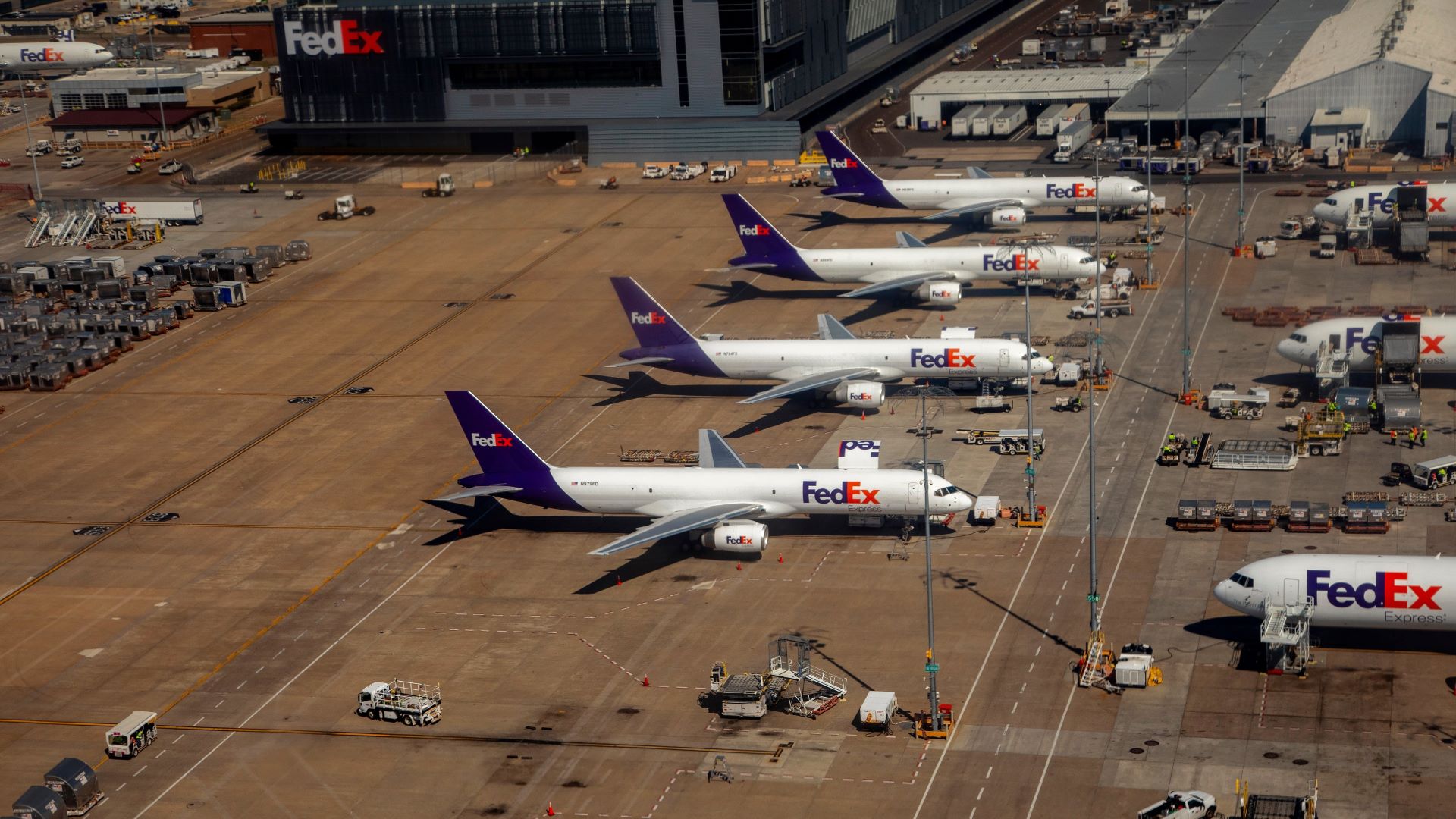
Purple-tailed FedEx planes lined up in a row at the FedEx main cargo terminal.

FedEx Corp. has unveiled plans for an enormous upgrade of its global parcel hub in Tennessee, submitting a preliminary proposal to local authorities for a five-story, 1.6 million square foot small package sort center at Memphis International Airport designed to keep up with e-commerce demand.

The new e-commerce project, code-named “Hercules,” would be built just south of FedEx’s (NYSE: FDX) new automated sorting facility that opened in October 2024, with the two buildings connected by an elevated bridge, according to a preliminary site plan application submitted in mid-January by project engineer GFT to the city of Memphis and Shelby County.

The development will replace a nearby existing structure and include new utilities and a new employee parking lot. The new facility will accommodate a sophisticated automated sort system, which is currently being designed under a separate contract with FedEx, according to the documents. 

GTF said a full building design will be submitted in June. 

A FedEx spokesman declined to provide any additional information about the Memphis hub project. Memphis handles more cargo tonnage than any airport in the nation because of the FedEx operation, which can reach 95% of the world within 72 hours by air. 

Architectural drawing of where FedEx plans to build a new e-commerce transfer facility at Memphis airport. (Source: FedEx site plan application)

“The Memphis World Hub is the heart of the FedEx global network, and this dynamic, new sort facility is equipped with the latest data-driven technology that enables us to strengthen our hub operations,” said Lisa Lisson, president of Air Operations, in a news release about the opening of the Secondary 25 building in 2024. “Modernizing the Memphis World Hub is a key step in our network transformation to help our customers compete and win with the world’s most flexible, efficient, and smartest logistics network.”

The Secondary 25 facility spans 1.3 million square feet across four levels, includes 11 miles of conveyor belts and can sort 56,000 packages per hour. 

The facility alone can process more than half the volume from the primary night sort. Automation reduces sorting time for transfers to outbound aircraft and trucks, improves reliability and allows packages to be culled in one building during weather events. Six-sided scanners allow for packages to be scanned on all sides to capture size and barcode information for accurate sorting. The terminal is also equipped with dimensional weight systems and 1,000 cameras to monitor the flow of packages and ensure they don’t hit a jam. 

The new sort building also includes a command center that is three times larger than the original and controls package traffic throughout the hub.

Overall, the FedEx World Hub covers 940 acres with 171 aircraft gates and 84 miles of conveyor belt. It can process 484,000 packages per hour.

News of FedEx’s next infrastructure investment in Memphis was previously reported locally by the Commercial Appeal and WMC-5.

Click here for more FreightWaves/American Shipper stories by Eric Kulisch.

Write to Eric Kulisch at ekulisch@freightwaves.com.

UPS won’t resurrect MD-11 fleet after deadly crash, takes $137M charge

The Chameleon Network Behind the Indiana Crash That Left Four Dead Is an Old, Tired Story

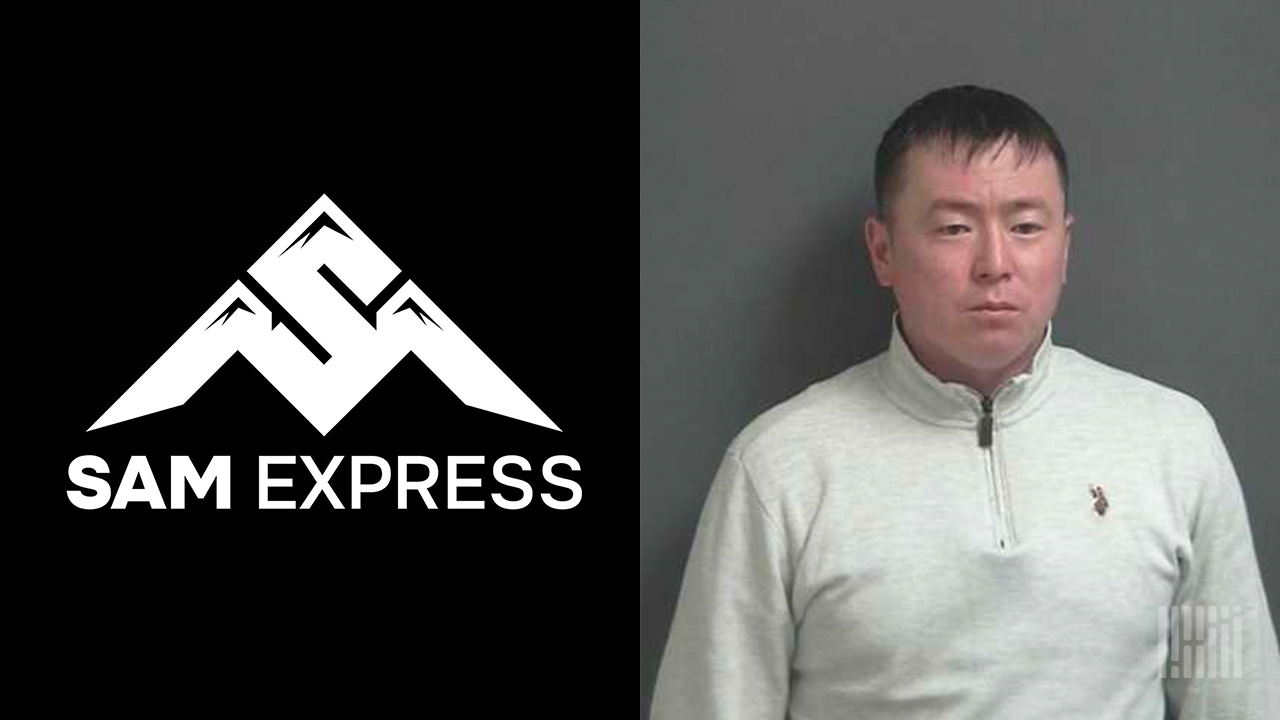
On Tuesday afternoon, a 30-year-old truck driver from Philadelphia named Bekzhan Beishekeev failed to stop for slowed traffic on State Road 67 in Jay County, Indiana. He swerved into oncoming traffic and killed four Amish men from the Bryant community: Henry Eicher, 58, his sons Menno, 33, and Paul, 31, and Simon Schwartz, 22.

The truck bore a triangular mountain logo. That logo was all it took. It’s also why you see first responder photographers blocking these markings more now because they don’t want people digging. No matter what marking is on the door, the Sam Express logo is somewhere on the truck.

Within hours, the FreightX community and independent investigators had identified the carrier network behind the truck. Not because the crash exposed something new. Because the network had already been documented, flagged, reported, and investigated by industry professionals who have been sounding this alarm for years.

This Didn’t Start Tuesday

For those of us who have been doing this work online, this crash is a recurring nightmare. It’s the same bad actors, re-igniting the same scrutiny, after the same kind of tragedy that did not have to happen.

I began publicly sharing content about chameleon carriers between 2020 and 2022 because it’s what I do. At Trucksafe, my sidekick and Trucking Attorney, Brandon Wiseman, did a YouTube video on Chameleon Carriers as old as 2022. It’s the compliance work. It’s the investigative research. It’s the due diligence that this industry desperately needs. But what was once a niche concern has become mainstream. More tools, stronger platforms, and a growing community of investigators can now track these individuals and disseminate information in real time.

FreightX, the trucking intelligence community Tuesday’s crash: “This is a well-known web of multiple trucking companies and shell companies. 20, to be exact. And I JUST posted yesterday about an inactive trucking company actively recruiting drivers on Instagram… This is the active company.”

Danielle Chaffin wasn’t exaggerating. FreightX members have documented trucks from this network swapping company name decals and DOT numbers at truck stops in real time. One member recorded video of a driver who “pulled up with the company logo in the photo and, within minutes, was switching out his company name and DOT number. This is a daily occurrence, I see it constantly.”

In October 2025, a wreck near Vicksburg, Mississippi, involving a truck with markings tied to this same network prompted another wave of documentation. The truck’s name on the side was immediately recognized. As one driver reported: “MHP is telling my driver may be after midnight before it’s clear. Notice the name on the side of the truck… gotta be innocent loss of life.”

Tuesday’s crash in Indiana is not a discovery. It’s an indictment of a system that failed to act on information already available to anyone willing to look.

What Chameleon Carriers Actually Are

Before I lay out what we’ve found, let me be clear about something that gets lost in every one of these conversations: chameleon carrier identification is not just about a shared address.

A chameleon carrier operation is about concealment. It’s about constructing a network of entities designed to evade regulatory detection and enforcement. The connective tissue can be any combination of shared Vehicle Identification Numbers moving between authorities, common officers or registered agents across multiple DOT numbers, identical or overlapping phone numbers and email addresses, the same branding and logos regardless of which company name appears on the door, common insurance brokers and policies, shared Electronic Logging Device infrastructure, overlapping financial services and accounting providers, coordinated recruitment pipelines from the same geographic origin, sequential authority registrations suggesting pre-planned entity creation, and shared terminal facilities where multiple authorities operate from the same physical location.

In this network, we found all of those indicators. All of them.

The Network (An Abridged Version)

Sam Express Inc. (USDOT 3235924) is based in Palatine, Illinois. Its primary officer is listed as Saipidin Tutashov.

Read that last name again: Tutashov. Now look at these carriers:

Sam Express Inc (USDOT 3235924) lists Saipidin Tutashov as the primary officer out of Palatine, Illinois. Tutash Express Inc (USDOT 3487141) lists Syrazhidin Zhalaldin Uulu in South Holland. Tutash Express 1 LLC (USDOT 4005857), whose authority was involuntarily revoked, lists Sultan D Musaev in Hoffman Estates. KG Line Group Inc (USDOT 3487333) lists Mirlanbek Murzapazylov in Streamwood,  the same man photographed wearing a Sam Express polo at a broker summit. AJ Partners LLC (USDOT 3617842) lists Isabek Arystankulov in Hoffman Estates. Two newly identified carriers extend the pattern: ITSMARTOFU LLC (USDOT 3533458, MC 1333060) is active in Palos Hills with a 50% driver out-of-service rate and 33.3% vehicle out-of-service rate. SANGAM TRANSPORT INC (USDOT 3589101, MC 1213164) in Mt Prospect lists Azamat Kenjebaev as primary officer and carries a 66.7% vehicle out-of-service rate. KG Line Group’s insurance policy KMC1066158 is pending cancellation effective January 21, 2026.

Tutash Express Inc (USDOT 3487141). Tutash Express 1 LLC (USDOT 4005857). Tutash Cargo LLC in Palatine. The network is literally named after the guy running Sam Express. They didn’t even try to hide it.

Each of those officer names is in Kyrgyz. These are names from Kyrgyzstan, the Central Asian nation whose phone number (+996) appears publicly on Sam Express’s website and social media. The driver who killed four people on Tuesday? Bekzhan Beishekeev. Also a Kyrgyz name. This isn’t a coincidence. This is a pipeline.

Carriers Identified

Since our initial reporting, additional carriers have been identified as connected to, or exhibiting operational patterns similar to, this network. ITSMARTOFU LLC (USDOT 3533458, MC 1333060), based in Palos Hills, Illinois, carries a 50% driver out-of-service rate and a 33.3% vehicle out-of-service rate. No safety rating has been assigned.

SANGAM TRANSPORT INC (USDOT 3589101, MC 1213164) out of Mt Prospect, Illinois, shows a 66.7% vehicle out-of-service rate. Two out of every three vehicles inspected were placed out of service. Its primary officer is Azamat Kenjebaev, another Kyrgyz name. Interestingly, a person with this name also appears on LinkedIn as a Linux System Administrator at a healthcare software company in Georgia. Whether this is the same individual or a coincidence, the pattern of non-trucking professionals appearing as officers on carrier registrations is itself a hallmark of chameleon operations.

The Smoking Gun, A Photo, A Polo, and 139 Shared Trucks

Mirlanbek Murzapazylov is listed as the primary officer of KG Line Group Inc, which claims to operate 310 trucks from a $610,000 residential home in Streamwood, Illinois. He was photographed at the Broker Carrier Summit in Orlando, Florida, wearing a Sam Express polo shirt.

That photograph is wild because we know he’s not actually Sam Express; he actually runs AJ Partners on paper. 

Federal carrier registration data shows that AJ Partners LLC (USDOT 3617842) has shared 139 Vehicle Identification Numbers with Tutash Express Inc (USDOT 3487141). AJ Partners has also shared 36 VINs with KG Line Group (USDOT 3487333). The same trucks, inspected under different DOT numbers. That’s the textbook definition of a chameleon carrier network.

According to the Government Accountability Office, chameleon carriers are three times more likely to be involved in serious crashes than legitimate operators. From 2005 to 2010, the GAO found that 18% of carriers with chameleon attributes were involved in severe crashes, compared to just 6% of new applicants without those red flags.

KG Line Group: Insurance Cancellation, and a Driver Who Can’t Read English

KG Line Group Inc (USDOT 3487333) now has two active risk factors flagged in federal safety data. Its insurance policy (KMC1066158) is pending cancellation effective January 21, 2026. It also has an ELP out-of-service history dating back to December 2025.

The inspection record from November 26, 2025, tells a story that should alarm every shipper using this network.

Inspection ID 86443266, conducted on I-80 westbound in Illinois, documented a KG Line Group driver hauling freight who was placed out of service under 49 CFR 391.11(b)(2) because the driver could not read and speak the English language sufficiently to converse with the general public, to understand highway traffic signs and signals in the English language, to respond to official inquiries, and to make entries on reports and records.

The same driver was also cited for speeding and improper lane change. The vehicle was a Volvo Truck with VIN 4V4KC9EH5FN181577.

A driver operating an 80,000-pound truck on Interstate 80, hauling freight, could not communicate in English with law enforcement or read highway signs. That’s not a regulatory technicality. That’s an imminent safety hazard. And it’s operating under a carrier whose insurance is about to be cancelled.

The Safety Record: 98+ Crashes and Counting

Nearly a hundred crashes across a network of carriers sharing the same equipment, the same officers, the same Kyrgyz recruitment pipeline. And that’s just what’s documented. That’s just what made it into FMCSA databases.

Tutash Express Inc leads the network with 1,803 inspections, 931 violations, 247 out-of-service orders, and 57 crashes in the past 24 months. KG Line Group follows with 544 inspections, 258 violations, 77 out-of-service orders, 11 crashes, and a 23.8% vehicle out-of-service rate. AJ Partners LLC has logged 417 inspections, 257 violations, 86 out-of-service orders, 10 crashes, and a 25.2% vehicle out-of-service rate — failing one in four vehicle inspections. Tutash Express 1 LLC, despite only 4 inspections, has 3 crashes and a 100% vehicle out-of-service rate, every single vehicle inspected was placed out of service. The newly identified ITSMARTOFU LLC carries a 50% driver out-of-service rate and 33.3% vehicle out-of-service rate. SANGAM TRANSPORT INC fails vehicle inspections at a 66.7% clip,  two out of every three trucks pulled over get parked. Across the documented network, the totals exceed 2,993 inspections, 1,552 violations, 439 out-of-service orders, and 91 crashes. The national average vehicle out-of-service rate is 22.26%. The national average driver out-of-service rate is 6.67%. Most of this network exceeds both.

The Revoked Authority Still Reporting Mileage

Tutash Express 1 LLC (USDOT 4005857) had its operating authority involuntarily revoked on July 26, 2024.

Yet according to federal records, the carrier updated its MCS-150 form in January 2026, reported 128,962 miles driven in 2025, maintains a 100% vehicle out-of-service rate, has had 3 crashes despite only 4 inspections.

The Federal Civil Complaint Calls It A ‘Unified Fraudulent Enterprise’

A federal civil complaint filed in the Northern District of Illinois uses language that cuts to the core of this operation. It describes the network as a “unified fraudulent enterprise” in which nominally separate carriers operate as a single operation under common control.

The complaint alleges a predatory leasing scheme in which drivers were promised 88% of gross revenue but received falsified rate confirmations showing lower amounts. Drivers were charged $14,000 or more in fuel deductions that exceeded what was physically possible given the miles driven. A 12% dispatch fee was deducted for services that were never actually provided independently. Drivers paid $250 per pay period for insurance policies that were voidable because they were operating under a different authority than the one listed on the policy.

The complaint further alleges that when a driver operating under one authority in the network was involved in an incident, they would be transferred to a different authority within the same network, effectively resetting the safety record.

The ELD Manipulation Problem

Court filings reference HERO ELD, the electronic logging device used across this network, and allege that the device had “backdoor” capabilities allowing remote manipulation of Hours of Service records and Records of Duty Status. This means someone could alter a driver’s legally mandated rest and drive-time records from a remote location.

This isn’t an isolated allegation. Since October 2025, FMCSA has removed 14 ELD devices from its registered list for non-compliance. Colorado State University research funded by the FMCSA found that ELD data manipulation is often undetected by roadside inspectors. The Cybersecurity and Infrastructure Security Agency has issued advisories about vulnerabilities in commercial ELD systems.

The broader ELD integrity crisis makes the allegations in this case more credible, not less.

The Insurance Question

After I published the initial article on this network, I received a Facebook friend request at 2 AM from an individual connected to Essex Insurance Brokers LLC in Elk Grove Village, Illinois. Essex explicitly lists trucking insurance as a core service. His friends include those you’d expect, most of the officers we’ve mentioned here. 

NAIC producer records show that Essex Insurance Brokers LLC (License #100287697), active since 2007, currently has no lines of authority assigned. A legitimate insurance brokerage placing commercial trucking policies needs, at a minimum, lines of authority in Casualty for auto liability. Without them, the entity shouldn’t have binding coverage.

A second individual connected to Essex, with a Kyrgyz background and a New York City area code, obtained his individual producer license in January 2025. The question isn’t whether an insurance broker serves this community. The question is whether proper underwriting due diligence is being conducted when placing coverage for carriers with these safety profiles, shared VINs, and common-control indicators.

The Ghost Offices

Process servers attempting to serve legal documents on entities in this network have documented a pattern of evasion. Five attempts to reach the Streamwood residential address registered as the headquarters for 310 trucks were met with “No English” responses. The South Holland office was found empty. A Schaumburg suite associated with a related entity had already moved out.

Federal regulations under 49 CFR require motor carriers to maintain a principal place of business where records are kept and management decisions are made. Try fitting 300 driver qualification files, 300 drug testing records, 300 hours-of-service logs, and 300 vehicle maintenance files in a suburban garage. Try conducting meaningful safety oversight from a kitchen table.

The Terminal Network

Multiple carriers in this network share terminal addresses:

Terminal 1: South Holland, IL

Tutash Express Inc (3487141), VIDMA Inc (2132319), and a truck repair shop operate from the same facility at 16647 Vincennes Ave.

Terminal 2: Markham, IL

DVL Express/Dovgal Express Inc (2192698, 152 trucks), and Tutash Express Inc all share space at 2064 W 167th St.

Terminal 3: Joliet, IL

Tutash Express Inc, KG Line Group Inc, and Borcha Inc (4059241) share a facility at 10 Gougar Rd. Tutash Express appears at multiple terminals.

Terminal 4: Streamwood, IL

KG Line Group operates 310 trucks from a residential home at 312 English Oak Lane.

The Kyrgyzstan Pipeline

Sam Express Corp openly displays a Kyrgyzstan phone number on its website and social media: +996 997 77-55-55. The website shows both the American and the Kyrgyz flags. This isn’t hidden. It’s right there on their public Facebook page.

It represents an active overseas dispatch operation and a driver recruitment pipeline connecting Kyrgyzstan to trucking operations in the Chicago area. Foreign driver recruitment is not illegal. Nearly 19% of American truck drivers are foreign-born. But when combined with shared equipment across multiple DOT numbers, officers whose names literally spell out other company names, residential addresses for 300-truck fleets, 100% vehicle out-of-service rates, revoked authorities still reporting mileage, drivers who can’t read English hauling interstate freight, and 91-plus crashes across the network, it paints a picture of a sophisticated operation designed to evade regulatory oversight.

The driver, who is held on an ICE detainer in Jay County, came from Philadelphia. The mutual Facebook friend of the insurance broker who contacted me operates an ELD service out of Philadelphia. The Kyrgyz community in the Chicago-to-Philadelphia corridor is more than a cultural connection. It’s infrastructure. Said ELD service has a contact at @gmail.com… yes, a legitimate ELD provider uses a @gmail.com email address and promotes 24-hour customer service support to help with your ELD-related issues.

The Broader Carrier Web

Beyond the core network, additional entities are under review:

Beyond the core network, additional entities are under review. DVL Express, also known as Dovgal Express Inc (USDOT 2192698), operates 152 trucks from the same Markham terminal at 2064 W 167th St by Tutash Express. VIDMA Inc (USDOT 2132319) shares the same South Holland address as Tutash Express: 16647 Vincennes Ave, and Borcha Inc (USDOT 4059241) all share the Joliet terminal at 10 Gougar Rd with Tutash Express and KG Line Group. Tutash Cargo LLC in Palatine is facing revocation by the authority, another Tutash-named entity in the same geographic cluster, and 1st Choice Logistics LLC (USDOT 3239052)

The California expansion continues through Ruslanbek Olzhebaev, who serves as the registered agent for Tutash Express Inc.’s California filing, as well as for EMIRKHAN LLC and A J Trucking Partners LLC.

What This Means for Shippers

For now, until we get a verdict in the Montgomery Supreme Court Case, under federal regulations, shippers are responsible for selecting carriers with adequate safety records. Brokers have affirmative obligations to verify carrier authority and insurance. When a carrier’s insurance is pending cancellation, when its drivers are being placed out of service at rates three times the national average, and when 139 trucks are inspected under multiple DOT numbers, the question of due diligence becomes unavoidable.

What FMCSA Can Do

The Federal Motor Carrier Safety Administration has tools to address chameleon carriers. ARCHI screens new applicants by matching registration data against existing carriers to identify common addresses, phone numbers, names, emails, and VINs. Safety Fitness Determinations can result in out-of-service orders. Common Ownership Reviews can examine whether multiple authorities share management, drivers, or equipment.

The problem is volume. FMCSA granted 109,340 new carrier authorities in 2021 alone, an 84% increase from the previous year. The bad actors know the system is overwhelmed. They register multiple authorities, such as burner phones, use them until they get hot, then switch to the next one.

This network isn’t hiding. The logo is on every truck. The officer’s names spell out the company names. The Kyrgyzstan phone number is on the website. The VINs cross-reference across multiple DOT numbers in FMCSA’s own databases. The only question is whether anyone with enforcement authority is willing to act on what’s already visible.

The Community Response

What’s different in 2026 is the investigator ecosystem. FreightX, which includes people like me, Danielle Chaffin, and Justin Martin, is a community that doesn’t wait for government action. Independent compliance or research professionals, owner-operators, safety advocates, and investigative journalists now have access to FMCSA safety data, GenLogs visual intelligence, state corporate records, and federal court filings. The information asymmetry that chameleon carriers relied on for decades is eroding.

As one FreightX member posted after identifying that all three companies mentioned in a December 2025 incident were from this network: “The only one still active, for now, is the first one, KG Line Group.” Given KG Line Group’s pending insurance cancellation, that may not last either.

This investigation will continue. Illinois Secretary of State corporate filings, FMCSA inspection records with VIN cross-references, federal court documents from the Northern District of Illinois, and additional carrier data are all under review. The network is larger than what has been published. It reaches into insurance, ELD devices, dispatch training, accounting services, and recruitment.

Four men are dead. Ninety-one-plus crashes are on the books. Hundreds of trucks are operating under multiple identities.

Someone has to answer for this.

SOURCES AND DATA

Crash Details: Indiana State Police Press Release, Feb 4, 2026; The Commercial Review (Portland, IN); WANE 15 (Fort Wayne, IN); TheTrucker.com

Federal Safety Data: FMCSA SAFER Database, FMCSA SMS Safety Measurement System, Carrier registration and inspection records accessed February 2026

GAO Reports: GAO-12-364 (March 2012); GAO-15-433T (March 2015)

VIN Crossover Data: AJ Partners LLC / Tutash Express Inc: 139 shared VINs; AJ Partners LLC / KG Line Group Inc: 36 shared VINs

Federal Court Filing: N.D. Illinois civil complaint; Commercial Credit Group Inc v. Dovgal Express Inc et al (N.D. Ill. 2024)

Community Intelligence: FreightX community documentation; GenLogs carrier intelligence platform

Insurance Records: NAIC Producer Lookup; FMCSA L&I Public Insurance Database

Inspection Referenced: ID 86443266, KG Line Group Inc, 11/26/2025, I-80 WB Illinois, VIN: 4V4KC9EH5FN181577

Last updated: February 5, 2026

No new deals imminent, but Love’s eyeing more growth in factoring

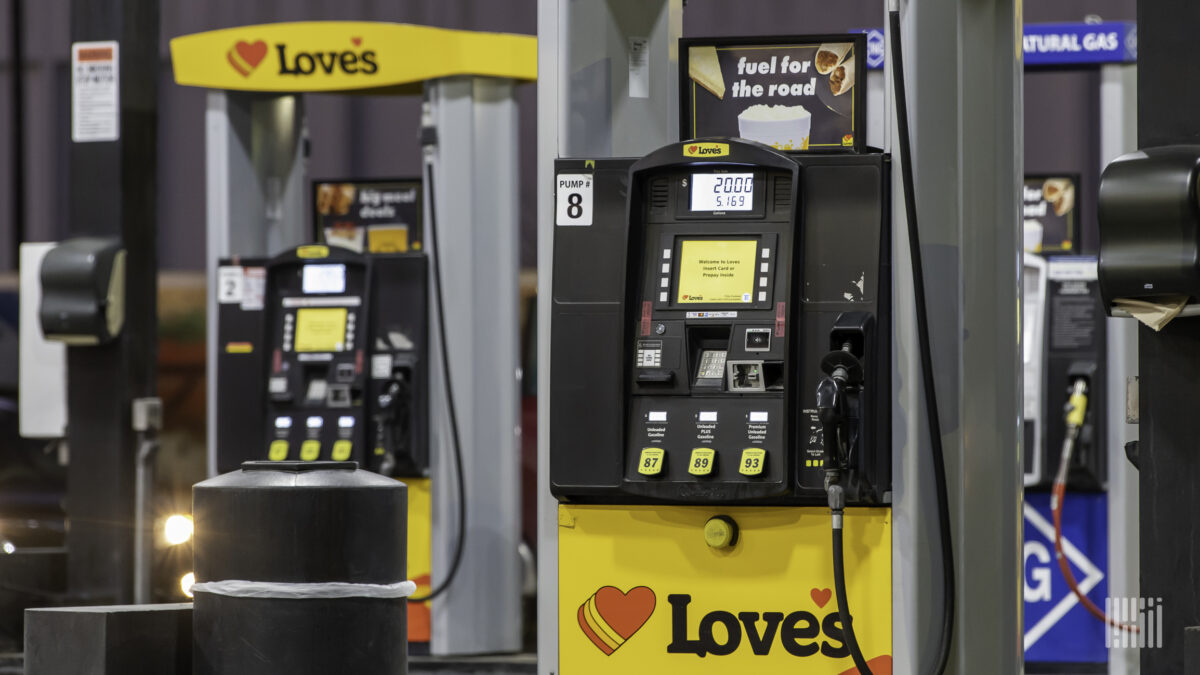
With its end-2025 acquisition trifecta that brought it three factoring companies all at once, Love’s Travel Stops is likely to look for more this year to grow its factoring activities within its Love’s Financial Services division.

Love’s announced the acquisition of three factoring companies–TBS Factoring Service, Saint John Capital and Financial Carrier Services–just before Christmas. The price was not disclosed, nor the sellers, but various references elsewhere suggested the companies were interlinked in different ways. 

“I think the acquisitions really speak to our commitment to growing this business and supporting the industry,” Love’s President Wharton said during the call. 

In what has become an annual event to review the company’s plans for the coming year, Wharton told an online forum with various media that factoring consolidation, widely discussed in the industry, has a basis in reality.

“There have been a lot of smaller players that have run into some challenges and so there are some possible rollup opportunities,” Wharton said. He described the three-company acquisition as “a good-sized purchase.”

Love’s is unique in the truck factoring sector because most factors consist of an office and communication tools, backed by financing. Love’s is in the face of its potential customers with its network of 668 travel centers (a number confirmed by a Love’s representative on the conference call).

“A lot of our competitors, all they offer are factoring services or they may offer a fuel discount,” Wharton said. But those companies are not “the entity that’s actually providing that fuel. So yes, it gives us the ability to bundle different products and services together, and I think that’s attractive to a lot of customers. They trust and know a lot of our other products and services.”

Pipeline empty for now

“I think there are still opportunities out there,” Wharton said, though he added that “we don’t have something in the pipeline at this second.”

“We feel we have a really good value proposition for our customers, and we want more customers to experience that,” Wharton said.

Wharton’s annual call with the media ranges widely, with discussions as diverse as growth in electric vehicle chargers to new types of foods in the various restaurants that can be found through the Love’s network. 

Renewable diesel plant opening

But a big moment for a very different business for Love’s this coming year will be the opening of Heartwell Renewables, which will produce 80 million gallons of renewable diesel annually 

That is a relatively small plant; by contrast, the Phillips 66 Rodeo, California renewable diesel facility in the San Francisco Bay area produces 800 million gallons per year

Wharton said Heartwell, which is in Hastings, Nebraska, is expected to open later this year though a precise or approximate date was not disclosed 

“This is a huge, gigantic project, and we’re excited to get it open,” Wharton said. The workforce there will be about 70 employees, he added.

The investment by Love’s in Heartwell is an example of a company going upstream in its particular area of business. Love’s, among other activities, sells a lot of fuel, diesel in particular. It is going upstream to help secure a supply of that fuel, in this case, renewable diesel which is a “drop-in” fuel that is chemically identical to diesel that comes from a petroleum refinery. 

That sort of reverse integration has always been controversial in numerous industries. In the petroleum industry, several fully integrated companies in recent years split into an upstream division that produced hydrocarbons from the ground, and a separate company that refined them. ConocoPhillips spun off its refining operations into Phillips 66; Marathon Oil split into Marathon Oil (upstream) and Marathon Petroleum (downstream). ExxonMobil and Chevron have stayed as fully integrated oil companies.

The decision at Love’s to take that upstream step, Wharton said, “comes from a couple of places. One is to generally support this industry. We’re in the business of providing fuel to our customers, and renewables is part of that fuel.”

Although Wharton did not mention it, the production of renewable diesel generates Renewable Identification Numbers (RINs), which can be sold to companies that need to acquire them to meet their respective requirements under the Renewable Fuels Act. Fuel retailers like Love’s generally do not have an renewable fuels mandate, so all of the RINs generated by Heartwell can likely be sold to companies that do.

RINs economics are a key factor in determining the economic viability of a renewable diesel project. One of the reasons why so many RD projects are in the West Coast is the sale of the product can generate not only RINs but also credits under California and Oregon’s Low Carbon Fuel Standard.

Wharton said Love’s believed Heartwell as a good investment, “and we felt like and we still feel like we have expertise in the space. You put all those things together and we decided to go forward.”

Love’s will market all the offtake from the plant. But Wharton added that “obviously a lot of that’s going to end up in Love’s facilities.”

Wharton said most of the feedstock for the plant will be tallow, which is an animal fat.

New stores, more parking

Addressing Love’s core business, Wharton said the company this year plans on opening 20 new locations. When asked where they would be located, he said “across all parts of the country.”

Capital expenditures to invest in the Love’s network will total $700 million, an amount that will include not only new stores but remodeling of others. The total work, Wharton said, will be 55 locations “that will either be new or refreshed.”

The projects, whether they are new stores or remodeled facilities, will add about 1,500 parking spots to the Love’s network of almost 51,000 spots, Wharton said new parking in 2025 totaled about 1,400 spots, he added. 

One shift in policy during remodeling is that more of the store undergoing renovation will be fully closed. “We found over the last year or two that doing these remodels while open was not a good experience for our customers,” Wharton said. “In a lot of cases we can get them done faster if we actually close down the location.”

During a closure, the Love’s facility will still provide fuel, restrooms and some food and drink options, many of them through an onsite trailer, Wharton said. 

While 2025 might have been a big year at Love’s in its expansion in its network of travel centers and its factoring business, there was another huge development for the company: its sponsorship of the hometown Oklahoma City Thunder which won the NBA championship, led by NBA most valuable player Shai Gilgeous-Alexander.

Love’s logo is prominent on the Thunder’s uniform, more visible than many team logos found on other NBA jerseys. 

“The marketing team has consultants that do an analysis and look at the reach and how many times the logo has been seen,” Wharton said. “The value is pretty strong if you look at it compared to if you paid for all that media.”

But there are other values, Wharton said. “It also helps in terms of recruiting talent to the team here in Oklahoma City, “ Wharton said, citing in particular several new executives who have joined the company in the past year in key roles, all of whom came from outside OKC.

“It definitely helps put a positive halo over the city,” Wharton said of the NBA title holders.

More articles by John Kingston

Werner settlement ready to go in drivers’ lawsuit that dates to 2014

Amazon’s LTL offering reaching out to shippers as possible customers: report

NFI’s Brown, others win another round in dismissed New Jersey indictment

First look: XPO posts Q4 earnings beat

a closeup of an XPO daycab

XPO’s fourth-quarter adjusted earnings came in 18% higher year over year, excluding one-off items and real estate gains.

XPO (NYSE: XPO) reported adjusted earnings per share of 88 cents (inclusive of gains) ahead of the market open. That was 12 cents ahead of the consensus estimate. The adjusted EPS number excluded transaction and restructuring costs but included 8 cents per share in gains from the sale of real estate. XPO recorded 21 cents per share in real estate gains in the 2024 fourth quarter.

The fourth-quarter consensus estimate moved down (from 85 cents) after XPO’s intraquarter update, which some analysts construed as worse-than-expected.

Consolidated revenue of $2.01 billion was 4.7% higher y/y and ahead of a $1.95 billion consensus estimate.

Click for full report – “XPO’s January tonnage bucks negative trend”

“By pairing world-class service with our proprietary technology, we’re building durable earnings power unique to our business,” said Mario Harik, chairman and CEO, in a news release. “We’re continuing to execute for market-leading margin expansion in the current environment, while positioning for outsized share and margin gains in a recovery.”

Table: XPO’s key performance indicators

The less-than-truckload unit reported a 0.8% y/y revenue increase to $1.17 billion (in line with management’s guidance of flat to slightly higher). Tonnage per day was down 4.5% y/y (in line with guidance calling for a result similar to the third quarter’s exit rate of down 4.7%). Revenue per hundredweight (yield) was up 5.2% y/y excluding fuel surcharges (compared to guidance of in line with the third quarter’s 5.9% increase).

The fourth-quarter yield metric benefitted from a 3% decline in weight per shipment and a 0.9% increase in length of haul.

Click for full report – “XPO’s January tonnage bucks negative trend”

The LTL unit reported an 84.4% adjusted operating ratio, 180 basis points better y/y, but 170 bps worse than the third quarter. The result was better than the historical sequential deterioration of 200 to 250 bps, and near management’s 84% implied guide.

XPO’s European transportation segment reported a 10.6% y/y increase in revenue to $846 million. Adjusted EBITDA of $32 million was up 18.5% y/y.

Shares of XPO were down 1.4% in pre-market trading on Thursday.

The company will host a call to discuss fourth-quarter results on Thursday at 8:30 a.m. EST.

More FreightWaves articles by Todd Maiden:

Alderson, CN investor relations executive, to retire

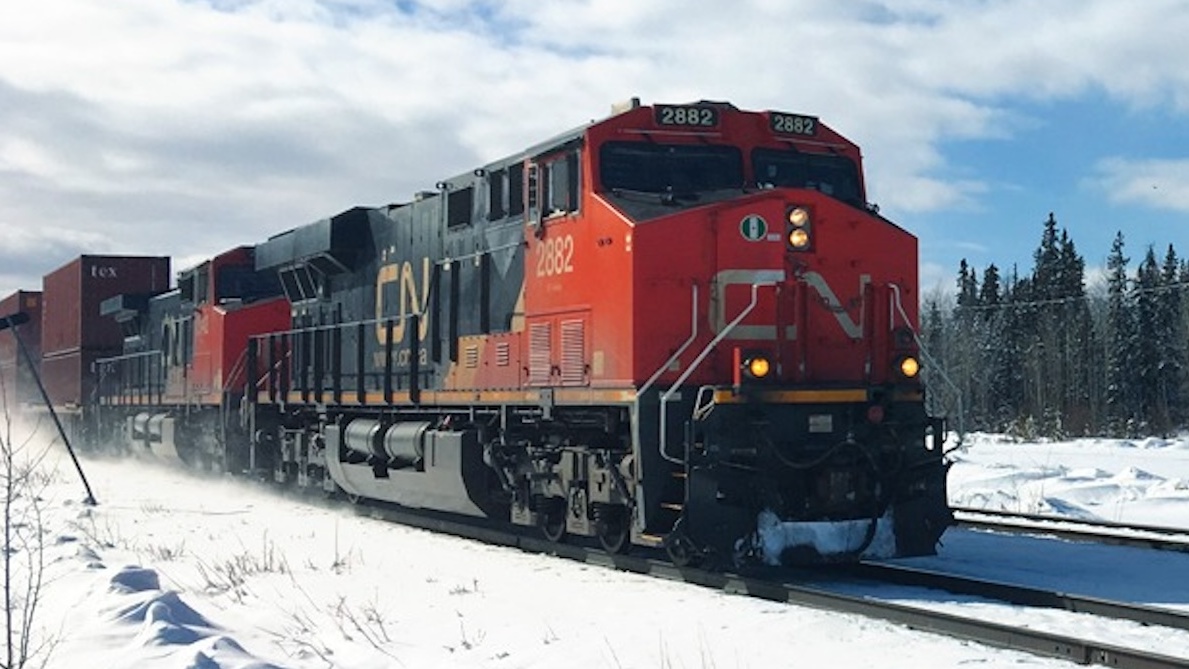
Stacy Alderson, Canadian National’s assistant vice president, investor relations, will retire in May.

Alderson will be succeeded by Jamie Lockwood, appointed as vice president, investor relations and special projects.

Chief Executive Tracy Robinson of Montreal-based CN (NYSE: CNI)  made the announcement during the company’s recent earnings call.

Stacy Alderson

Robinson said Alderson has “had an exceptional 30-year career here at CN, defined by leadership, integrity, and lasting impact. She’s touched many parts of our business over those years – strategic planning, acquisitions, network development, financial planning, she’s done it all.”

Lockwood will move into the new position from his current post as vice president, engineering. “He brings about 18 years of deep railroad experience,” Robinson said. “He’s spanned finance, internal audit, supply chain, and most recently, a big kind of job in engineering, where with Pat (Whitehead, chief operating officer), he’s been leading the transformation of our engineering strategy and execution.”

Alderson and Lockwood will work together over the next month or so, Robinson said, to ensure a smooth transition.

Subscribe to FreightWaves’ Rail e-newsletter and get the latest insights on rail freight right in your inbox.

Related coverage:

Union Pacific, Wabtec sign for $1.2B in locomotive upgrades 

Sorfleet retires at CSX; Chand new CAO

New industrial development worth $7.7B for Norfolk Southern in 2025 

CPKC profits rise as economy, trade issues drag freight

Truck drivers win $52M whistleblower retaliation verdict against Sysco

A California jury has awarded roughly $52 million to a group of truck drivers and yard workers who alleged they were retaliated against after raising safety, wage and regulatory concerns at Sysco, one of the nation’s largest food-distribution companies.

The verdict stems from a lawsuit filed in Los Angeles County Superior Court against Sysco Riverside Inc. and Sysco Corp., in which multiple plaintiffs accused company managers of fostering a culture of intimidation toward employees who reported unsafe and illegal practices.

Maryann Gallagher, the lead plaintiff attorney in the case, said the size of the verdict reflects how jurors viewed the evidence.

“I think there was overwhelming evidence,” Gallagher told FreightWaves. “There was so much evidence that Sysco was violating the law and these people were complaining and they didn’t do anything about it.”

Sysco said it plans to challenge the verdict. In a statement emailed to FreightWaves, the company said, “Safety and security are top priorities at Sysco Riverside, Inc., as well as Sysco’s other operating sites.”

Sysco added that while it “respect[s] the jury’s time and service,” it “strongly disagree[s] with its findings” and is reviewing the award to determine next steps, “including but not limited to anticipated post-verdict proceedings and an appeal.”

Allegations of unsafe practices

According to court documents, the employees — many of whom had worked at Sysco for years or decades at a location in Riverside, California — raised concerns related to yard safety, excessive working hours, falsified time records, food safety violations and retaliation for contacting regulators, including Cal/OSHA and the Labor Commission.

Houston-based Sysco (NYSE: SYY) is a multinational corporation that sells, markets and distributes food products, foodservice supplies, and equipment to restaurants, healthcare facilities and stadiums.

Sysco directly operates 1,472 power units and employs 1,719 drivers, according to the Federal Motor Carrier Safety Administration. The company has 340 distribution centers in 10 countries. 

The plaintiffs who worked at the Sysco Riverside facility said they were pressured to move trucks and trailers quickly through crowded yards, sometimes at unsafe speeds, and to maintain tight schedules that prioritized efficiency over safety. They also said they were told to load perishable food into trailers that were not properly refrigerated.

Gallagher said the misconduct described at trial spanned several years.

“It was, at least in our case, from 2016 until 2020 — four years,” she said.

Retaliation claims central to verdict

At the heart of the lawsuit were allegations that Sysco retaliated against workers who refused to participate in or reported those practices. The employees said retaliation included reduced hours, harassment, surveillance, discipline, termination and constructive discharge.

Gallagher said one of the most striking facts for jurors was how the company handled a supervisor accused of leading the retaliation.

“After all these people complained, it continued to go on, and they promoted him to a director — and he’s still the warehouse director there,” she said.

What the drivers wanted

Gallagher said the plaintiffs were motivated by more than personal compensation.

“There were two important factors,” she said. “It was getting them compensation for what they went through, and the second factor was stopping this behavior at Sysco. They didn’t want other truck drivers to have to go through what they went through.”

The jury found that Sysco violated California Labor Code Section 1102.5, the state’s whistleblower protection statute, which prohibits retaliation against employees who report or oppose illegal activity — even when complaints are made internally.

“In California, you don’t have to go to a government agency to be protected,” Gallagher said. “If you complain to your employer and they don’t take steps or they retaliate against you, then that’s illegal.”

Message for drivers and employers

Gallagher said she hopes the verdict sends a clear warning to employers across transportation and logistics.

“I know it’s scary to stand up and speak out,” she said. “But it’s the only way it’s going to stop.”