Reinventing driver staffing  – Taking the Hire Road

On this week’s episode of Taking the Hire Road, Justin Clarke, founder and CEO of driver staffing firm F|Staff, sat down with host Jeremy Reymer to share his vision for the future of CDL driver staffing and to discuss leveraging technology to match drivers with the right fleets. 

When Clarke began in carrier staffing as a young man, the traditional method of staffing relied on a branch model, wherein a central staffing branch supports the businesses throughout its city.

Clarke, however, says he saw early on that decentralizing that model could make it more efficient. 

“I think since I got into this career at such a young age, I had a creative perspective on how I envisioned the future of our company,” Clarke said. 

F|Staff helps match truck drivers to motor carriers around the country. The firm works with hundreds of carriers to meet staffing needs, including on-demand help, short-term work orders and permanent direct-hiring. 

As technology began to revolutionize every industry in the early 2000s, Clarke realized there were ways that he and F|Staff could not only revolutionize the staffing business model, but also make the experience better for the customer and the worker. 

“We wanted to abandon the traditional concepts of staffing,” he said. “We started developing technologies that would make things better – help workers find the job they want faster and help employers find the right hire more seamlessly.”

Eventually, Clarke says, he understood that small-scale, iterative development was not the best use of technology. “I finally had a Rubicon crossing moment,” he said. “It wasn’t just stages of development, it was a completely new business model.” 

Over the past decade, the F|Staff on-demand model has converted from a traditional staffing company to a direct sourcing marketplace where employer partners, mostly motor carriers, use proprietary technology to find the workers they’re looking for directly. “It’s an entirely different way of doing things from the old model, where everyone has to be bottlenecked while we make phone calls all day back and forth,” Clarke said.

F|Staff has reimagined that paradigm by using technology that helps end users meet their needs more efficiently. “We’ve become a conduit for success instead of a big Berlin Wall between good employers and good employees,” Clarke said. 

According to Clarke, many staffing agencies initially pushed back on F|Staff’s on-demand concept. “A lot of businesses in this space were afraid that they would lose their relationships, but we’ve found the opposite,” he said. “Our relationships have improved because businesses and workers can get to what they need without anything in their way. Because of that, we’ve seen growth to our head count, increased retention rates, and warm reviews from clients and hires,” he said. 

Efficiency is the name of the game in staffing, Clarke says. “I am all about finding the right worker for the right employer at the right time, as fast as possible,” he said. “And when I say fast, I mean snap your fingers and get it done.”

In the coming decades, the goal of F|Staff is to move the trucking industry into the future of staffing. Clarke says that means even more hands-on, direct sourcing that allows carriers to be granular in their hiring process.

“If the old model was Staffing 1.0, we’re in 2.0. I equate us to the Uber concept,” he said. “Our system allows clients to push job orders directly to the marketplace, and our algorithm pushes that job order to the appropriate workers, allowing for the best match,” he explained. 

“3.0 is a totally different version. Where we’re headed next is a business like VRBO, which lets people rent vacation homes for cheaper than hotel costs,” Clarke said. 

“With direct sourcing, clients will go to our marketplace, search and filter for workers they’re looking for, all the way from the type of CDL requirements down to the specific industry that a driver has experience hauling in,” he said. “We have the capability to view reviews for the workers, and even a way for drivers to post details or videos verifying their experience and qualifications.”

F|Staff has created a marketplace where the drivers are available for carriers to screen and filter precisely. “We want to give them the opportunity to not just find a qualified person who generally can fulfill the requirements, but the exact person that they want,” Clarke said.

Click here to learn more about F|Staff

Book recommendation: Platform Revolution

Sponsors: The National Transportation Institute, Career Now Brands, Carrier Intelligence, Infinit-I Workforce Solutions, WorkHound, Asurint, Transportation Marketing Group, Seiza, Drive My Way, F|Staff, Trucksafe Consulting, Seated Social, Repowr

FreightWaves Infographics: Cargo rail theft up 99% across Mexico in May


To view more FreightWaves infographics, click here

Trucking company owner pleads guilty to falsifying logs in fatal motorcycle crash

A former co-owner of now-defunct Westfield Transport of West Springfield, Massachusetts, has pleaded guilty in federal court to falsifying driving logs in connection with a June 2019 collision involving one of the company’s vehicles. Seven motorcyclists died in the accident in Randolph, New Hampshire.

Dunyadar “Damien” Gasanov, 39, of West Springfield, pleaded guilty Tuesday in the U.S. District Court for the District of Massachusetts to three counts of making false statements to federal investigators. He is scheduled to be sentenced in November and faces up to 15 years in prison and a $30,000 fine, according to the plea deal reached with prosecutors. He also admitted that he had lied about how long he had known the Westfield Transport driver, Volodymyr Zhukovskyy, who was involved in the crash.

As of publication Thursday, Dunyadar Gasanov’s attorney, Peter A. Slepchuk, had not responded to FreightWaves’ request for comment. 

Dunyadar Gasanov was indicted in February 2021, along with his brother, Dartanayan Gasanov, who has pleaded not guilty and is awaiting trial. According to Westfield Transport’s business filings with the state agency, Dartanayan Gasanov served as president, treasurer, secretary and director of the shuttered auto transport company.

“Keeping communities safe takes all forms. In this case, it is about making sure that operators of commercial vehicles adhere to all required safety procedures and regulations,” said acting U.S. Attorney Joshua S. Levy in a statement

According to court documents, from May 2019 to June 23, 2019, the owners of Westfield Transport allegedly falsified driving logs “in order to evade federal regulations designed to ensure the safety of roadways and drivers.”


In court filings, Dunyadar Gasanov admitted that he had instructed at least one Westfield Transport employee to falsify records to exceed hours-of-service limits. He then “made a false statement to a federal inspector regarding the manipulation of recording devices that track drivers’ on and off duty hours in order to evade regulations,” according to federal prosecutors.

In July 2022, a jury acquitted Zhukovskyy, now 28, of killing seven members of the Jarheads Motorcycle Club. He originally faced seven counts of negligent homicide, seven counts of manslaughter and one court of reckless conduct in the collision in rural New Hampshire. However, jurors found that the lead motorcyclist of the Jarheads, Albert “Woody” Mazza, was impaired and over the centerline of the road at the time of the collision. Zhukovskyy was driving an empty flatbed trailer at the time of the crash.

Dunyadar Gasanov also admitted that he had known Zhukovskyy for years prior to the crash and knew that the driver had been charged with operating a vehicle while under the influence of alcohol years before the crash, according to investigators. 

Feds charge Massachusetts state troopers in alleged CDL bribery scheme
Trucking bookkeeper already in prison for embezzlement sentenced for PPP fraud
Ex-Slync CEO Chris Kirchner guilty of wire fraud, money laundering

Participants line up to bend STB’s ear at rail growth hearing

This story originally aired on Trains.com.

WASHINGTON — The Surface Transportation Board will hear from more than three dozen participants during its two-day hearing next month regarding recent trends and strategies for growth in freight railroad traffic.

The hearing, set to begin at 9:30 a.m. Sept. 16 and 17 in the board’s hearing room, will be livestreamed on the STB’s YouTube channel.

The board called the hearing last month. It requested that executives from the six Class I railroads attend the hearing, and invited testimony from industry analysts, other railroads, shippers, suppliers and rail labor.

“While the Board recognizes that some shifts in volume may not be primarily within the control of rail carriers, the Board has observed that over the past ten years carload volumes have not grown, and have in fact decreased,” the STB said in announcing the hearing. “The Board wishes to explore how industry participants are strategizing and innovating to reverse this recent trend and achieve freight rail growth. The Board is also interested in shippers’ plans or desire for future use of rail, factors that may affect shipment decisions, and what rail carriers are doing and can do to increase shippers’ use of rail. This hearing presents a chance to discuss opportunities for growth in the freight rail industry, as well as the challenges and effects associated with a failure to grow.”

Thirty-eight companies, associations and individuals have asked to participate in the hearing. Requests to testify were due at the STB Wednesday; written testimony is due by Friday.

Among those notifying the board of their intent to participate:

Railroads

  • BNSF Railway Chief Marketing Officer Tom Williams and Chief Legal Officer Jill Mulligan
  • CN Chief Field Operations Officer Derek Taylor and Chief Strategy Officer Patrick Lortie
  • CPKC Chief Marketing Officer John Brooks
  • CSX CEO Joe Hinrichs and Chief Commercial Officer Kevin Boone
  • Norfolk Southern CEO Alan Shaw
  • Union Pacific Executive Vice President of Marketing and Sales Kenny Rocker
  • American Short Line and Regional Railroad Association: Executives from Sierra Northern Railway, R.J. Corman, Iowa Interstate Railroad, New York & Atlantic Railway, and Genesee & Wyoming, along with ASLRRA’s top legal officer
  • Association of American Railroads CEO Ian Jefferies and Chief Economist Rand Ghayad

Shipper trade groups

  • Alliance for Chemical Distribution
  • American Chemistry Council
  • American Fuel & Petrochemical Manufacturers
  • Freight Rail Customer Alliance and National Coal Transportation Association
  • Growth Energy, which represents biofuel producers
  • National Grain and Feed Association
  • National Industrial Transportation League
  • National Mining Association
  • Private Railcar Food and Beverage Association
  • The Fertilizer Institute

Suppliers

  • Half53
  • Hum Industrial Technology
  • OptiFuel Systems
  • Parallel Systems
  • Railway Supply Institute
  • Solutionary Rail, an advocacy group that explores rail transportation and the public interest

Lobby groups

  • CPAC Foundation’s Center for Regulatory Freedom
  • Washington Legal Foundation

Rail Labor

  • Brotherhood of Locomotive Engineers and Trainmen
  • Brotherhood of Maintenance of Way Employes Division/IBT; Brotherhood of Railroad Signalmen; International Association of Machinists and Aerospace Workers; SMART-TD Mechanical Division; International Brotherhood of Boilermakers; National Conference of Firemen and Oilers; Transport Workers Union of America
  • SMART-TD
  • Transportation Trades Division of the AFL-CIO

Wall Street analysts

  • Loop Capital Markets
  • Wolfe Research

Consultants

  • CNJ Rail Corp.
  • Highroad Consulting
  • Oliver Wyman LLC

Canada’s labor minister won’t send CN-union talks to binding arbitration

This story originally aired on Trains.com.

MONTREAL – Canada’s labor minister has denied CN’s request to intervene in contract talks with the union representing engineers and conductors.

Last week the railroad asked Labor Minister Steven MacKinnon to send stalled contract negotiations to binding arbitration to prevent a work stoppage that would halt rail traffic in Canada beginning at 12:01 a.m. on Aug. 22.

But MacKinnon, in letters sent Wednesday night to CN and the Teamsters Canada Rail Conference, said he won’t proceed with a so-called “section 107 referral.”

“Consistent with our discussion on August 5, 2024, I would like to clarify that it is your shared responsibility — Canadian National Railways Company and the Teamsters Canada Rail Conference — to negotiate in good faith and work diligently towards a new collective agreement,” MacKinnon wrote.

Federal mediators are standing by to assist in contract talks, he added.

“I trust that with continued effort, an agreement can be achieved promptly. The Government firmly believes in the collective bargaining process and trusts that mutually beneficial agreements are within reach at the bargaining table,” MacKinnon wrote.

CN, in a statement on Thursday, said it was disappointed in the minister’s decision. 

“We hope TCRC will listen to the Minister’s strong message that they must get serious and engage meaningfully at the negotiating table. The Minister must reconsider his decision if they don’t,” CN said, adding that it has made four offers to the union since January.

The TCRC, which opposed CN’s request for binding arbitration, applauded MacKinnon’s decision. 

“Teamsters Canada agrees with Minister MacKinnon: agreements are within reach at the bargaining table. It bears repeating that the main sticking points at the bargaining table are company demands, not union proposals,” the union said in a statement. “The only way forward is for the rail companies to engage in genuine negotiations at the bargaining table, and to back down from their demands for concessions.”

Talks between TCRC and CPKC also are deadlocked. Both railways have said they will be forced to lock out employees on Aug. 22 and that they have begun a phased shutdown of operations in Canada, starting with hazardous materials shipments.

The U.S. Surface Transportation Board on Wednesday said it was monitoring the situation in Canada.

“If a strike occurs, the U.S. rail network and supply chain could be affected,” the STB said in a statement. “The Board is aware that embargoes related to the potential strike have been issued and that the scope of the embargoes could expand in the coming days. The Board is monitoring the implementation and effects of those embargoes on the network.”

A work stoppage at CN and CPKC in Canada will have an impact on rail volumes in the U.S. and will affect multiple commodities. Among them: international intermodal, lumber and forest products, auto parts and finished vehicles, grain and other agricultural products, and petroleum products and chemicals.

About a third of CN’s revenue comes from U.S.-Canada cross-border traffic, while CPKC says 24% of its revenue comes from cross-border business between the U.S. and Canada as well as Canada and Mexico.

Brokerage acquires truckload and LTL carrier, forming Southeast-focused BRW

The owners of separate asset-light and asset-heavy companies are combining in the Southeast to form a significantly larger brokerage, truckload and LTL business. 

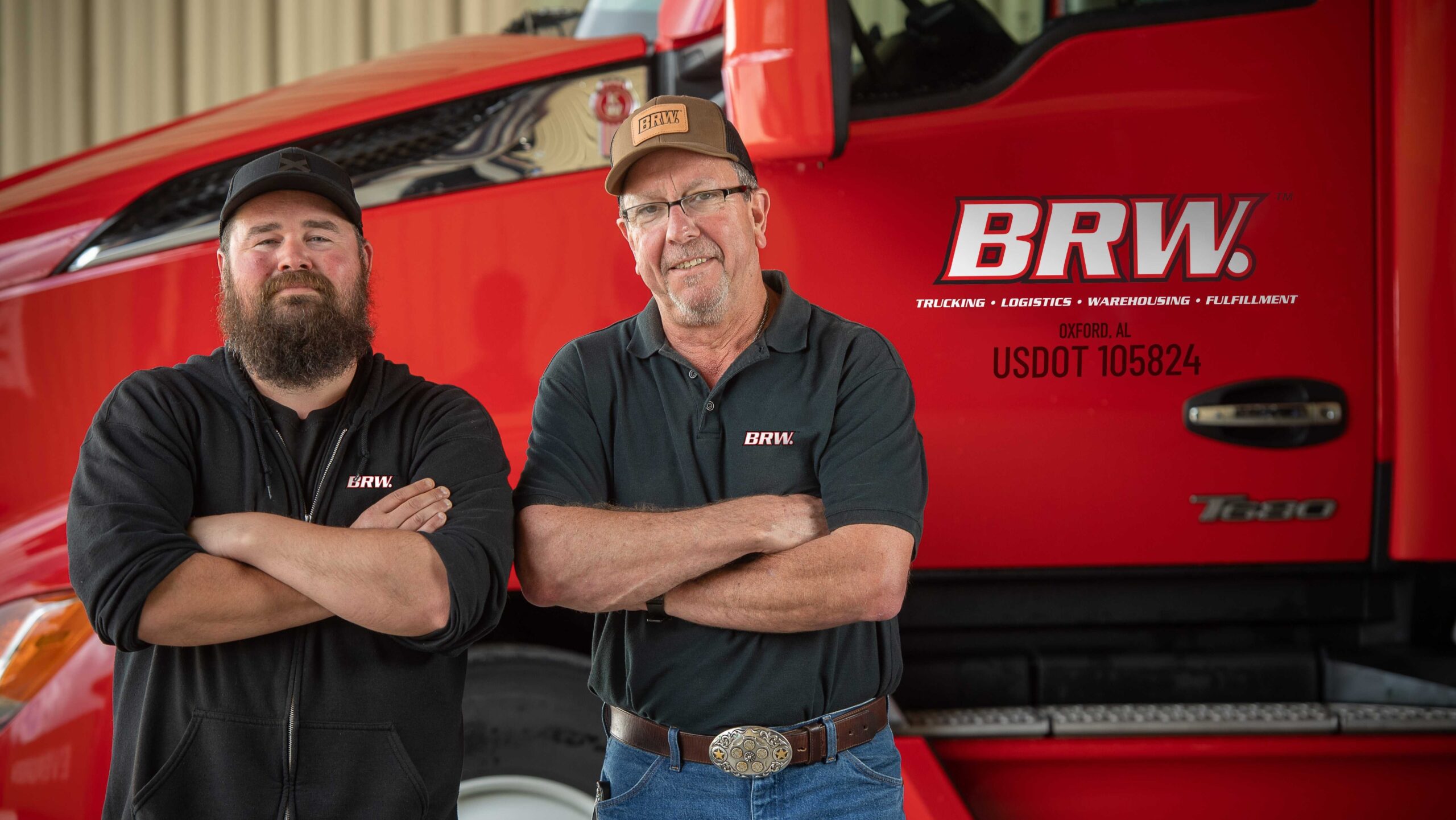
The name of the new entity is BRW. It comes from the acquisition of B.R. Williams Trucking and B.R. Williams LTL Logistics by Haney and White Enterprise, which owns brokerages Haney and White Logistics and Running Ox Logistics.

B.R. Williams is based in Oxford, Alabama. Haney and White is based in Shepherdsville, Kentucky. According to a spokeswoman for BRW, the two companies had no formal ties or relationships prior to the acquisition.

The acquisition price was not disclosed.

In response to a question from FreightWaves, the spokeswoman said the transaction could be described as a “reverse integration,” in which a 3PL that previously had no physical assets buys a company of substantial size and now has those assets.

B.R. Williams will bring to BRW approximately 175 tractors, more than 700 trailers and five warehouses in the Southeast with total space of more than 1 million square feet. 

B.R. Williams is family-owned and has been in existence since 1958. CEO and President Greg Brown is the son-in-law of Ruth Williams, who was a co-founder. 

The two B.R. Williams companies being brought into the combination with the 3PL are B.R. Williams Trucking, a truckload carrier, and B.R. Williams LTL Logistics. The spokeswoman said the companies have roughly equal revenues.

The company will have more than 300 people across locations in Kentucky, Georgia, Alabama and Florida, it said in a prepared statement announcing the transaction. Its annual revenues will be “approaching” $100 million with a target of $250 million by 2030. 

That target will be reached by “synergies and a growth strategy already in motion,” according to the spokeswoman.

Asked if that could mean more acquisitions are in the offing and if the combination into BRW is just step one, the spokeswoman said that “additional acquisitions are on the table.”

“However, the phrase (already in motion) related to the synergies created in our key customer target areas to replicate and multiply existing business up and down the I-65 corridor and additional areas in its reach,” she added in an email to FreightWaves. “The customer piece of this acquisition is the paramount focus.”

In the Southeast, I-65 runs through Alabama; Nashville, Tennessee; and Louisville, Kentucky; then up to Indianapolis and on to Chicago.

B.R. Willliams is also bringing to the combined company about 125-130 company drivers and two owner-operators. But that latter number is likely to change. “We see this as a huge growth opportunity and will be rolling out an owner-operator program in short order,” the spokeswoman said.

B.R. Williams does have a brokerage division, as do most truckload and LTL carriers, that will be integrated into the new company. 

Although Haney and White is the acquiring company in the transaction, the spokeswoman said its current activities provide about 40% of the combined revenue, with B.R. Williams accounting for the remainder.

The strategic plan driving the acquisition, the companies said in their announcement, is to “facilitate direct growth in the Southeast corridor from Indiana to Florida, with a focus on automotive manufacturers and suppliers, e-commerce and government contract opportunities for BRW. With the essential resources for expansion and enduring viability, the acquisition further enables BRW to replicate established customer bases across the upper Midwest and Southern regions of the United States.”

However, the spokeswoman said the company does operate in all Lower 48 states.

Nate Haney, co-founder of Haney and White, said in the prepared statement that “the combination of these four companies provides a dynamic, disruptive, and driven enterprise built on integrity that is ideal for taking advantage of market growth opportunities and long-term sustainability.”

More articles by John Kingston

ATA chief rips OOIDA stance on Biden independent contractor rule

Newly public Proficient has strong Q2, makes first post-IPO acquisition

RXO points to bright spots even as soft freight market persists

South Texas ports of entry requiring cargo trucks to display QR codes

U.S. Customs and Border Protection has begun requiring trucks using international bridge crossings in South Texas to print and display the QR code of their cargo manifests on their windshields.

The QR code requirement is for cargo trucks arriving from Mexico using the eight ports of entry that are administered by the Laredo field office. Those include international bridges in Laredo, Brownsville, Eagle Pass, Hidalgo, Rio Grande City, Progreso and Roma.

Officials for CBP said the QR code requirement is meant to streamline the screening process for trucks, as well as reduce wait times.

“This is isolated to the Laredo Field Office area of responsibility since we are the first field office to get large non-intrusive inspection x-ray systems in the truck environment,” Armando Taboada, assistant director of field operations at the Laredo Field Office, told FreightWaves in an email. “The QR code will assist CBP officers by reducing the probability of selecting the wrong shipment/trip number at the time of arrival at a port of entry. This normally adds administrative time in correcting the issue.”

The border crossing in Laredo is currently the No. 1 international gateway for trade in the U.S. Laredo recorded $27.8 billion in two-way trade in July and processed 258,924 trucks during the month, a 9.4% year-over-year increase.

In July, Laredo’s World Trade Bridge received an advanced X-ray scanning machine called a multienergy portal inspection device. The device can scan more than 150 containers per hour, CBP said.

“The QR code will assist by linking the non-intrusive inspection image to the shipment/trip number,” Taboada said. “The non-intrusive inspection system is also an enforcement tool used by CBP officers to protect the U.S. from terrorist and narcotic threats such as methamphetamines, cocaine and fentanyl.”

Trucks that are not displaying a QR code on their windshields will not be sent back to Mexico, and will be processed manually, CBP said.

The Laredo Field Office trade division has been communicating with the trade stakeholders and carriers, Taboada said.

“Like all new steps, this will add some additional time to the overall crossing time while the CBP officers and trade stakeholders get familiar with the additional step,” Taboada said. “Eventually, the process will become more efficient and will also have cost savings to the trade stakeholders by having less cargo offloaded (this expense is covered by the importer of record).”

Officials for the Laredo Motor Carriers Association (LMCA) said the new requirements should speed up the screening process for cargo trucks at the border.

“Local CBP leadership presented this new QR code requirement to us, our membership took it with good spirits and was grateful for the partnership we have with CBP,” Jerry Maldonado chairman of LMCA, said in an email to FreightWaves. “We are confident that this new procedure will help us expedite the border crossings.”

Teamsters National Black Caucus endorses Harris for president

As the International Brotherhood of Teamsters membership continues to vote on an official endorsement for president this election year, the Teamsters National Black Caucus (TNBC) has endorsed Democratic presidential contender Kamala Harris.

In a news release posted to the group’s Facebook page, TNBC announced Tuesday that the caucus would endorse Harris for president.

“Vice President Harris and Governor Walz have consistently demonstrated their unwavering commitment to workers and their families,” the release states. “Their records reflect a deep dedication to advancing labor rights and supporting working class Americans. As a key partner in leading the most pro-labor administration in our lifetimes, Vice President Harris has proven to be a tough and principled fighter for workers’ rights and a leader who delivers on her promises.”

The endorsement also blasts Republican nominee Donald Trump, who the TNBC alleges is discriminatory, anti-immigrant and sexist. TNBC argues that while Trump was president, his administration weakened worker protections, undermined labor unions and blocked wage increases.

The TNBC is a nonprofit organization that represents Black members of the Teamsters union, which has over 1.3 million members in the U.S., Canada and Puerto Rico. The caucus focuses on issues such as increasing participation within the Black community and other communities of color.

International Brotherhood of Teamsters reacts

While the TNBC is made up of Teamsters members, the organization is technically an independent group. Asked for the union’s reaction to TNBC’s endorsement, Kara Deniz, assistant director of communications at the International Brotherhood of Teamsters, said the union encourages all voices to be heard.

“We are a diverse union and what being in a union is all about, as a worker and as a member, is having your voice heard,” Deniz said in a phone interview with FreightWaves. “We encourage all voices because we’re a democratic union, and that is exactly why we are holding this endorsement process, so that our members can be engaged and involved.”

The International Brotherhood of Teamsters is halfway through a monthlong vote polling its members on whom to endorse. Deniz said 1.6 million Teamsters members and retirees will have received a union magazine issue with a QR code that takes them to online polling about whom they want for president along with issues related to labor and what their priorities are.

Deniz said that going back to last fall, the Teamsters union invited candidates Donald Trump, Robert F. Kennedy Jr., Joe Biden and Cornel West to attend several presidential roundtables at Teamsters headquarters in Washington. There, candidates spoke with Teamsters President Sean O’Brien, Secretary Treasurer Fred Zuckerman and groups of rank and file Teamsters coming from Democratic, Republican and independent backgrounds from around the country.

“It’s really important to us that our members are engaged and that their voices are heard,” Deniz said. “The Teamsters union has never done anything like this before where we have sat down with the candidates, gone into the communities where members live at each local union and held these conversations that we’ve done.”

Deniz said the union’s decision on whom to endorse will come from data collected during the roundtable conversations, town halls and membership polls. The Teamsters’ general executive board will take all of this information into account in making the endorsement decision, which is expected sometime after the Democratic National Convention starting Monday.

“We have not had a sit-down with Vice President Harris at this time, although she has been invited,” Deniz said.

She said the Teamsters have not received a response from the Harris campaign regarding the roundtable invitation. As of Thursday, O’Brien has not yet been invited to the Democratic National Convention, which he has filed a request to speak at.

O’Brien spoke at the Republican National Convention in July, making history as the first Teamsters president to do so. There, he called for labor reform and made an appeal to bipartisanship, stating the union was not beholden to any one political party.

The challenge

Welcome to the WHAT THE TRUCK?!? Newsletter presented by Truckstop. In this issue, challenge issued to ATA and OOIDA; Tesla Semi scam; has the market bottomed?; and more.

Heavyweight matchup


X

The Great Debate 2? — The American Trucking Associations and the Owner-Owner Independent Drivers Association are at each other’s throats again, this time over President Joe Biden’s independent contractor law. 

The brouhaha is over Julie Su, California’s secretary of labor, and her hostility toward independent owner-operators under the AB5 law. The ATA feels that Su’s words are empty regarding a driver being able to keep independent contractor status and sees it as similar to how health care regulations were implemented.

“It’s laughable to think that these folks give a hoot about small business truckers. They’ve been on the wrong side of every issue for the last 40 years.” – OOIDA President Todd Spencer

John Kingston reports, “[OOIDA Executive Vice President Lewie] Pugh made a point that many other observers have made: that the Biden IC rule is not significantly different from the Trump administration rule and less stringent than what was first proposed.”

“If you’re truly an independent contractor, subleased or whatever to another motor carrier, you shouldn’t be controlled as an employee, meaning speed limiters and driver fleet management tools like that must be put into your truck.” – Pugh

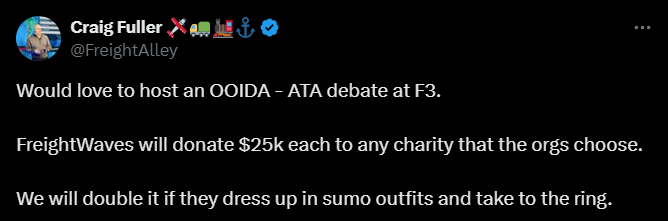
Now, FreightWaves CEO and founder Craig Fuller has offered a forum for the two to debate at FreightWaves’ F3 conference this November. There’s $25,000 on the line for each participant that would go to the charity of their choice? Heck, they both get $50,000 if they wear sumo outfits!

Will OOIDA and the ATA step up the plate?

Tesla Semi scam


North American Council for Freight Efficiency

Nontransferable — A new scam has been uncovered in Southern California, and this one is targeting zero-emission fleets that have unused Hybrid and Zero-Emission Truck and Bus Voucher Incentive Project (HVIP) vouchers. CCJ reports that the suspected scammer is “attempting to sell non-existent reservations at a premium for the soon-to-be-released truck.” He was looking to receive $5,000 per Tesla Semi reservation that he’d transfer.

“Why are you ghosting me? I thought we were super close?” – Alleged Tesla Semi scammer to Talon Logistics Inc.’s Mike Bush

Talon Logistics Inc.’s Mike Bush was one of the potential victims of the scam, but he was able to smoke out the ruse fairly quickly. For one thing, Tesla Semis have been notoriously hard to get. Only Pepsi has been able to obtain them, and Tesla says large-scale production won’t begin until 2025. 


In addition, the scammer used a Gmail address, and Bush was aware that Tesla Semi reservations are not transferable.

Bush says the scammer eventually got very aggressive but ultimately his fraud failed. Now he’s upset that Bush ghosted him. I recommend every fleet do the same.

Have you been hit by this scam? Email me.

Bottom of the cycle?


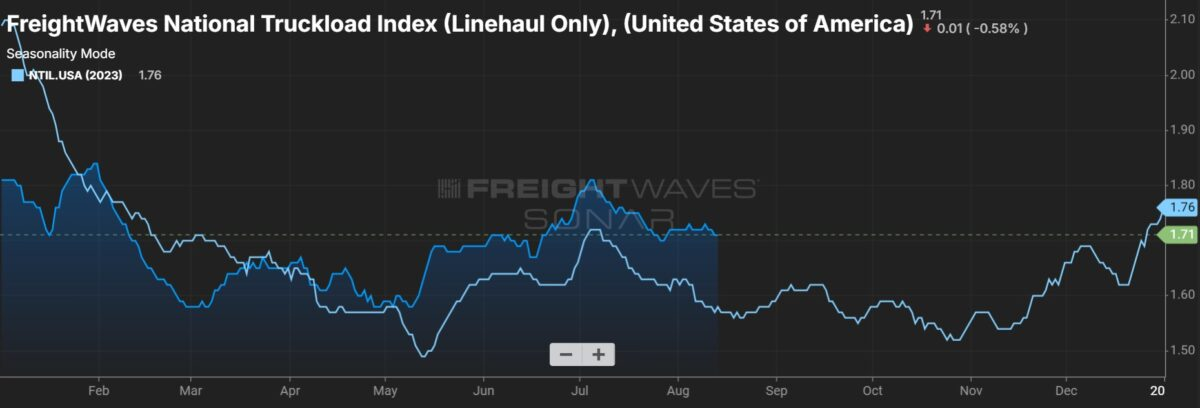
Cass report – Cass Information Systems showed year-over-year declines at their lowest in 17 months. Todd Maiden reports, “The Wednesday report said pressure on the for-hire truckload market is easing as demand for goods slowly improves and private fleets rein in capacity additions.”

SONAR

At the ports – FreightWaves’ Stuart Chirls reports, “The Port of Los Angeles handled a record-breaking 939,600 twenty-foot equivalent units in July, up 37% over the previous year. It was the busiest month in more than two years and the best July in the port’s 116-year history.”

Two weeks ago I was at the Port of Long Beach, where officials were very excited about their record-breaking volumes in June and said the forward-looking vessel schedule looked good.


LinkedIn

The momentum looks to continue as volumes keep growing at ports of origin bound for the U.S.

The No. 1 word I’ve heard from logistics leaders over the past two months is uncertainty. Businesses hate it and right now they’re worried about the health of the market, the economy, potential for delays, the election and global conflicts. 

Do you think we’re just seeing a pull forward that will recede in coming months, or do you think this momentum starts to build? Sound off in my email.

Storrowed PSA


X

The green monster – With moving season picking up in Boston, MassDOT has released its latest warning about The Hub’s most notorious roadway, Storrow Drive.


WAGA

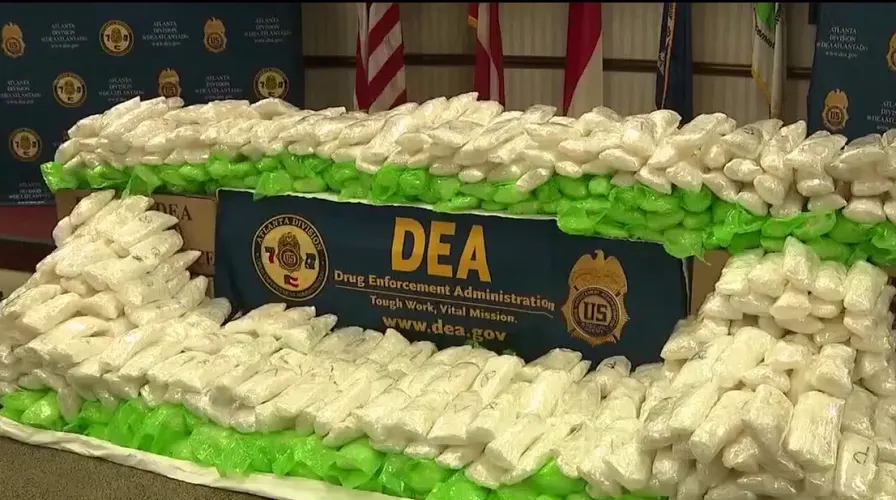
Big bust – A farmer’s market just outside of Atlanta now has the dubious distinction of being the location of the biggest drug seizure of its kind ever in the U.S. Drug Enforcement Administration agents confiscated more than 2,300 pounds of meth concealed in a shipment of celery at Atlanta State Farmers Market in Forest Park. 

“It was hiding in the celery. Obviously, we threw away the celery. That didn’t make it to the store.” – DEA Special Agent in Charge Robert Murphy

DEA Special Agent Murphy says the agency was tipped off about that tractor trailer in advance. AP reports, “A Mexican citizen was arrested.”

WTT USA! USA! USA! – Head on over to WTTGear.com to get your WTT USA T-shirt and show your patriotic pride! They’re $30 and made from some of the softest Bella & Canvas cotton around. Readers of this newsletter can take 10% off with code WTTFans. Get yours today right here.

WTT Friday

How the Red Sea conflict is reshaping freight and the need for U.S. shipbuilding — Friday live at 12 p.m. Eastern, we’re joined by GCaptain’s John Konrad to talk all about the Red Sea conflict, America’s need for shipbuilding; and the decimation of the U.S. merchant marine.

What happens when a driver dies on the road? It can be incredibly challenging for surviving family members. That’s why Robert Palm started Truckers Final Mile, a charity dedicated to helping trucking families when the worst happens. 

Plus, headlines, weirdness and more.

Catch new shows live at noon EDT Mondays, Wednesdays and Fridays on FreightWaves LinkedIn, Facebook, X or YouTube, or on demand by looking up WHAT THE TRUCK?!? on your favorite podcast player and at 5 p.m. Eastern on SiriusXM’s Road Dog Trucking Channel 146.

Now on demand

OOIDA urges DOT to proceed with caution on AI, autonomous trucks

What inventory levels are telling us about holiday peak season

The rest of the noise

Thanks for reading, and feel free to forward this to a friend.


Tweet @ Dooner

Email me

Subscribe to the newsletter

Subscribe to the show

Apple Podcasts

Spotify

YouTube

TikTok

Twitter

Or simply look up WHAT THE TRUCK?!? on your favorite podcast player. Or, if you have SiriusXM, tune in to the show Monday, Wednesday and Friday at 5 p.m. Eastern time on Road Dog Trucking Channel 146.

Exit through the gift shop: WTTGear.com 

Don’t be a stranger,

Dooner

Ocean market – adding capacity doesn’t mean overcapacity

To subscribe to The Stockout, FreightWaves’ CPG and retail newsletter, click here.

Maritime-focused The Stockout episode

(Image: FWTV)

On Monday’s The Stockout show, I interviewed longtime ocean industry expert John D. McCown. McCown has multiple decades of experience attacking the ocean industry from different angles, including as CEO and co-founder of Trailer Bridge.

One overarching observation is that ocean carriers’ business models have improved in recent years. The carriers’ ability to coordinate blank sailings through alliances has enabled carriers to mitigate the risk of overcapacity from a robust order book for new vessels. Carriers can fine-tune capacity levels via slow steaming as well. McCown also points out that the volume of container ships set to come online (15% over a multiyear period) is only about half of the TEU capacity (30%), which gains most of the headlines. Container ships are also pulling cargo from other vessel types in agriculture. Taken together, while Maersk last week said spot rates have likely peaked, contract rates, which are more important in the container shipping industry, are nevertheless likely to remain elevated. Longer routings away from the Red Sea continue to remove about 8% of capacity from the industry, and volume in the key Asia-to-North America lanes continues to set records.

Watch Monday’s show here or click here to get caught up on all past The Stockout episodes. 

For more from John D. McCown, you can sign up for his monthly ocean newsletter by sending an email to john.d.mccown@gmail.com.

Here are links to several recent FreightWaves articles on ocean shipping: 

Maersk’s management said it believes that ocean spot rates have peaked, but rates remain at elevated levels. Ocean spot rates from China to the North American west coast and east coast are shown in white and red, respectively. (Chart: SONAR)

Canadian rail strike may begin as early as Aug. 22

Intermodal volume originating at Prince Rupert, British Columbia, is tracking below recent years (white line is 2024) due to vessel diversions to avoid potential labor disruptions. (Chart: SONAR)

On Aug. 9, the Canadian Industrial Relations Board (CIRB) determined that a work stoppage at the Canadian railways would cause no “serious danger.” At the same time, the CIRB ordered a 13-day cooling-off period that started that day. The dispute involves close to 10,000 workers represented by the Teamsters Canada Rail Conference (TCRC) that work at both Canadian National Railway (CN) and Canadian Pacific Kansas City (CPKC), and the ruling gives negotiating leverage to the union. CN has called on the labor minister to issue binding arbitration. The railway also issued a notice that it plans to begin a phased network shutdown on Aug, 22 if there is no meaningful progress in either negotiations or binding arbitration.

For more, see FreightWaves article

Macro data points highlight moderating inflation, stressed consumer:

Recent macro data points relevant for CPG and retailers include:

  • The Consumer Price Index in July showed price levels rising 2.9%, the smallest increase since March 2021 and slightly below the consensus forecast of 3%.
  • Tuesday’s release of the Producer Price Index saw the headline index for July increase just 0.1% month over month (versus 0.2% consensus) and increase 2.2% year over year. The inflation in producers’ costs was mainly driven by energy (+1.9% m/m) on a 2.8% and 12.9% rise in gasoline and diesel, respectively.
  • Credit card balances of $1.14 trillion are 5.8% higher year over year. 10.9% of credit card balances are 90-plus days delinquent.
  • A survey by Datassential found that 60% of consumers say they have changed how they shop due to higher grocery prices.
  • Walmart raised its guidance for FY25 sales by 75 basis points, from 3%-4% to 3.75%-4.75%. It cited continued share gains across income levels, led by upper-income households.