What Lumber And Steel Futures Are Telling Flatbedders As We Wrap Up 2025

Let’s keep this simple: lumber and steel are two of the biggest drivers of flatbed freight in this country. If people are building houses, warehouses, retail centers, data centers, transmission lines, and factories, you’re hauling the stuff — framing lumber, coils, plate, beams, structural steel, rebar. When that demand is hot, you feel it right away in your load board. When it cools off, you feel that too.

So where are we right now, closing out 2025? Lumber futures are sliding off their highs and steel demand is soft with some pockets still running hot. That combination is sending a pretty clear message to flatbed haulers: expect mixed demand instead of broad “every lane is on fire” demand. Some regions will stay busy. Some will get quiet. And the guys who survive are going to be the ones who understand where the money still is — and where it isn’t.

Lumber: housing is cooling off, and the market is telling on itself

(Source: Trading Economics)

Lumber futures ran up hard earlier this year and even hit around $695 per thousand board feet in August — a three-year high, driven mostly by traders betting on tighter supply and higher tariffs on Canadian wood. That wasn’t because America was suddenly building houses like crazy. It was mostly front end tariff buying: “Tariffs are going up, better load up before it gets expensive.” Mills, wholesalers, builders — everybody grabbed inventory early.

Then additional reality hit.

Mortgage rates stayed high. Builders started seeing buyers slow down. Single-family starts and permits dropped. Builders shifted from “how fast can we frame it” to “how fast can we move what we’ve already built.” Lumber demand didn’t follow the price up. Now, as we sit in late October 2025, lumber futures have fallen back into the $590–$610/mbf range, down double digits from that August spike, and recently touched the lowest levels in weeks.

Here’s what that means in plain English: the lumber market is heavy. They’ve got plenty of  product. They don’t have buyers lined up like they hoped. Builders overbought expecting a strong fall build cycle, and that build cycle didn’t fully show up. Again, you heard it before, it is all supply versus demand. 

There are two main reasons for that weakness:

  1. Housing affordability is still brutal. Buyers are backing off because monthly payments are ugly, even if sticker prices come down a little. That stalls new single-family construction, which is a core driver of flatbed loads like studs, trusses, sheathing and roofing materials into subdivisions.
  2. Inventory is sitting. Builders in a lot of markets are now cutting prices or offering incentives just to move finished homes. You don’t order framing packages for the next phase if the last phase hasn’t sold yet.

So instead of steady flatbed freight — lumber from mill to yard, yard to jobsite, jobsite to next jobsite — you get pauses. Slow downs. Gaps in the week.

If you’re a flatbed carrier that leans heavy on housing freight (think Southeast and Sun Belt bedroom communities, roofing materials, truss packages, drywall), you’re going to feel that softness first. You’ve probably already felt it: more deadhead to get something decent, brokers holding the line on rate because “it’s slow this week,” and more back-and-forth just to keep the truck moving.

The price slide in lumber is basically the market saying: “Housing isn’t absorbing material fast enough.”

That is your early warning signal. When lumber drops, housing obviously cools. When housing cools, flatbed softens.

Now, does that mean lumber freight dies everywhere? No. It means you stop assuming “house build = easy money” in every county. The good lumber lanes going into high-growth pockets (parts of Texas, the Carolinas, Tennessee, Alabama) will still exist. But they’ll be more competitive. You’re going to see more trucks chasing the same pool of deliveries because demand isn’t broad and guaranteed anymore; it’s targeted and uneven.

Translation: If you’re purely living off new residential construction materials, you’re in a risk lane. You’ll need to either widen your service radius or start playing in non-residential work (commercial buildouts, distribution centers, solar fields, infrastructure jobs) to keep your week full.

Steel: weak overall, but not dead — and not equal in every lane

Now let’s talk steel.

Steel is the backbone of flatbed freight — coils, plate, beams, fabricated components. When steel moves, flatbeds eat. When steel slows down, you feel trucks stacking up in places like Ohio, Indiana, Michigan, Pennsylvania, Alabama, Texas.

Here’s where steel sits as we close 2025:

Global steel demand in 2025 has been weak. Prices have been under pressure most of the year because buyers — construction, manufacturing, export markets — haven’t been pulling hard enough to soak up supply. We’ve got too much capacity chasing not enough end use in a lot of regions, especially Asia, where prices are at or near historic lows.

In Europe, demand is also soft, and the only thing keeping prices from totally dumping is production cuts and trade protection. In other words: they’re shutting furnaces off just to stop the bleeding. According to a September 2025 report, this scenario will drive overall utilization rates down to approximately 70% from the current 78-79%, creating what steel industry observers describe as a “structural oversupply crisis.”

In the U.S., you’ve got another layer: tariffs. That sounds like a policy headline, but let’s talk about what that actually means at the dock door.

When imported steel is priced out of the market, domestic mills get to hold onto more volume by nature. That keeps U.S. production running, even if global demand is soft. It doesn’t mean price explodes upward — because demand is still not booming — but it does mean U.S. mills get the work that might’ve gone offshore.

Add to that a couple bright spots: infrastructure, energy, grid upgrades, pipeline components, utility and heavy industrial work are still consuming steel in certain pockets like Texas, Alabama, and along Gulf and Mid-South corridors. Flatbed demand in those areas is still described as “hot” thanks to coil and industrial freight, even while residential construction is cooling.

So yes, the overall mood in steel for late 2025 is: weak now, slow recovery maybe into 2026. But that’s not the full story. It’s not equally weak everywhere, and it’s not equally weak in every product type.

Some steelmakers in the U.S. are still posting strong earnings outlooks tied to non-residential demand — things like energy, automotive, and infrastructure build — and metals recycling. That right there should grab your attention if you’re hauling flatbed.

So what does all of this say about Q4 2025 for flatbedders?

Let’s break it down:

  1. Lumber is telling you housing is slowing, not surging.

    Lumber futures fell from their August high down toward the $590–$610 range by late October. The spike was mainly fear and tariffs. The drop is reality: builders aren’t pulling as hard. That means fewer constant, easy, short-haul building-material loads feeding new subdivisions. Expect more empty miles in purely residential markets unless you diversify.
  2. Steel is telling you “soft now, slow, hopeful grind later.”

    Analysts expect steel to stay weak through the rest of 2025 and only start to find better footing into 2026. That means don’t expect broad, across-the-country, “flatbed is booming” behavior. You’re going to work for your loads. You’re going to negotiate. You’re going to see brokers testing you on rate.
  3. But steel is not dead — it’s just shifting.

    Even with sluggish global demand, U.S. mills are still feeding sectors like energy, infrastructure, automotive, grid upgrades, and industrial expansion. Those projects need plate, beams, poles, coils, and fabricated assemblies. That’s all flatbed freight. 
  1. Your best-paying freight heading into 2026 probably won’t be starter homes in a new subdivision for sure.

    It’ll be steel going into power grid work, utility infrastructure, industrial sites, heavy equipment builds, and even data center construction for example. Those jobs are less interest-rate sensitive than housing. Cities can slow housing starts. Utilities can’t slow the grid upgrade. Manufacturers can’t delay retooling forever. That’s where the need is.
  2. The  “lumber hustle” model is going to tighten.

    For the one-truck or three-truck carrier that built their money on regional hauls of lumber, trusses, roofing bundles, fencing panels to new build sites? You’re going to start seeing more competition. They’ll do it now — because their steel work got soft that week. So be ready to defend your relationships, offer reliability, and maybe stretch your service area a little.

Bottom line

Lumber and steel tell the truth before the broader market does.

Lumber falling back from that August spike is the market quietly admitting: housing isn’t strong enough to keep every flatbed busy on residential construction going into winter.

Steel staying soft through late 2025, with talk of only a slow recovery into 2026, is the market saying: don’t expect a miracle, expect to hustle — but pay attention, because certain regions tied to infrastructure, grid work, energy, and manufacturing are still moving steel every single day.

If you’re a flatbedder, things will be a little slower for a little longer on your side.

In other words: 2025 is ending with a sorting-out. If you’re smart about where you point that trailer, you’ll still eat.

Talking to AI Like a Business Partner – How Prompting Can Power Up Your Trucking Business

If you’ve ever told someone to “just find a load,” and they came back with something that made no sense, then you already understand the problem with vague communication. The same rule applies to artificial intelligence (AI). It can’t read your mind—it can only respond to what you clearly tell it.

That was the central theme of our recent Masterclass on Prompt Engineering for Trucking Companies, where we broke down how to “talk to AI so it works for you.” What started as a deep dive into prompt building quickly became a wake-up call for fleet owners and dispatchers who realized AI isn’t just another tech gimmick—it’s a tool that can clean up inefficiencies, reduce admin stress, and bring structure to how you run your business.

This article is your high-level recap and playbook on how to effectively prompt AI tools (like ChatGPT or Copilot) to become a genuine asset in your trucking operation.

Why Prompt Engineering Matters in Trucking

AI doesn’t think for you—it thinks with you. That means the quality of your output depends entirely on the quality of your input.

If you’re vague, you’ll get vague results.

If you’re clear, structured, and specific—you’ll get answers that feel like they came from a trained operations manager.

In trucking, time equals money. Every hour you spend writing policies, searching for loads, emailing brokers, or piecing together safety reports can now be reduced to minutes—if you know how to talk to AI properly.

Let’s break it down with a simple example:

Bad Prompt: “Make a safety checklist.”

Good Prompt: “Create a weekly truck safety inspection checklist for a 5-truck reefer fleet running Midwest lanes, focusing on DOT compliance and preventing breakdowns.”

That second version tells AI exactly what it needs to know—who it’s helping, what the task is, and what to focus on. The more context you give it, the smarter it performs.

The 3-Part Formula for Writing a Good Prompt

If you remember nothing else from this lesson, remember this: Role + Task + Format.

This formula turns a random question into a professional-grade instruction.

  1. Role & Context – Tell AI who it is and what situation it’s in.

    Example: “You are a fleet operations manager for a small reefer company with five trucks running Midwest lanes.”
  2. Task & Details – Explain what you want done and include the key factors that matter.

    Example: “Create a driver orientation plan that covers compliance, safety, and company culture.”
  3. Format & Output Style – Tell it how you want the answer presented.

    Example: “Provide it as a bulleted checklist organized by daily activities for the first week.”

When you combine all three, you give AI the same clarity you’d expect from a dispatcher briefing a driver before a run.

The Most Common Prompt Mistakes Trucking Companies Make

AI doesn’t fail—it follows bad directions. In the Masterclass, we looked at five common mistakes that cost trucking businesses hours of frustration:

  1. Being Too Vague.

    “Make a safety plan” gives you vague. “Create a DOT safety plan for a six-flatbed fleet running Midwest to Texas lanes, including driver training and CSA monitoring” gives you precision.
  2. Forgetting Output Format.

    Don’t just say “make a checklist.” Say “make a checklist grouped by daily, weekly, and monthly tasks.”
  3. Leaving Out Context.

    A driver handbook for a hotshot company in Texas looks nothing like one for a reefer fleet in Ohio.
  4. Asking Too Much at Once.

    Split your request into steps. Let AI focus, refine, and build piece by piece.
  5. Not Reviewing the Response.

    AI gives you a first draft, not a final product. Edit it like you would an SOP before sending it out to your team.

Turning AI Into an Assistant That Knows Your Business

The next level of prompt engineering is what we call “training your AI.” Think of it as onboarding a new office assistant—you have to give it your company profile before it can do real work.

Step 1: Gather Core Info

Write out your company basics:

  • Fleet size, trailer types, and lanes you run
  • Preferred shippers and brokers
  • Driver home-time rules and lane restrictions
  • Communication tone (professional, friendly, direct, etc.)

Step 2: Create Your Company Profile Prompt

Example:

“You are now my virtual operations assistant for Playbook Logistics, a five-truck reefer carrier based in Charlotte, NC. We specialize in Midwest and Southeast lanes, avoid loads under $2.25 per mile unless repositioning, and our drivers must be home every weekend. Preferred brokers: ABC, Coyote, TQL. Tone: professional and direct.”

Save this as your “AI Company Profile.” Paste it at the start of every new AI session, and now you’ve got an assistant who remembers your playbook before you even start typing.

Step 3: Reuse and Update

Keep that prompt handy in your notes app or Google Drive. When your policies or lanes change, update it and reuse it. Over time, this becomes your digital co-pilot for decision-making.

How Trucking Companies Can Use AI Prompts Right Now

Once you master prompting, AI becomes your silent business partner. Here are real examples covered in the class:

  • Dispatch Planning:

    Ask AI to plan a 5-day load schedule based on your drivers’ preferred lanes, HOS rules, and rate goals.

    “You are a professional dispatcher for a small dry van carrier in Atlanta. Plan a weekly load schedule that maximizes revenue while keeping all drivers within HOS limits.”
  • Safety & Compliance:

    AI can create a monthly DOT compliance checklist, including file audits, random drug testing schedules, and equipment logs.
  • Driver Recruiting:

    Draft professional job ads that highlight your pay, home time, and family culture.

    “You are writing a recruitment ad for a family-owned reefer company based in Ohio. Focus on stability, respect, and home weekends.”
  • Broker Outreach:

    AI can write polished intro emails that make you sound like a national carrier—even if you only run three trucks.
  • Rate Negotiation Practice:

    Use AI to simulate a broker call and prepare rebuttals. Use the video or audio function of your AI so you can practice the back and forth.

    “Act as a broker offering me a load from Charlotte to Chicago for $1,650. Push back on my counter so I can practice my responses.”

The Secret Weapon – AI in Your Daily Operations

Prompting isn’t just about “asking better questions.” It’s about embedding AI into your everyday workflow.

You can use it to:

  • Draft your SOPs for onboarding new drivers or dispatchers.
  • Analyze ELD reports and create driver coaching summaries.
  • Detect maintenance trends before breakdowns happen.
  • Automate shipper updates via email and Zapier integration, so customers get professional communication every time.

Think of AI as your virtual operations manager—never tired, never late, never taking a lunch break.

But only if you feed it the right information.

The Golden Rules of AI for Trucking

Before you start typing away, keep these Do’s and Don’ts from the class in mind:

DO:

  • Be specific and structured.
  • Train it on your company profile.
  • Ask for multiple options, not just one answer.
  • Double-check trip times, mileage, and compliance.
  • Use it for tasks that drain your time—emails, SOPs, reports.

DON’T:

  • Trust it blindly with live rate data or financial decisions.
  • Feed it sensitive info like account numbers or driver SSNs.
  • Expect it to replace humans—it enhances your people, not replaces them.

The Big Picture – AI Won’t Replace People, But It Will Replace Poor Process

Prompt engineering is about turning AI into your assistant, not your boss.

It’s about taking back control of your time, cleaning up your workflows, and scaling without chaos.

If you’re an owner-operator or small fleet owner trying to grow in a tough market, this isn’t just a tech skill—it’s a competitive edge.

When you know how to talk to AI, it can help you:

  • Build load plans that match your goals.
  • Write SOPs that train new hires in half the time.
  • Catch compliance issues before they hit your CSA score.
  • Improve communication with brokers and drivers.

AI doesn’t replace experience—it amplifies it.

Final Takeaway and Call to Action

Our recent Masterclass was just one of many deep dives we host every month, showing small carriers how to use AI to run smarter, scale cleaner, and compete stronger.

If this lesson sparked ideas or helped you see where AI can fit into your workflow, it’s time to take the next step.

Enroll in the Playbook Masterclass Program to get bi-weekly lessons like this—covering everything from AI-driven dispatching to compliance automation, financial analysis, and driver performance tools.

Learn how to turn technology into a business advantage, one prompt at a time.

US, China reach trade framework as Trump threatens 10% tariff on Canada

President Donald Trump said on Monday the U.S. and China have reached a framework for a new trade agreement just days before his meeting with Chinese President Xi Jinping — even as tensions with Canada flared over a new 10% tariff on imports.

Meanwhile, Mexico secured another extension for “a few more weeks” on a looming tariff deadline, Mexican President Claudia Sheinbaum said on Monday.

Trade breakthrough with China

The U.S. and China have agreed to the framework of a trade deal that could be finalized when Trump and Xi meet later this week in South Korea, according to U.S. Treasury Secretary Scott Bessent. 

The plan includes a final agreement over TikTok’s U.S. operations, a deferral of China’s tightened rare earth export controls, and the resumption of large-scale soybean purchases from the U.S.

Bessent told CBS’ Face the Nation with Margaret Brennan on Sunday that the 100% tariff Trump had threatened on Chinese imports would likely be avoided, saying the two countries had reached “a substantial framework” that would “avert tariffs.” 

The U.S. and China have also agreed to finalize additional details in the coming weeks. Beijing confirmed that talks produced “constructive” progress and a “basic consensus” on trade arrangements, Bessent said.

The discussions come amid months of escalating trade measures, including Chinese restrictions on rare earth exports vital to U.S. electronics manufacturing and Trump’s renewed push to expand American access to Asian mineral supply chains through agreements with Malaysia and Thailand.

Trump raises tariffs on Canada

Even as Washington and Beijing moved closer to easing trade tensions, Trump reignited friction with America’s northern neighbor. On Saturday, he announced a 10% tariff hike on Canadian imports, a move reportedly triggered by an Ontario advertising campaign that featured former President Ronald Reagan denouncing tariffs. 

The new tariffs represent a sharp break from the cooperative framework under the U.S.-Mexico-Canada Agreement (USMCA).

The escalation coincides with Canada’s economy entering contraction for the first time in more than a year. Statistics Canada reported GDP fell 0.4% in Q2 2025, with exports dropping 7.5% after U.S. tariffs on steel, aluminum and autos took effect, according to BNN Bloomberg.

Mexico avoids confrontation — for now

Sheinbaum said on Monday she spoke with Trump over the week and the two leaders agreed to delay his planned 30% tariff on Mexican imports, citing “very good progress” in ongoing negotiations. 

“I was interested in making sure that Nov. 1 didn’t arrive without us having communicated and that we were in agreement that our teams were still working,” Sheinbaum said during her daily morning news conference on Monday.

The U.S. agreed in July to pause for 90 days an increase in tariffs on heavy-duty vehicles made in Mexico as the two countries continued talks aimed at reaching a new trade deal. That pause was set to end this week.

The U.S. currently has tariffs of 25% to 30% for automotive sector goods and 50% for steel and aluminum from Mexico.

Meet the Firestone FS592 – A New Era of Steer Tires for Owner-Operators

The Overlooked Workhorse – Why Steer Tires Deserve More Attention

If drive tires get all the glory for traction and trailer tires get all the heat for wear, then steer tires are the unsung heroes—silently absorbing the brunt of the highway, balancing weight, and literally setting the direction for your operation.

But many carriers—including small fleets—treat steer tires as just another item on the maintenance checklist. That’s a mistake.

Steer tires are your first line of defense when it comes to safety, handling, and even fuel economy. They take the hits, absorb the road, and bear the wear patterns that tell you a lot about your truck’s condition—if you know how to read them. Blow one steer tire and you’re never forget the experience—you’re at the mercy of someone else’s tow bill.

In 2025, we’re not just talking about circular chunks of rubber. Today’s steer tires are highly-engineered tools, designed to extend service intervals, increase casing durability, and deliver better wear life across a variety of operating conditions. If you’re still buying steers like it’s 2015, you’re leaving safety and money on the table.

What’s Changing – Inside the Firestone FS592

Bridgestone just launched the Firestone FS592, and it’s not another tire—it’s a real shift in steer tire tech. And if you’re a small fleet trying to extend life between swaps, this deserves your attention.

The FS592 features a new tread compound built to resist irregular wear, which is one of the biggest killers of steer tires. That alone could mean thousands in savings across your fleet if you’re rotating properly.

Then there’s the updated shoulder profile, which reduces the chance of shoulder step wear—a common issue in regional operations. The tire’s 18/32” tread depth provides an excellent starting point for long mileage cycles, and its casing is engineered for multiple retreads.

Translation? You’re getting more tire for your dollar, better wear resistance, and more flexibility in casing reuse. The sidewall design even accounts for lower rolling resistance, which quietly helps your fuel economy without sacrificing durability.

That’s not just innovation—it’s practical ROI.

Cost vs Value – Rethinking Your Tire Strategy

Here’s where some small fleet owners go wrong: they price-shop their steers like it’s only about the upfront cost.

Let’s break that down (using numbers for easy math only, your life expectancy is based on many factors).

Say you buy a set of steers for $1,100 total. If they last you 75,000 miles but start showing irregular wear at 30,000 miles, your long-term cost per mile creeps up—especially if you’re prematurely rotating, replacing, or burning fuel due to misalignment.

Now say you spend $1,350 for a premium steer like the FS592, and it lasts 90,000+ miles with a casing good for retread. Suddenly that extra $250 investment feels a lot smarter.

Quick example:

  • Budget steer: $1,100 / 75,000 miles = $0.0146/mile
  • Premium steer: $1,350 / 90,000 miles = $0.015/mile — but with one retread, it drops to $0.011/mile total

And when you factor in fuel savings from reduced rolling resistance, that “more expensive” steer just made you money.

How to Know When It’s Time to Upgrade Your Steers

You don’t wait for a steer tire to explode to replace it. That’s not smart—that’s a disaster waiting to happen.

Here’s how to know it’s time to upgrade or rethink your steer spec:

  • Feathered wear across the tread: Your alignment or toe-in may be off.
  • Cupping or scalloping: Sign of bad shocks or worn suspension.
  • Consistent inside shoulder wear: Usually underinflation or overloading.
  • Visible cracks or bulges: Age, heat, or impact damage.

Also look at your downtime. If you’re sidelined for tire-related issues more than once a quarter, you’re burning opportunity cost, not just rubber.

Owner-Operator Angle – Real ROI and Peace of Mind

For owner-operators and 3-5 truck fleets, the tire game isn’t just about replacement schedules—it’s about trust. Trust that your tires won’t fail you in the middle of a load. Trust that you’re getting every possible mile out of your casing. Trust that your maintenance budget isn’t going to blow up when you least expect it.

When you spec a better steer tire, you’re protecting your uptime, your CSA score (yes, blowouts can lead to roadside inspections in a few cases), and your ability to operate without constant tire drama.

This is especially true if you’re running varied lanes. From regional P&D to long-haul reefer runs, steer tires need to be spec’d for how you operate, not just what’s in stock.

Frequently Asked Questions (FAQ)

Q: Is it worth it for a small fleet to invest in premium steer tires?

A: Absolutely. When you spread the cost over multiple retreads and fuel savings, the ROI is clear—especially when downtime kills your profit margins. If at all possible, don’t short change on tires. 

Q: Can poor tire choice affect my fuel mileage?

A: Yes. Rolling resistance plays a real role. Low-rolling-resistance steers like the FS592 can improve MPG enough to make a noticeable difference over a quarter.

Q: Should I match steers with specific drive tires?

A: Ideally yes, especially if you’re running a fuel-focused spec. Keep everything aligned for balance and wear consistency.

Final Thought – Innovation Is Only as Good as the Operator Who Uses It

The FS592 and other steer innovations are game-changers—if you know how to take advantage of them. But no tire can save a fleet that doesn’t track alignment, rotate regularly, or spec for its real-world operation.

You don’t need to be a tire engineer to win the tire game—you just need to be a smarter buyer than your competition.

And in 2025, when margins are tighter than ever and downtime is unacceptable, smarter beats cheaper every time.

Accucold expands with dual compressor refrigerator-freezers

The division of Felix Storch, Inc., behind the trusted AccuCold name, has introduced a significant enhancement to its Performance Series. The company launched its new dual-compressor combination refrigerator-freezers, aimed squarely at life science, healthcare and pharmaceutical facilities searching for streamlined, all-in-one cold storage. 

These latest units are available in two widths: 24 inches and 28 inches, broadening options for facilities with varied spatial footprints. Working within the Performance Series Pharma-Vac lineup, the upright designs integrate an auto-defrost refrigerator compartment (with a glass viewing window) above a manually defrosting freezer section. Each compartment is equipped with its own compressor, allowing independent temperature control via dual microprocessor controllers. The refrigerator side is programmable from +2 °C to +8 °C, while the freezer side can be set between –30 °C and –10 °C. 

“Accucold remains committed to supporting medical institutions and healthcare providers with reliable, purpose-built equipment that helps meet CDC and Health Canada guidelines for proper vaccine storage,” said Jeff Grattan, Vice President of Accucold Sales. “Our new series delivers advanced temperature control and stability, and user-focused safety features. These refrigerator-freezers are an ideal solution for facilities that need a trusted dual-purpose storage system that doesn’t overcrowd the space.”

On the safety front, the units are well-equipped. Audible and visual alarms alert users to temperature excursions, power loss, door openings and sensor failures. Units include remote alarm contacts and half-inch probe ports in both compartments to enable external monitoring devices. Anti-microbial handles are factory-installed to help reduce bacterial spread, and additional features include keyed locks for each section, self-closing doors, adjustable shelving, and locking casters for mobility. 

From a size perspective, the larger model is 80″ high by 28″ wide by 26″ deep and the smaller is 75″ high by 24″ wide by 25″ deep. Both models offer connectivity options for wireless or USB temperature monitoring devices and are available through North American medical equipment dealerships and distributors. 

For organizations in the life-science, pharmaceutical or healthcare sectors tasked with managing strict temperature requirements, especially around vaccines, biologics, diagnostics or other temperature-sensitive materials, this launch marks a meaningful expansion of options. 

The new unit splits the difference for organizations that continue to balance the pressures of space, cost, compliance and operational simplicity. 

Graten goes on to say, “These refrigerator-freezers are an ideal solution for facilities that need a trusted dual-purpose storage system that doesn’t overcrowd the space.”

This release reflects a smart alignment with real-world demands in the medical and life-science cold-storage realm: combining robust features, regulatory-mindful design and a smaller footprint. 

Record Pistachio Harvest and Freight Fraud’s Billion-Dollar Blind Spot

California just wrapped a monster pistachio crop, 1.5 billion pounds of premium product hitting the market, with expanded exports to Mexico and Brazil on deck. The American Pistachio Growers are celebrating quality yields and strong demand. The immediate thought among freight professionals is that cargo theft hit record highs in 2024, according to CargoNet, and nuts remain among the most targeted commodities in the game.

We’ve known about sophisticated nut theft operations since at least 2006. I was brokering freight after being a driver when almond theft started to rise. We’ve seen organized crews steal $10 million worth of California almonds and pistachios between 2013 and 2017 alone. We’ve documented the playbook, fake trucks, fraudulent bills of lading, identity theft, and phony carrier authorities. Armenian Power got linked to it. Federal investigators even traced almond theft proceeds to Pakistani terror funding.

Nearly two decades later, the problem hasn’t been solved. It’s gotten worse.

I’ve written about these systemic failures on my Substack. Danielle Chavin covers it. Others in the private sector constantly hammer away at freight fraud. The narrative is finally building to hold bad carriers and drivers accountable and to out the fraudsters operating behind legitimate-looking DOT numbers, but narrative pressure only matters if someone has the authority and the will to act on it.

That’s where the whole system falls apart.

Freight fraud is a form of theft often committed in interstate commerce. That’s federal territory. You’d think the FBI would jump on a case involving hundreds of thousands of dollars’ worth of stolen cargo crossing state lines. We recently had a client hit with freight fraud. We told them to file with the FBI. The FBI said it wasn’t their jurisdiction, call local police. Local police have already sent them to the FBI. Local police said interstate commerce falls under federal jurisdiction. Nobody touched it. The load was gone. The fraudsters moved on to the next victim.

This isn’t an isolated incident. It’s often standard operating procedure. Freight fraud frequently exists in an enforcement dead zone where federal agencies point to state jurisdiction, state and local cops point to federal authority, and nobody actually investigates unless the dollar amount is astronomical or someone gets hurt.

This is part of the reason why freight fraud has gone from a manageable problem to an epidemic.

The sophistication level is off the charts now. These aren’t tweakers boosting TVs from a dock. These operations involve sophisticated people and networks who understand trucking logistics, computer security, identity theft, and international shipping. In some cases, they’re hiring legitimate drivers through legitimate channels, paying them $180 for a pickup, and those drivers have no idea they’re part of a felony theft ring until they get arrested. After all, for under $2000, you can get a broker authority with a financed bond and have unlimited access to freight in less than 3 weeks from anywhere in the world.  

Nuts check every box for organized theft operations. California produces 80% of the world’s almonds, is the second-largest producer of pistachios and walnuts globally, and the nut industry generates over $9 billion annually. Nuts have high market value worldwide, excellent shelf life, can’t be traced with serial numbers or electronics, and possession isn’t inherently illegal. It’s a non-violent crime with massive payoffs and minimal risk.

A single truckload can be worth $500,000. The methods are wildly elegant. Fake carrier authorities registered with FMCSA, fraudulent insurance certificates, financed broker bonds, stolen driver and carrier identities, forged bills of lading. The criminals scout legitimate freight boards, monitor shipping patterns, and strike when high-value loads are moving through California’s San Joaquin Valley. By the time the real carrier shows up for pickup, the load is gone, and by the time anyone figures out it was fraud, those pistachios are already on a container ship headed overseas or getting repackaged for resale in domestic markets.

The industry has tried to adapt. Shippers now fingerprint and photograph truckers. They verify vehicle information against FMCSA databases. Some use RFID tags to track shipments. Law enforcement conducts aerial and ground surveillance in high-theft areas. None of it has stopped the bleeding.

From four incidents worth $500,000 in 2012, reported nut theft jumped to 31 incidents valued at $4.5 million in 2015. By early 2016, more than $10 million in nuts had been stolen from central California in just a few months. That’s just what got reported in California, and that’s just nuts. Literally. Expand that to electronics, pharmaceuticals, retail goods, and building materials getting jacked from trucks nationwide, and you’re looking at a multi-billion-dollar crisis.

The chaos in trucking creates perfect cover for freight fraud. Post-pandemic capacity whiplash left the industry flooded with new entrants, many operating on thin margins with questionable safety records and compliance standards. FMCSA’s enforcement mechanisms are stretched thin. Carrier vetting often comes down to checking a SAFER score and verifying insurance, both of which are easily faked with forged documents.

When freight fraud happens, the victim, who is usually the shipper or broker, is left holding the bag financially while also being told to figure out the jurisdictional maze themselves. Most companies don’t have in-house investigators or legal teams equipped to navigate the boundaries between federal and state law enforcement. They file police reports that go nowhere, submit claims to insurance companies that fight payouts, and eventually write off the loss.

The fraudsters know this. They’re counting on it. Meanwhile, the drivers who actually get arrested are usually the low-level guys taking $180 gigs off sketchy load boards, using fake IDs and paperwork they were handed by someone they’ve never met. Law enforcement calls them “small fish” while acknowledging the masterminds remain at large. Even when arrests happen, like Alberto Montemayor getting busted in 2021 with 42,000 pounds of stolen pistachios in a parking lot, mid-repackaging operation, it barely makes a dent in the overall problem.

The core issue is, who actually has the authority to investigate and prosecute freight fraud, and why aren’t they doing it?

Interstate theft should trigger federal jurisdiction under 18 U.S.C. § 659, which criminalizes theft of property in interstate shipments. That’s FBI territory, but the FBI has limited resources and generally won’t touch cases under $500,000 unless there’s an organized crime or terrorism angle. Even then, as we’ve seen, they often decline to investigate.

The DOT Inspector General could potentially investigate fraud involving carriers with federal operating authority, especially when it involves forged documents and identity theft related to FMCSA registration. The DOT-OIG focuses primarily on grant fraud, safety violations, and internal department corruption, not individual cargo theft cases.

State and local law enforcement lack jurisdiction over interstate commerce crimes and typically don’t have the resources or expertise to investigate complex freight fraud schemes that span multiple states and potentially international borders.

The result? A massive enforcement gap that criminals exploit with near impunity.

First, we need clear jurisdictional authority to investigate and prosecute freight fraud. Whether that’s expanding FBI resources and lowering case thresholds, empowering DOT-OIG to pursue carrier fraud more aggressively, or creating a dedicated task force that coordinates federal and state efforts, something has to give. Right now, everyone assumes someone else is handling it, which means nobody is until someone is. 

Second, FMCSA needs to tighten carrier authority registration and verification processes. Too many fraudulent authorities get registered with forged insurance and non-existent principals. Enhanced vetting, biometric verification for carrier officers, and real-time insurance validation could close some of these gaps, and we’re seeing real change in approved carrier applications with FMCSA’s new Idemia verification process. I actually failed the process when I attempted to open a new entity. 

Third, the industry itself needs mandatory verification protocols. Shippers and brokers should be required to use carrier verification services, validate insurance directly with carriers, and implement callback procedures to confirm pickup authorizations. Make it standard practice, not optional best practice. My argument has always been about blockchain secure transactions. 

Fourth, we need real consequences for freight fraud that go beyond catching the guy driving the truck. Follow the money. Prosecute the organizers. Seize assets. Make it a high-risk, low-reward crime instead of the current low-risk, high-reward setup.

Finally, transparency matters. CargoNet, Genlogs and other cargo theft tracking organizations provide valuable data, but most freight fraud goes unreported because companies don’t want the publicity or don’t think reporting will accomplish anything. We need industry-wide reporting requirements and data sharing that help identify patterns and bad actors before they hit their next victim.

California’s record pistachio harvest is excellent news for growers and shippers looking to expand into new markets. Still, without addressing the freight fraud and cargo theft crisis, every one of those 1.5 billion pounds represents a potential target for organized criminals who’ve been refining their playbook for nearly 20 years while law enforcement plays jurisdictional hot potato.

Nut thefts aren’t new. Freight fraud isn’t new. What’s new is the scale and sophistication, and the growing recognition that the current system isn’t just failing to stop it, it’s practically designed to enable it.

Until someone actually has the authority to investigate these crimes and the political will to prosecute them aggressively, we’ll keep seeing the same story of record harvests, record thefts, and zero accountability for the people running the show.

The industry deserves better. Legitimate carriers deserve better, and shippers hauling California pistachios to Mexico and Brazil deserve to know their product will actually arrive at its destination rather than disappear into the cargo theft black hole that law enforcement refuses to acknowledge, let alone address.

We’ve identified the problem. We’ve documented the methods. We’ve arrested the small fish. Now it’s time to figure out who’s actually going to catch the bigger ones, and give them the authority to do it.

Engine Overhaul or New Truck? A Brutally Honest Guide for Small Carriers Facing the Big Diesel Decision

Is it time to overhaul… or walk away?

This ain’t just about paying the bill. This is about making the best decision for your long term business. Because when your engine starts tapping, blowing smoke, or throwing codes like a Vegas slot machine, you’re not just facing downtime—you’re facing a financial fork in the road that could make or break your business.

We’re going deep into that decision today.

When Your Diesel Engine Is Screaming for Help

Let’s start with some of the warning signs.

Most overhauls don’t come out of nowhere. Your engine whispers before it screams. And if you’re paying attention, it’ll give you time to plan before it forces you off the road.

Here are some of the most common signs that you’re approaching overhaul territory:

  • Excessive Oil Consumption: If you’re adding a gallon of oil every couple thousand miles, your rings or valves could be failing.
  • White or Blue Smoke: Blue means burning oil. White could mean coolant (could be a head). Either way, that’s a repair bill coming.
  • Poor Compression or Power Loss: You push the pedal, and the truck feels like it’s lost power it once had? Time to check compression. A dyno test can also point out this.
  • Fuel Economy Drops Off a Cliff: If you’re down to 4–5 MPG and can’t trace it to the trailer or load, your engine may be starting to wear down.
  • Frequent Regens or Fault Codes: Your emissions system (DPF, DOC, SCR) is under stress, which usually means your engine is too.
  • Metal in the Oil Filter: This one’s self-explanatory. Metal shavings = internal wear.

Here’s the deal: A failing engine rarely fails quietly. But too many small carriers ignore the signs (some have no choice as money gets tight), trying to squeeze another 10,000 miles out of something that’s already dying. That gamble can lead to catastrophic failure—and catastrophic cost.

What’s Inside an Overhaul (and Why It’s So Expensive)

Let’s break it down.

A full in-frame or out-of-frame engine overhaul usually includes:

  • Pistons and liners
  • Cylinder head service
  • Crankshaft and camshaft inspections
  • New gaskets and seals
  • Turbocharger evaluation or replacement
  • EGR and DPF system work (depending on mileage)

Now for the cost.

Depending on your make/model, shop labor rates, and parts pricing, a quality overhaul can range from $12,000 to $25,000+—and that’s if there are no surprises inside. Some quotes we’ve seen even hit $40,000 when you factor in emissions components.

Pro tip: Don’t go bargain shopping here. Poor workmanship can turn an overhaul into a rolling disaster.

If the shop can’t show you a build sheet, part numbers, terms, and before/after compression readings… walk.

How to Know If an Overhaul Is Worth It

You’re now at a crossroads. Here’s how to evaluate your options with clarity:

Choose an Overhaul If:

  • You own the truck outright or have low payments
  • Your transmission, frame, and drivetrain are solid
  • Your truck has sentimental or business value (e.g., pre-ELD, pre-emissions, or customized sleeper)
  • You have documentation on the truck’s service history
  • You’re confident in the shop and parts warranty

Walk Away If:

  • Your truck is in poor condition mechanically, constantly in the shop, or in simple terms, outdated
  • You’re leasing or still upside down on a high-interest loan
  • The repair cost exceeds 50–60% of the truck’s current market value
  • Your cash flow can’t handle the downtime + rebuild + catch-up bills
  • The emissions system has been problematic even when the engine was strong

Don’t get romantic. This is a business decision. If your overhaul is just delaying the inevitable—and draining working capital in the process—it might be smarter to re-invest into a newer, better-spec’d truck.

Here’s the Math:

Let’s say a truck’s market value is $60,000.

If the overhaul quote is $35,000, and you’re still facing transmission, DPF, or body work repairs on top of that… it may not pencil out.

On the flip side, a $28,000 overhaul on a well-maintained truck with a known service record can extend your asset life by 3–5 years. That’s leverage.

How Overhauls Affect Your Operations and Taxes

Let’s not forget the non-mechanical side.

1. Downtime

A quality overhaul takes 2–4 weeks minimum. That’s a month without revenue. Are your reserves deep enough to float payroll, insurance, truck note, and home bills?

2. Warranty

Shops vary wildly here. Look for:

  • 1 year/100,000 mile minimum
  • 2 years/200,000 for premium kits
  • Nationwide coverage (not just local shop support)

3. Tax Implications

Overhauls are capital improvements, not write-offs like tires or PMs. That means depreciation instead of expense. Talk to your accountant.

You might depreciate the engine work over 3–5 years or use Section 179 if your business qualifies. Don’t assume—ask your tax pro.

Extending Life After the Rebuild

If you choose to overhaul, protect the investment:

  • Break in the engine properly: Be sure to follow the tech instructions specifically, no idling for long stretches, and no heavy loads at low RPMs, etc.
  • Flush and replace fluids at required intervals: That includes coolant, DEF, and transmission fluid. Don’t trust “lifetime fill” claims.
  • Monitor boost, temps, and oil pressure: An engine gauge cluster is your early warning system.
  • Use quality oil and fuel: Aftermarket additives are optional, but clean fuel and factory-spec oil is non-negotiable.
  • Track everything: Keep a dedicated folder (digital or paper) with receipts, compression test results, and warranty documents.

Frequently Asked Questions

Q: Can I finance an overhaul?

Yes. Many shops work with lenders like CAG Truck Capital or offer their own payment plans. Expect to show business financials and insurance. APRs vary from 7% to 20%.

Q: Is it better to get a reman engine instead?

Depends. Reman engines (like those from Detroit, Cummins, or Cat) often come with better warranties but cost more—up to $50,000 installed. A reman can be a safer bet if your block or head is compromised.

Q: Should I buy a used truck instead?

Used doesn’t mean better. You’re trading known problems for unknowns. And if it’s a pre-2020 emissions truck with no overhaul records? You might just inherit someone else’s ticking time bomb.

Q: Will an overhaul increase my truck’s resale value?

Slightly—but not dollar for dollar. You’ll retain value better and attract more buyers, but you won’t get 100% ROI unless it’s a rare truck or the market is tight.

Final Thought: Think Like a CEO, Not Just a Driver

Look—this industry doesn’t hand out second chances easily. If your truck is waving the white flag, it’s not the end of the road. But it is a crossroad.

Some will overhaul and extend the life of a paid-off workhorse. Others will cut bait and start fresh with better specs and lower emissions headaches.

The key is not emotion—it’s facts.

Run the numbers. Ask the hard questions. Don’t be afraid to walk away from a truck if it’s dragging you into debt. But also don’t fall for the lie that new always means better.

In the end, the right call is the one that keeps you in the game… profitably.

Are Some Brokers Willingly Using Known Non-Domiciled Drivers to Save Margins?

There’s a tweet making the rounds this week that says more about our industry than some 10-page white papers ever could.

That one post sums up the quiet corner-cutting that’s been happening in our industry for far too long. And it poses a serious question no one wants to answer out loud:

Are brokers knowingly choosing cheaper capacity from non-domiciled CDL holders — even when they know the risks?

Let’s break it down.

The $500 Question

In this case, a broker is getting quoted rates from drivers or carriers with non-domiciled CDLs — and the price difference is real.

We’re talking about $400 to $500 cheaper per load.

Now multiply that across 20–50 loads a week and you’ve got savings of $10,000 to $25,000 per week. In a margin-compressed environment where brokerages are fighting to stay afloat, that kind of money turns into temptation real quick.

But it’s not just about the savings. It’s about what brokers are willing to risk to get it.

What Is a Non-Domiciled CDL, Again?

Let’s clarify the definition, because not everyone in freight understands what’s at stake.

A non-domiciled CDL is a Commercial Driver’s License issued to someone who isn’t a U.S. citizen or legal permanent resident, often issued in states where the driver doesn’t actually live. Most of these CDLs are held by immigrants under temporary legal status — some with asylum claims, some with work permits, others with questionable documentation altogether.

In theory, if the driver is legally authorized and meets federal training standards, they’re allowed to operate.

But in practice? It’s become a loophole. A soft target. And some bad actors have taken full advantage.

The Problem: Known Risk, Ignored

Let’s not pretend this is a mystery. Everyone in freight knows what time it is:

  • Brokers sometimes know which carriers operate with non-domiciled drivers.
  • Carriers know which drivers are harder to verify.
  • Shippers know from the moment the driver checks in and has difficulty communicating with the guard at the guard shack.

Yet, when the market tightens and margins dry up, risk tolerance magically grows.

And here’s the scary part: it’s not just about whether a driver is “legal.” It’s about how much due diligence is being ignored.

Due Diligence or Deliberate Blindness?

Most freight brokers require a carrier packet, insurance, and a DOT number. But very few go beyond that to verify:

  • Driver CDL origin and match to home state
  • Language proficiency required under FMCSA rules
  • Residency documentation
  • Whether that carrier is actually compliant

And sometimes, that’s by design. Because the deeper they dig, the fewer $1.85/mile carriers are left.

Let’s be honest. If you’re moving cheap freight, you can’t afford to get too picky. That’s the ugly truth of it.

That’s where it gets complicated.

Since the FMCSA approved a non-domiciled CDL, then technically — yes — the driver can operate commercially.

But right now, we’re seeing the largest crackdown ever on these licenses. The feds say they’ve been issued improperly. States like California and Illinois are under scrutiny. And if the FMCSA decides to cancel even 25% of those CDLs, you’ll see tens of thousands of drivers removed from the road.

If a broker continues to use those drivers — knowing their status is questionable — it opens up a world of liability.

Let’s say one of them gets into a fatal crash (which, unfortunately, we’ve already seen). Now it’s not just a tragedy — it’s negligence.

And if there’s one thing trial lawyers love more than truck insurance… it’s fraud plus negligence.

So, Are Brokers Responsible?

The short answer? Not totally.

Brokers aren’t required to validate the legal status of individual drivers. They contract with motor carriers, not drivers. It’s the carrier’s job to vet their people.

But here’s the thing: brokers do have a duty of care. And if you repeatedly select carriers that have known red flags, it becomes hard to say “we didn’t know.”

Especially if those same carriers magically undercut the market by $500 a load.

The truth is, many brokers don’t want to know. Because once they know, they’d have to stop booking them.

The Cost of a Bad Call

The tweet was right: $500 is not worth losing your business or risking the motoring public.

One bad call can mean:

  • Freight claims and lawsuits
  • Shipper bans
  • Permanent damage to your MC number
  • And even criminal charges if fraud is uncovered

But it’s not just a broker issue. Small carriers face the same test.

If you’re tempted to contract that cheaper truck — ask yourself:

  • Can I afford to defend this in court?
  • Can I explain this to my insurance provider?
  • What happens if something goes wrong?

Because let’s face it — things do go wrong.

What This Means for Small Carriers

If you’re a small carrier trying to stay compliant while others are obviously cutting corners, it can feel like you’re playing with one hand tied behind your back.

But don’t flinch.

Because the winds are shifting.

The FMCSA is already:

  • Investigating states who issued improper CDLs
  • Updating enforcement around English proficiency and residency
  • Reviewing fraud patterns tied to certain regions

If you’ve been doing things the right way, believe your day is coming. Once the crackdown hits and capacity drops, shippers will turn to trusted carriers — the ones who have clean files, valid CDLs, and verified safety records.

That’s where you win.

Final Thought: Knowingly or Negligently?

So, are brokers knowingly using cheaper, non-domiciled drivers?

In some cases, yes.

But even when they’re not knowingly doing it — the failure to check still creates real-world risk.

And when the crash happens or the lawsuit comes? “I didn’t know” won’t cut it.

This is the time to sharpen your eyes. Ask questions. Vet every driver. Track CDL origin. Protect your business like your family depends on it — because it does.

Because in trucking, what you don’t know can hurt you — and what you ignore can destroy you.

Kalitta Air deploys 1st 777 converted freighters for dedicated customers

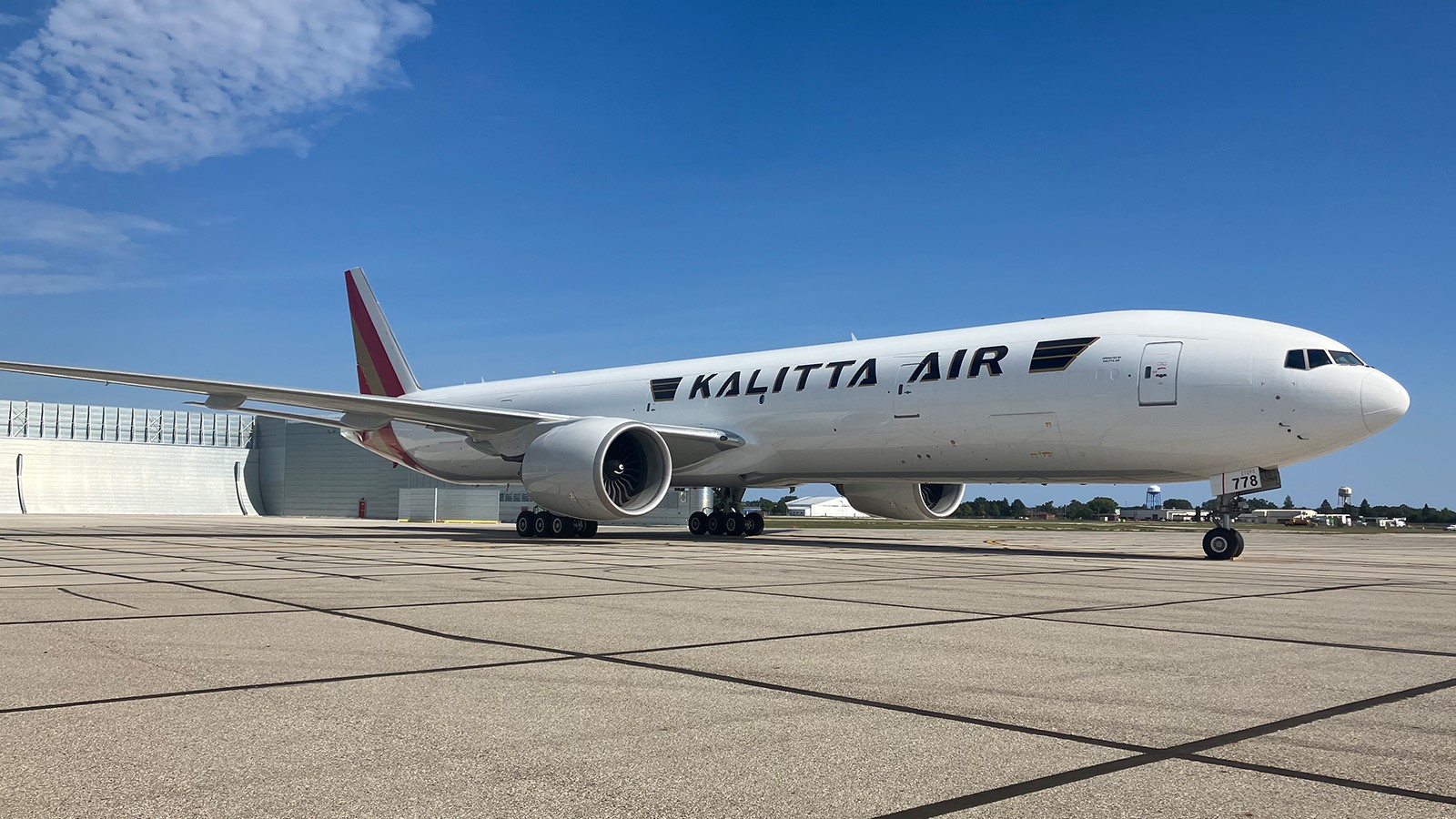
A white Kalitta Air cargo jet with black lettering sits on the tarmac on a sunny day.

Kalitta Air is putting its newest fleet additions, the first-ever Boeing 777 aircraft converted from passenger to cargo configuration, to work for Israel-based cargo airline Challenge Group and long-time customer DHL Express.

Ypsilanti, Michigan-based Kalitta Air last month received the initial two of seven converted freighters under a long-term lease from AerCap after they were retrofitted by Israel Aerospace Industries (IAI) with a large cargo door and other features that enable containers to be transported on the main deck.

Kalitta was the launch customer for the IAI converted 777 freighter. The airline currently operates four 777-300 converted freighters, with three additional aircraft scheduled to enter service before year-end, said Heath Nicholl, Kalitta’s chief operating officer, in an email. 

Industry publication Cargo Facts first reported that Kalitta Air has now taken possession of its fifth 777-300 and expects to have all seven on order by the end of the year. 

Challenge Group last week announced it has contracted with Kalitta Air to operate one of the 777 converted freighters on its behalf between Tel Aviv and Hong Kong via Dubai, a route the carrier has operated for five years with its own aircraft. The capacity arrangement gives Challenge Group a head start evaluating the 777’s operational performance and gaining hands-on experience with the platform until its own 777 converted freighters are delivered by AerCap and IAI.

“This partnership with Kalitta Air . . . provides us with the opportunity to test and familiarize ourselves with this new aircraft type, ensuring that when our first converted aircraft arrives, we are fully prepared to operate it at the highest standards. This will ultimately allow us to offer our customers a more efficient, flexible, and environmentally responsible air cargo solution,” said Or Zak, chief commercial officer at Challenge Group, said in  a news release.

The transportation services agreement with Kalitta Air is currently set up to run for several months. The aircraft conducts multiple rotations per week carrying mostly e-commerce products, Gianluca Marcangelo, head of industry relations and marketing, said in an email.

Challenge Group operates 10 aircraft (six Boeing 747-400s and four 767-300s) across three airlines licensed in Israel, Belgium and Malta. Its main hub is at Liege Airport in Belgium, where it has a 430,500-square-foot cargo terminal. A logistics subsidiary also handles middle-mile delivery to distribution centers at European destinations. 

Challenge has committed to take six 777-300 passenger-to-freighter conversions. The airline expects to receive its first 777 from AerCap by the end of the year, said Marcangelo. It will register the 777-300 under its Maltese air operator’s certificate.  

The redesigned jets are dubbed the “Big Twin” because of the 777’s size and two GE-90 engines. With 25% more interior volume than a 777-200, the 777-300 Extended Range freighter is well suited for lightweight e-commerce shipments that take up a lot of space and don’t weigh as much as other commodities. It has 14% more volume than a 747-400 converted freighter and is 21% more fuel-efficient, according to IAI. 

U.S.-based aerospace startup Mammoth Freighters is also in the final stages of Federal Aviation Administration certification for its own 777 conversion design. The company has dozens of orders from several customers.

Kalitta Air earlier this month began operating three of the Big Twins on trans-Pacific routes for DHL, according to aircraft database Flightradar24. Records show three freighters routinely operate from Tokyo and Hong Kong to DHL’s hub in Cincinnati, as well as to Chicago, Los Angeles, New York’s JFK airport and Miami. Kalitta also operates factory-built 777s and 747s in DHL’s air network.

Nicholl said additional converted freighters are available now for wet lease (aircraft, crew, maintenance and insurance bundle) and charter flying. 

Kalitta Air operates 21 Boeing 747-400 cargo jets and 10 factory-built 777 freighters, 

“We have not retired any 747s as a result of the 777 introductions. The [converted freighters] are supplementing our widebody network, leveraging their fuel efficiency and payload-range advantages where they best fit customer demand,” Nicholl told FreightWaves.

Click here for more FreightWaves/American Shipper stories by Eric Kulisch.

Israel’s Challenge Group prepares to fly all-new 777 converted freighter

CVSA Brake Week 2025 Results Show 15% Failure Rate

The Commercial Vehicle Safety Alliance just released results from the 2025 Brake Safety Week, and if you’re experiencing déjà vu, you’re not alone. Inspectors pulled 2,296 commercial vehicles off the road during a single week in August because their brakes were so defective they could not operate legally, resulting in a 15.1% out-of-service rate.

That’s virtually identical to 2024’s results, when 2,370 vehicles were placed OOS out of 15,752 inspections for a 15% failure rate. Different year. Same problem. 

During Aug. 24-30, 2025, inspectors across 52 North American jurisdictions conducted 15,175 commercial vehicle brake system inspections. In the U.S., 13,700 inspections yielded 2,035 brake-related OOS violations, for a 14.9% failure rate. Canada’s 1,459 inspections produced 260 violations, a 17.8% failure rate. Mexico conducted 16 inspections with one violation at 6.3%.

The most common violation? Twenty percent or more of the vehicle’s service brakes were out of service. Inspectors identified 1,199 such violations, a 52.2% OOS rate within that category alone.

Beyond that, inspectors documented:

  • 375 other brake violations
  • 306 brake hose and tube defects
  • 199 steering axle violations
  • 100 air loss rate failures

This year’s focus on drums and rotors revealed 113 violations, with 39 vehicles placed OOS specifically for rotor or drum defects. The breakdown: 22 broken rotors on air disc brakes, 50 rusted rotors, 32 broken drums on S-cam brakes, plus multiple hydraulic system failures.

Broken rotors. Rusted rotors. Broken drums. These aren’t components that suddenly failed without warning. These deteriorated over time while someone, a driver, a mechanic, a fleet manager, looked them over during inspections and decided they were good enough to keep rolling.

Compare 2025 to 2024 and the pattern is wildly predictable:

  • 2024: 15,752 inspections, 2,370 OOS violations, 15.0% failure rate 
  • 2025: 15,175 inspections, 2,296 OOS violations, 15.1% failure rate

We conducted essentially the same enforcement effort, found essentially the same failure rate, and will presumably do absolutely nothing different about it. CVSA has already scheduled next year’s Brake Safety Week for Aug. 23-29, 2026, where we’ll almost certainly see the same results again. This is a systemic issue.

Fifteen states deployed performance-based brake testers during this year’s enforcement week, conducting 528 inspections. They measure actual braking performance against a minimum 43.5% efficiency standard required by federal regulations.

Twenty-five vehicles, 4.7%, failed to meet that minimum standard. These trucks couldn’t adequately brake to pass a mechanical test, yet they were operating on public roads until an inspector stopped them.

Think about that. These vehicles weren’t borderline cases where a mechanic might disagree with an inspector’s judgment. They literally couldn’t generate enough braking force to meet the minimum safety threshold, yet they were out there anyway.

Every truck pulled over for brake violations during CVSA Brake Week passed through multiple failure points that nobody wants to discuss:

  • Pre-trip inspections: Federal regulations require drivers to conduct pre-trip inspections and document defects. How many of these 2,296 vehicles had brake issues that drivers either didn’t check or didn’t report?
  • Periodic maintenance: Carriers must maintain vehicles in a safe operating condition. When was the last time these vehicles received proper brake inspections? What did maintenance records show, or were they fabricated after the fact?
  • Management oversight: Someone in each carrier’s operation is responsible for ensuring vehicles are safe before dispatch. Did anyone actually verify brake conditions, or did they just assume everything was okay?

The enforcement action stops at the roadside. The inspector finds bad brakes, the vehicle gets placed out of service, the carrier fixes the brakes, and the vehicle goes back in service. There’s rarely any follow-up investigation into how those brakes got that bad or who was responsible for letting a vehicle operate in that condition.

We treat brake violations as maintenance issues when they’re actually compliance failures, revealing systemic problems within carrier operations.

CVSA notes that 84.9% of inspected vehicles didn’t have OOS brake violations. The industry will spin that as success; most trucks passed!

That framing is dangerous nonsense.

An 85% pass rate during a focused enforcement week when carriers know inspections are happening means the actual brake compliance rate during normal operations is almost certainly worse. Even under ideal inspection conditions, with inspectors specifically looking for brake problems, 15 out of every 100 trucks checked were found to be unsafe to continue.

CVSA conducts approximately 4 million inspections annually among hundreds of millions of commercial vehicle trips. The vast majority of trucks never get inspected, meaning defective brake systems can operate indefinitely until they either cause a crash or are randomly caught.

Brake-related violations consistently rank as the most-cited out-of-service vehicle violation during roadside inspections. We know this. CVSA dedicates an entire week each year to brake safety through its Operation Airbrake Program, specifically to reduce brake failures through inspections and education.

Yet here we are in 2025, still pulling 15% of inspected vehicles during a week when the industry should be at its best. What does that tell us about brake conditions during the other 51 weeks when the spotlight isn’t shining?

Brake failures don’t just result in OOS violations and tow bills. They result in crashes, injuries, and fatalities. An 80,000-pound truck traveling at 65 mph needs approximately 525 feet to stop under ideal conditions with properly functioning brakes. Add defective brakes, worn drums, rusted rotors, or air system leaks, and stopping distances increase dramatically, often beyond the driver’s ability to avoid a collision, even with early hazard recognition.

We see it repeatedly in crash investigations: brake defects identified post-crash that were clearly pre-existing conditions. Drums worn through. Rotors with cracks. Air system components have been leaking for weeks. All conditions that inspection should have caught before a crash occurred.

When a vehicle is placed OOS for brake violations, the immediate fix is performed: the carrier repairs the defects, the inspector clears the vehicle, and operation resumes. What doesn’t happen is any meaningful investigation into compliance failures that allowed those defects to develop.

What should happen:

  • FMCSA reviews maintenance records to determine if brake problems were previously reported and ignored
  • SMS scores get updated to reflect brake system maintenance failures
  • Repeat offenders face escalating enforcement, including safety audits and potential authority revocation
  • Carriers with patterns of brake violations get flagged for enhanced inspections

What actually happens:

  • Vehicle gets fixed
  • The carrier pays the fine
  • The truck goes back in service
  • Everyone moves on until the next inspection

There’s no systemic accountability for carriers that consistently put defective vehicles on the road. There’s no enhanced scrutiny for drivers who keep signing off on pre-trip inspections despite obvious brake defects. There are no consequences for mechanics who approve inspections while components are visibly deteriorating.

CVSA’s 2025 Brake Safety Week results aren’t surprising. They’re virtually identical to 2024. Fifteen percent failure rate then, 15% now, and almost certainly 15% again when inspectors conduct next year’s enforcement week Aug. 23-29, 2026.

We have adequate regulations, trained inspectors, and enforcement mechanisms. What’s missing is the institutional will to hold carriers accountable for operating vehicles with defective safety systems.

Carriers know brakes matter. Drivers know brakes matter. What’s missing are consequences meaningful enough to make properly maintaining brake systems more attractive than running them until they fail or get caught.

We’ll inspect another 15,000 vehicles next August, pull another 15% for brake violations, publish another report, and move on without addressing why this keeps happening year after year.

Meanwhile, trucks with defective brakes continue operating on public roads, drivers continue signing off on pre-trip inspections without actually checking brake conditions, carriers continue dispatching equipment with known maintenance issues, and we all pretend the next safety initiative will somehow fix what is fundamentally a compliance and accountability crisis.

Brake Safety Week proves we know how to find defective brakes. What we apparently don’t know, or don’t want to know, is how to prevent them from being on the road in the first place.